

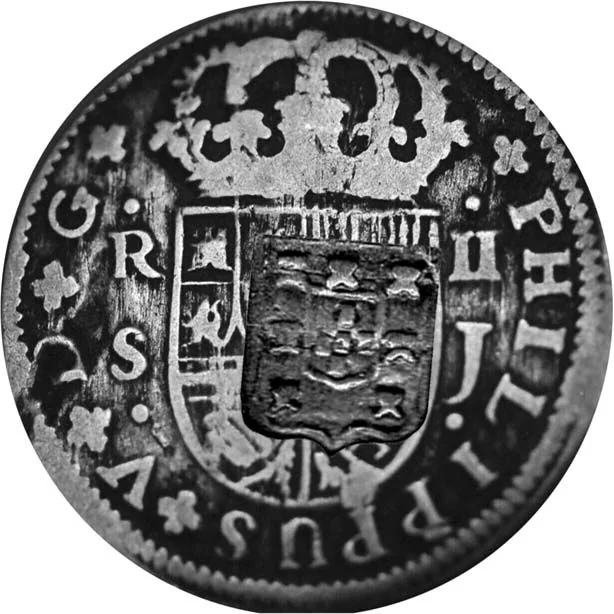
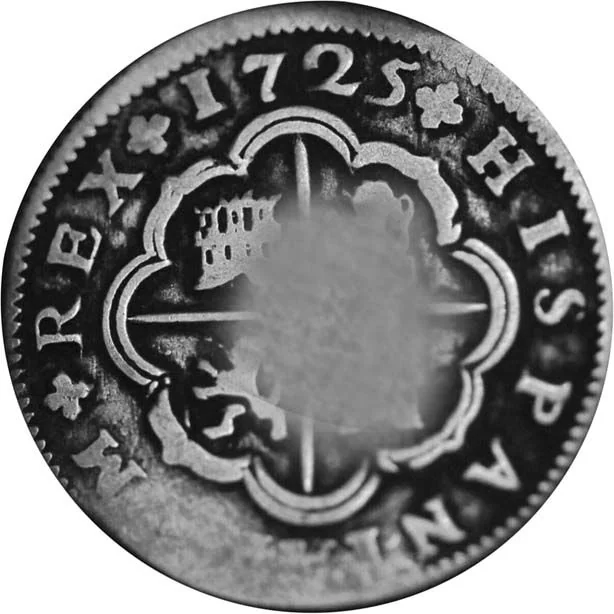
200 réis – Angola
Add to wishlist
Angola
Material
Diameter: 26 mm
Weight: 6 g
Silver Weight:: 5.00 g
Thickness: 1 mm
Shape: Round
Composition: 83.3% Silver
Magnetic: No
Techniques: Milled, Countermarked
Alignment: Medal alignment
flip
References
Numista: #372557
Value
Bullion value: $12.55
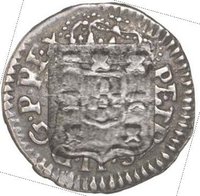
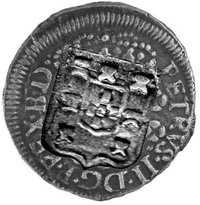
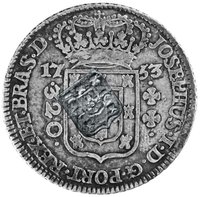
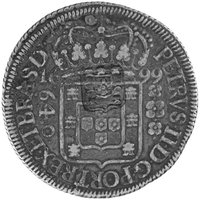
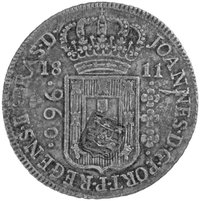
Obverse
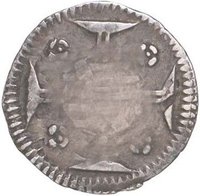
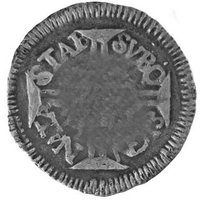
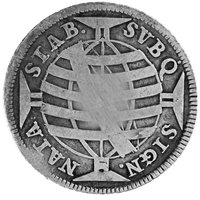
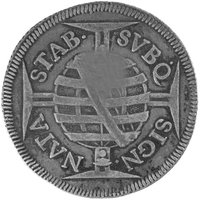
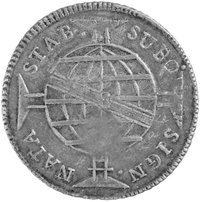
Reverse
Edge
Categories
| Symbols> Coat of Arms |
Mintings
| Year | Mint Mark | Mintage | Quality | Collection |
|---|---|---|---|---|
| 1895 | — | — |
Historical background
In 1895, Angola was a Portuguese colony operating under a complex and fragmented monetary system, a direct reflection of its transitional economic state. The official currency was the Portuguese real, but its practical use was largely confined to coastal administrative centers and the accounts of the colonial government and large trading houses. The broader economy, particularly in the vast interior where the slave trade had only recently been supplanted by forced labor for rubber, wax, and ivory, relied heavily on commodity money. Here, standardized lengths of rolos (cloth), bundles of tobacco, bottles of rum, and especially libongos (cowrie shells) served as the primary media of exchange for daily transactions and tax payments.
This dual system existed because Portugal lacked the economic power to impose a uniform metallic currency across such a vast territory. The limited supply of Portuguese coinage was often hoarded or used for external trade, leaving a vacuum filled by traditional and imported commodities. Furthermore, several foreign silver coins, notably the British pound and the Mexican peso, circulated in port cities like Luanda and Benguela, used in international trade for exports like coffee and raw materials. This created a tiered monetary landscape: high-value foreign coins for import/export, low-value Portuguese coins for official business, and commodity money for the internal indigenous economy.
The situation in 1895 was one of strain and impending change. The colonial state, seeking greater economic integration and control, viewed the commodity system as primitive and an obstacle to taxation and exploitation. Efforts to suppress the libongo and enforce the use of the real were ongoing but largely ineffective outside of direct Portuguese influence. Thus, the currency landscape was marked by inconsistency and fluctuation, symbolizing the tension between a colonial administration attempting to modernize its extractive economy and the resilient, traditional systems that continued to facilitate most local commerce.
This dual system existed because Portugal lacked the economic power to impose a uniform metallic currency across such a vast territory. The limited supply of Portuguese coinage was often hoarded or used for external trade, leaving a vacuum filled by traditional and imported commodities. Furthermore, several foreign silver coins, notably the British pound and the Mexican peso, circulated in port cities like Luanda and Benguela, used in international trade for exports like coffee and raw materials. This created a tiered monetary landscape: high-value foreign coins for import/export, low-value Portuguese coins for official business, and commodity money for the internal indigenous economy.
The situation in 1895 was one of strain and impending change. The colonial state, seeking greater economic integration and control, viewed the commodity system as primitive and an obstacle to taxation and exploitation. Efforts to suppress the libongo and enforce the use of the real were ongoing but largely ineffective outside of direct Portuguese influence. Thus, the currency landscape was marked by inconsistency and fluctuation, symbolizing the tension between a colonial administration attempting to modernize its extractive economy and the resilient, traditional systems that continued to facilitate most local commerce.
Series: 1895 Angola circulation coins
✨ Legendary