

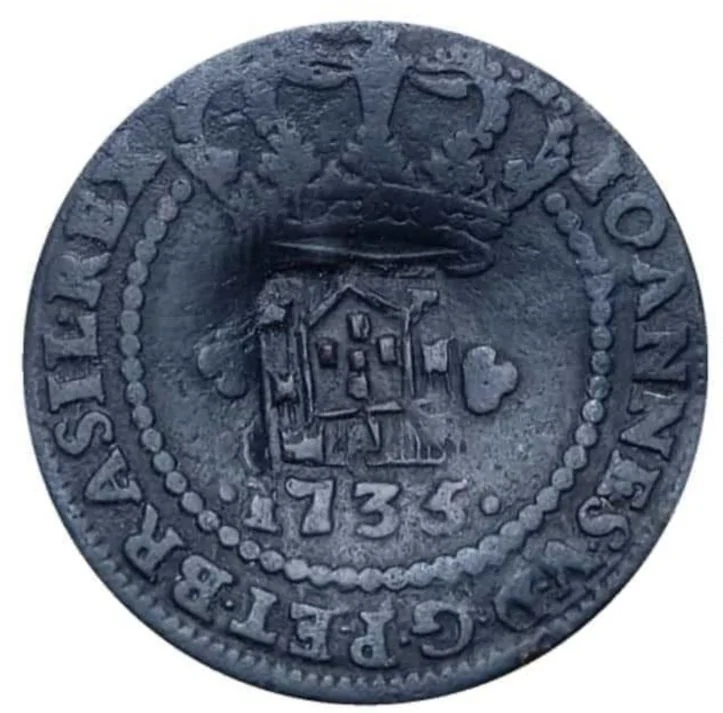
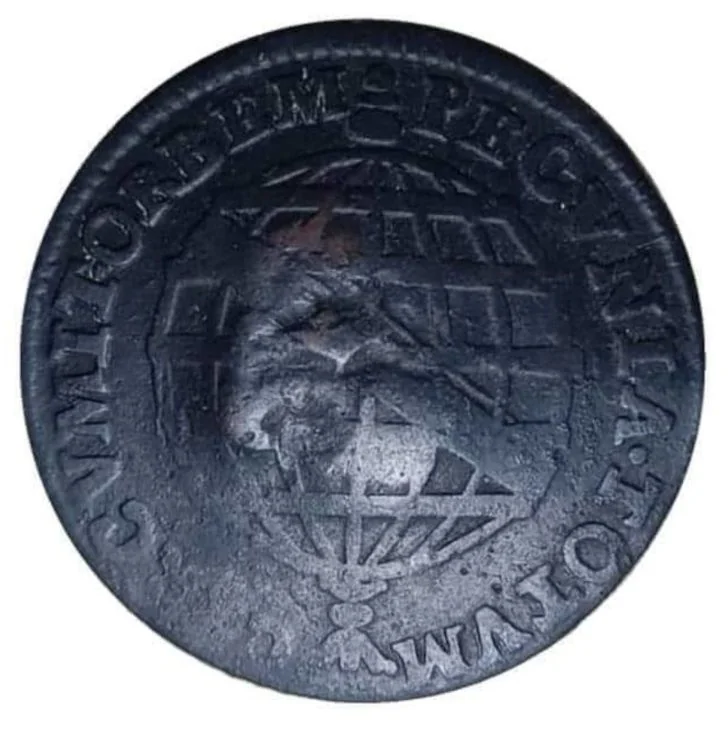
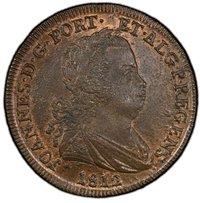
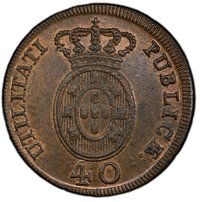
20 réis – Portugal
Add to wishlist
Portugal
Mintings
| Year | Mint Mark | Mintage | Quality | Collection |
|---|---|---|---|---|
| 1809 | — | — |
Historical background
In 1809, Portugal’s currency situation was chaotic and deeply destabilized by the ongoing Peninsular War. The country was under the dual pressures of a French invasion and the presence of its British allies, both of which placed enormous strain on the economy. The Portuguese government, operating from Rio de Janeiro since the royal family's flight in 1807, had limited control, while the British-led regency council in Lisbon struggled to finance the war effort. This led to rampant issuance of paper money, primarily vales reais (royal bonds), which were not backed by sufficient specie, causing severe inflation and a collapse in public confidence.
The monetary system was a complex and depreciating mix. The primary unit was the real (plural: réis), but transactions often involved huge sums quoted in milréis. Crucially, the value of circulating coinage was unstable. Existing Portuguese gold and silver coins were hoarded, while a flood of lower-quality foreign coins, especially Spanish and French, circulated at fluctuating rates. British troops also injected pounds sterling and created demand for supplies, further distorting local markets. The over-issued paper vales traded at a steep and ever-widening discount to their face value in metal, creating a two-tier economy where precious metal was king.
This financial crisis directly impacted the war effort and daily life. The government resorted to compulsory loans, confiscations, and printing more paper to pay troops and suppliers, exacerbating the inflationary spiral. For the Portuguese populace, this meant skyrocketing prices for basic goods, eroding savings, and widespread economic hardship. The currency disorder of 1809 was therefore not merely a monetary issue but a central feature of the societal breakdown caused by the war, highlighting the profound challenge of maintaining a functioning state and economy under military occupation and liberation.
The monetary system was a complex and depreciating mix. The primary unit was the real (plural: réis), but transactions often involved huge sums quoted in milréis. Crucially, the value of circulating coinage was unstable. Existing Portuguese gold and silver coins were hoarded, while a flood of lower-quality foreign coins, especially Spanish and French, circulated at fluctuating rates. British troops also injected pounds sterling and created demand for supplies, further distorting local markets. The over-issued paper vales traded at a steep and ever-widening discount to their face value in metal, creating a two-tier economy where precious metal was king.
This financial crisis directly impacted the war effort and daily life. The government resorted to compulsory loans, confiscations, and printing more paper to pay troops and suppliers, exacerbating the inflationary spiral. For the Portuguese populace, this meant skyrocketing prices for basic goods, eroding savings, and widespread economic hardship. The currency disorder of 1809 was therefore not merely a monetary issue but a central feature of the societal breakdown caused by the war, highlighting the profound challenge of maintaining a functioning state and economy under military occupation and liberation.
✨ Legendary