

1 pound (National Bank of Egypt) – Egypt
Add to wishlist
Non-circulating coins
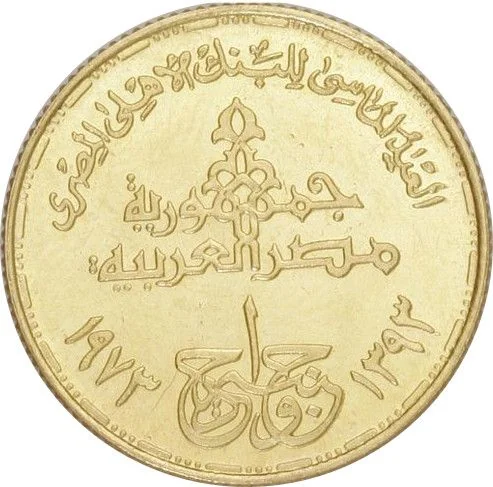
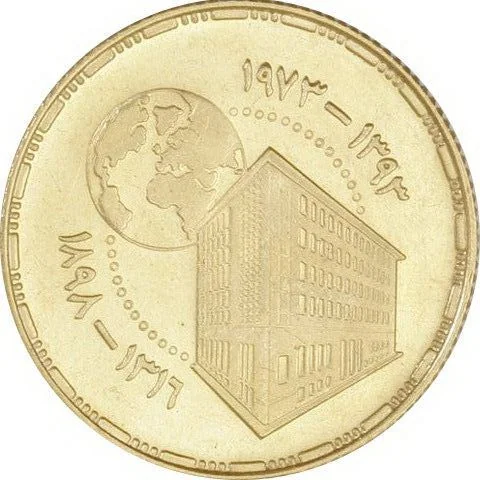
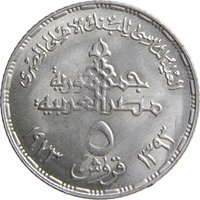
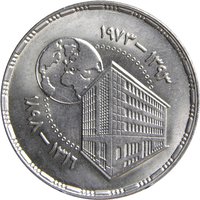
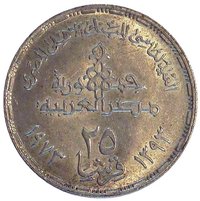
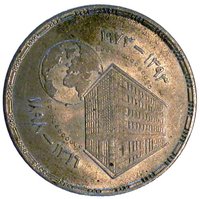
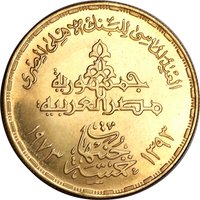
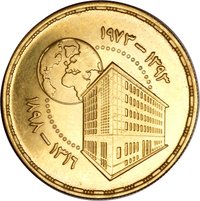
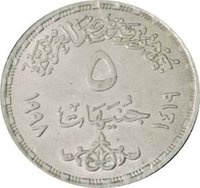
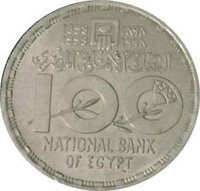
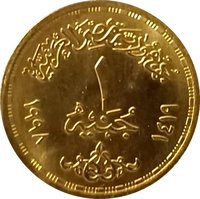
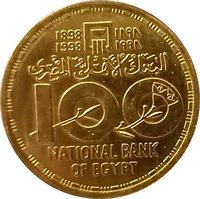
Commemoration: 75th Anniversary of the National Bank of Egypt
Series: National Bank of Egypt
Egypt
Context
Year: 1973
Islamic (Hijri) Year:: 1393
Issuer: Egypt
Period:
(since 1971)
Currency:
(since 1916)
Demonetized: Yes
Total mintage: 3,978
Material
References
KM: #
Numista: #372113
Value
Exchange value: 1 EGP
Bullion value: $1080.44
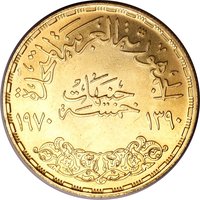
Obverse
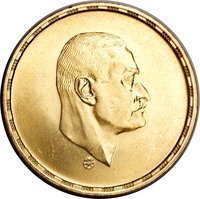
Reverse
Edge
Categories
| Building |
Mints
| Name | Mark |
|---|---|
| Egyptian Mint Authority | — |
Mintings
| Year | Mint Mark | Mintage | Quality | Collection |
|---|---|---|---|---|
| 1973 | — | 3,978 |
Historical background
In the lead-up to the 1973 October War, Egypt's currency situation was characterized by severe economic strain and isolation. The country was still grappling with the profound consequences of the 1967 Six-Day War, which had resulted in the loss of the Sinai Peninsula and the closure of the Suez Canal—a critical source of foreign revenue. President Anwar Sadat, who succeeded Gamal Abdel Nasser in 1970, inherited an economy burdened by heavy military expenditures, a growing budget deficit, and dwindling foreign reserves. The economy was largely state-controlled and inward-looking, with limited access to Western capital markets, leaving it dependent on financial aid from the Soviet Union and Arab oil states.
Internationally, the Egyptian pound faced significant pressure. A complex system of multiple exchange rates had evolved, creating a wide gap between the official rate and the black-market rate. This divergence reflected a lack of confidence in the currency and the scarcity of hard currency needed for essential imports. While the official rate was pegged at E£0.43 to the US dollar, the black-market rate was substantially weaker, undermining legitimate trade and encouraging capital flight. This economic fragility was a key driver behind Sadat's strategic decision to go to war, viewing a military initiative as necessary to break the political and economic stalemate that was crippling the nation.
The outcome of the 1973 war itself, despite its military complexities, fundamentally altered Egypt's currency and economic prospects. The initial military successes restored national prestige and provided the political capital for Sadat to pivot towards the United States. Most importantly, the subsequent reopening of the Suez Canal in 1975 and the return of Sinai oil fields began to generate vital foreign exchange inflows. This paved the way for the Infitah (economic opening) policy, which aimed to attract foreign investment and liberalize the economy, setting the stage for a gradual move towards a more unified, albeit still managed, exchange rate system in the years that followed.
Internationally, the Egyptian pound faced significant pressure. A complex system of multiple exchange rates had evolved, creating a wide gap between the official rate and the black-market rate. This divergence reflected a lack of confidence in the currency and the scarcity of hard currency needed for essential imports. While the official rate was pegged at E£0.43 to the US dollar, the black-market rate was substantially weaker, undermining legitimate trade and encouraging capital flight. This economic fragility was a key driver behind Sadat's strategic decision to go to war, viewing a military initiative as necessary to break the political and economic stalemate that was crippling the nation.
The outcome of the 1973 war itself, despite its military complexities, fundamentally altered Egypt's currency and economic prospects. The initial military successes restored national prestige and provided the political capital for Sadat to pivot towards the United States. Most importantly, the subsequent reopening of the Suez Canal in 1975 and the return of Sinai oil fields began to generate vital foreign exchange inflows. This paved the way for the Infitah (economic opening) policy, which aimed to attract foreign investment and liberalize the economy, setting the stage for a gradual move towards a more unified, albeit still managed, exchange rate system in the years that followed.
Series: National Bank of Egypt
✨ Legendary