

5 pounds – Isle of Man
Add to wishlist
Circulating commemorative coins
Commemoration: F1 World Champion Nigel Mansell 1992
Series: Nigel Mansell
Context
Year: 1993
Country: British Crown dependencies
Issuer: Isle of Man
Ruler: Elizabeth II
Currency:
(since 1971)
Material
References
KM: #
Numista: #37172
Value
Exchange value: 5 IMP
Obverse
Description:
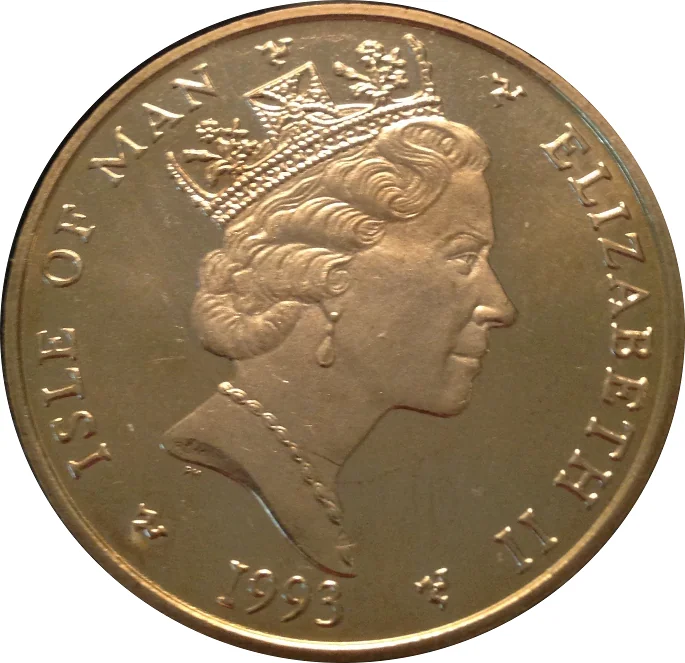
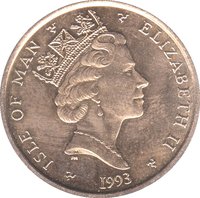
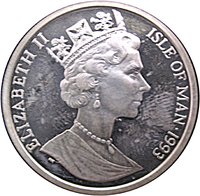
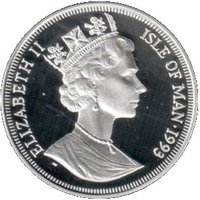
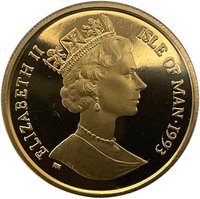
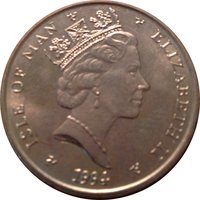
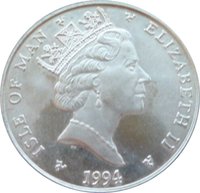
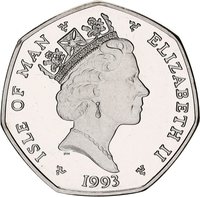
Queen Elizabeth II right-facing bust in George IV State Diadem, legend around, date below.
Inscription:
ISLE OF MAN
ELIZABETH II
RDM
PM
1993
ELIZABETH II
RDM
PM
1993
Translation:
ELIZABETH II
RDM (Rex/Regina Dei Gratia Manuensis - By the Grace of God, King/Queen of Mann)
PM (Premier - First)
1993
RDM (Rex/Regina Dei Gratia Manuensis - By the Grace of God, King/Queen of Mann)
PM (Premier - First)
1993
Script: Latin
Languages: English, Latin abbreviations
Designer: Raphael David Maklouf
Reverse
Description:
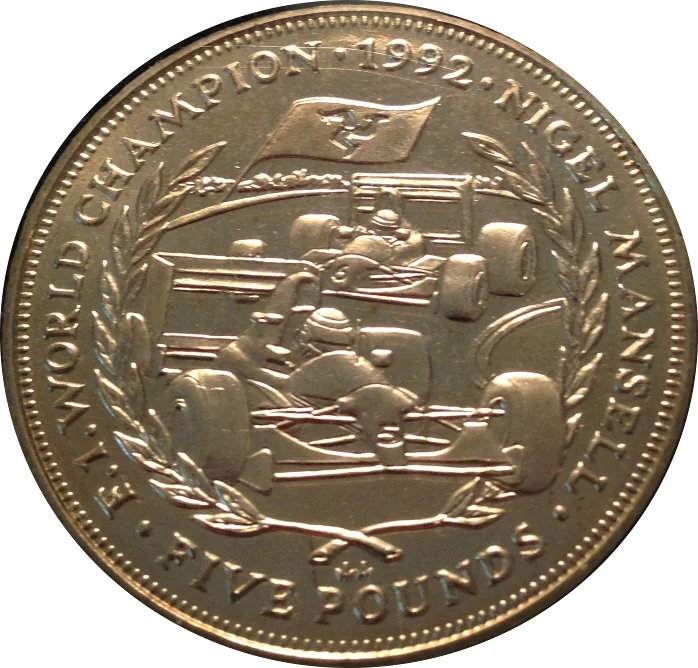
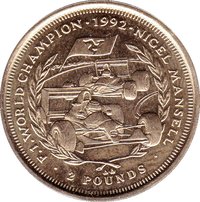
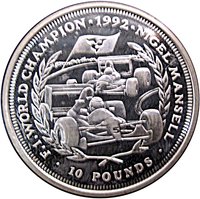
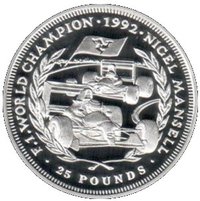
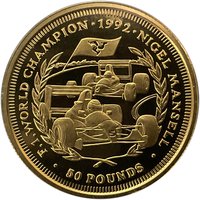
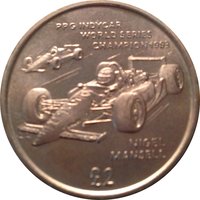
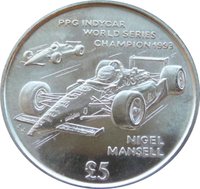
Two F1 cars, Isle of Man flag above, legend around, denomination below.
Inscription:
F.1. WORLD CHAMPION ·1992·NIGEL MANSELL
·FIVE POUNDS·
·FIVE POUNDS·
Script: Latin
Edge
Reeded
Categories
| Sport> Motorsports |
| Transportation> Car |
| Symbol> Triskelion |
Mints
| Name | Mark |
|---|---|
| Pobjoy Mint | (PM) |
Mintings
| Year | Mint Mark | Mintage | Quality | Collection |
|---|---|---|---|---|
| 1993 | PM | — |
Historical background
In 1993, the Isle of Man's currency situation was characterized by a unique and stable dual-issuance system, underpinned by its long-standing constitutional relationship with the United Kingdom. As a Crown Dependency, the Isle of Man was not part of the UK or the European Union, granting it a high degree of autonomy over its domestic affairs, including the right to issue its own currency. The Manx government, through its Treasury, issued distinct pound notes and coins (Manx pounds, £), which were legal tender on the island and maintained a fixed 1:1 parity with sterling.
The system operated on a "hard peg," where the Manx pound had no independent monetary policy and was fully backed by pound sterling reserves held in London. This meant the Isle of Man effectively imported UK monetary policy, ensuring price stability and economic confidence. Crucially, while Manx notes and coins were not legal tender in the UK, sterling was universally accepted on the island, and Manx currency could be exchanged at par in British banks, facilitating seamless trade and travel.
This arrangement in 1993 reflected a period of economic transition and growth for the Isle of Man, as it was actively developing its offshore finance sector. The reliable and familiar currency peg provided a crucial foundation for this economic diversification, offering stability to both residents and international investors. There was no serious debate about altering this system, as it perfectly balanced symbolic national identity—through distinct Manx designs featuring local landmarks and the triskelion emblem—with the practical economic benefits of being tied to a major global currency.
The system operated on a "hard peg," where the Manx pound had no independent monetary policy and was fully backed by pound sterling reserves held in London. This meant the Isle of Man effectively imported UK monetary policy, ensuring price stability and economic confidence. Crucially, while Manx notes and coins were not legal tender in the UK, sterling was universally accepted on the island, and Manx currency could be exchanged at par in British banks, facilitating seamless trade and travel.
This arrangement in 1993 reflected a period of economic transition and growth for the Isle of Man, as it was actively developing its offshore finance sector. The reliable and familiar currency peg provided a crucial foundation for this economic diversification, offering stability to both residents and international investors. There was no serious debate about altering this system, as it perfectly balanced symbolic national identity—through distinct Manx designs featuring local landmarks and the triskelion emblem—with the practical economic benefits of being tied to a major global currency.
Series: Nigel Mansell
⭐ Rare