

½ penny – ERR New ZealandandUnited Kingdom
Add to wishlist
Context
Year: 1965
Issuer: ERR New ZealandandUnited Kingdom
Ruler: Elizabeth II
Currency:
(1840—1967)
Demonetized: Yes
Material
References
Numista: #371056
Obverse
Description:
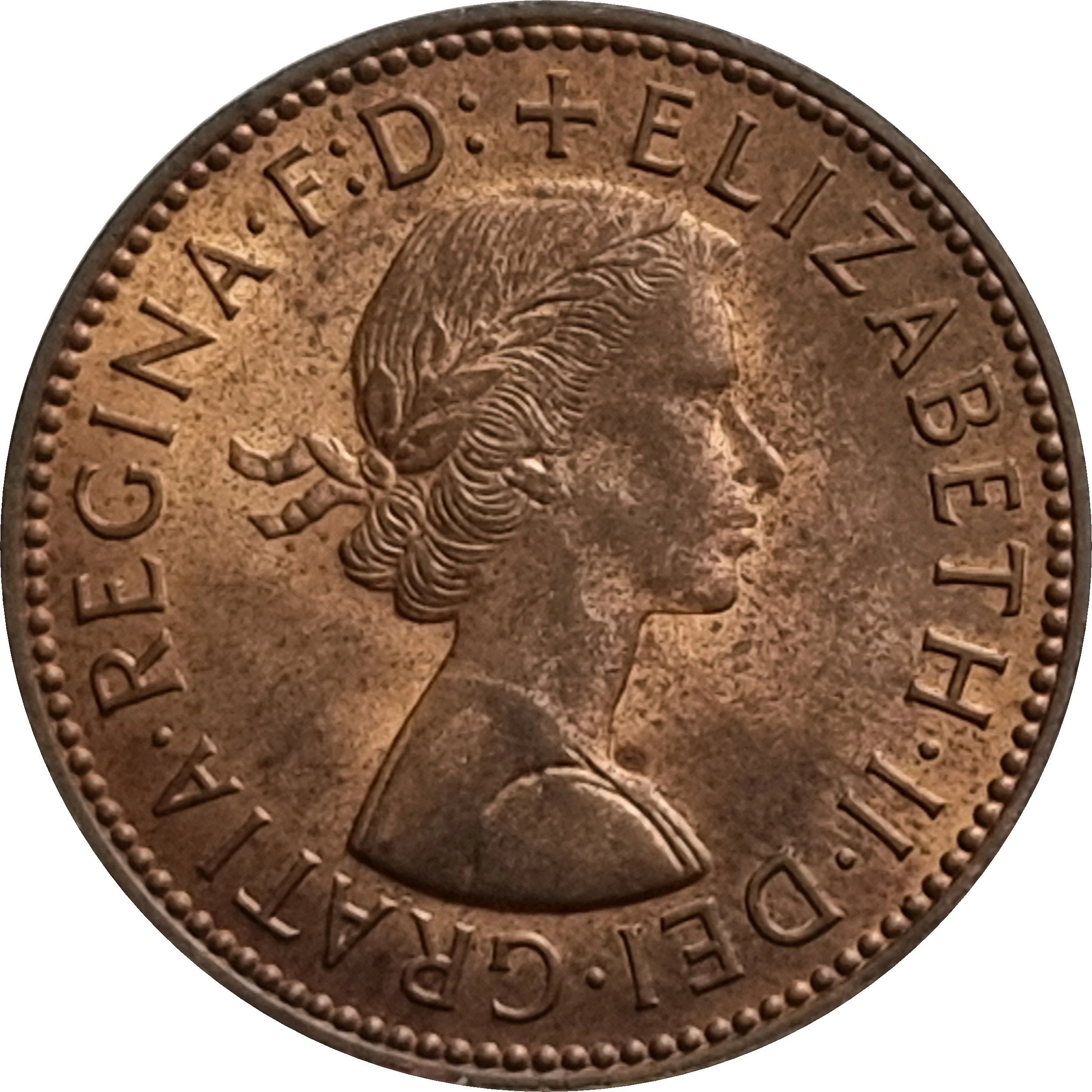
Young laureate bust of Elizabeth II right, surrounded by legend.
Inscription:
+ELIZABETH·II·DEI·GRATIA·REGINA·F:D:
Translation:
Elizabeth the Second, by the Grace of God, Queen, Defender of the Faith.
Script: Latin
Language: Latin
Designer: Mary Gillick
Reverse
Description:
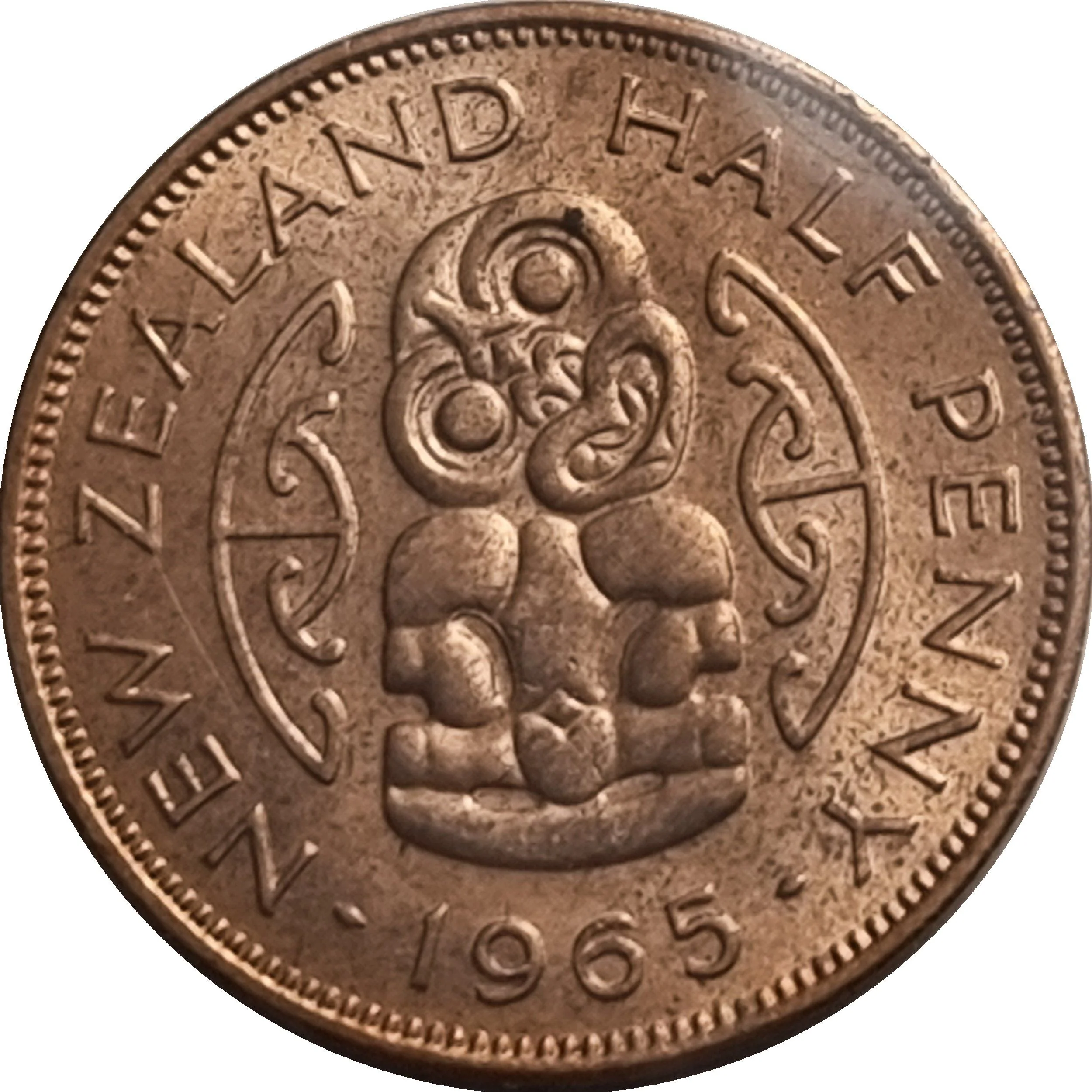
A Hei-tiki pendant flanked by Māori scrollwork, with a legend encircling it and the date beneath.
Inscription:
NEW ZEALAND HALF PENNY
· 1965 ·
· 1965 ·
Script: Latin
Designer: L.C. Mitchell
Edge
Plain
Mints
| Name | Mark |
|---|---|
| Royal Mint (Tower Hill) | — |
Mintings
| Year | Mint Mark | Mintage | Quality | Collection |
|---|---|---|---|---|
| 1965 | — | — |
Historical background
In 1965, both New Zealand and the United Kingdom were members of the Sterling Area, a system of fixed exchange rates that pegged their currencies to the British pound sterling. This arrangement facilitated trade and capital flows within the Commonwealth but also meant their monetary policies were heavily influenced by the UK's economic conditions. For New Zealand, this link was crucial as the UK was its dominant export market for agricultural products like wool, meat, and dairy. The system provided stability but also made New Zealand vulnerable to Britain's economic decisions and balance of payments problems.
The UK itself was under significant economic strain in 1965, grappling with a persistent balance of payments deficit and pressure on the pound sterling. The Labour government under Harold Wilson had just taken office in 1964, inheriting a large trade deficit and pledging to defend the pound's parity of US$2.80. To achieve this, it imposed a controversial 15% surcharge on imports in late 1964 and maintained high bank rate interest rates to attract foreign capital. These defensive measures, aimed at shoring up confidence in sterling, had direct repercussions for New Zealand, making its exports to the UK less competitive and tightening credit conditions.
Consequently, 1965 represented a period of growing tension within the Sterling Area. New Zealand's economy was feeling the constraints of a system designed to support the pound, while the UK's struggle to maintain sterling's value was leading to policies that often conflicted with the domestic needs of its Commonwealth partners. The underlying pressures would intensify, leading the UK to devalue the pound in 1967—a decisive event that forced New Zealand to re-evaluate its economic dependencies and ultimately accelerate its search for new trading partners and greater monetary independence.
The UK itself was under significant economic strain in 1965, grappling with a persistent balance of payments deficit and pressure on the pound sterling. The Labour government under Harold Wilson had just taken office in 1964, inheriting a large trade deficit and pledging to defend the pound's parity of US$2.80. To achieve this, it imposed a controversial 15% surcharge on imports in late 1964 and maintained high bank rate interest rates to attract foreign capital. These defensive measures, aimed at shoring up confidence in sterling, had direct repercussions for New Zealand, making its exports to the UK less competitive and tightening credit conditions.
Consequently, 1965 represented a period of growing tension within the Sterling Area. New Zealand's economy was feeling the constraints of a system designed to support the pound, while the UK's struggle to maintain sterling's value was leading to policies that often conflicted with the domestic needs of its Commonwealth partners. The underlying pressures would intensify, leading the UK to devalue the pound in 1967—a decisive event that forced New Zealand to re-evaluate its economic dependencies and ultimately accelerate its search for new trading partners and greater monetary independence.
✨ Legendary