

1 Mohar – Nepal
Nepal
Context
Years: 1936–1937
Issuer: Nepal 
Ruler: Tribhuvan Bir Bikram Shah
Currency:
(since 1932)
Demonetized: Yes
Material
References
KM: #Click to copy to clipboard722
Numista: #37038
Value
Exchange value: ½ NPR
Bullion value: $934.07
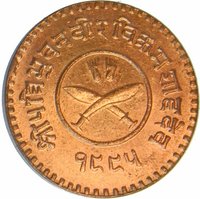
Obverse
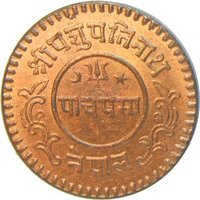
Reverse
Edge
Mintings
| Year | Mint Mark | Mintage | Quality | Collection |
|---|---|---|---|---|
| 1936 | — | — | ||
| 1937 | — | — |
Historical background
In 1936, Nepal’s currency system was a complex and transitional one, operating under the dual pressures of its historic economic ties to British India and its own sovereign monetary identity. The primary circulating medium was the silver Mohar, but the more dominant and practical currency for trade was the Indian Rupee. This was due to the Nepal-British India Treaty of 1923, which, while recognizing Nepal's independence, cemented an open border and deeply intertwined economies. Consequently, Indian coins and notes circulated freely within Nepal, especially in the Tarai and for significant commerce, while various older Nepali silver coins like Mohars and Dams were used more locally, often at fluctuating values.
The official exchange rate was fixed by the Nepali government at 1 Indian Rupee = 1.6 Nepali Mohars. However, this official peg was often disconnected from market reality, where the intrinsic silver content of the Nepali coins dictated their actual value. This led to chronic instability, arbitrage, and confusion in everyday transactions. The system was cumbersome, requiring constant recalculation between two metallic currencies, and it left Nepal's money supply vulnerable to decisions made in Calcutta and London, particularly following Britain's departure from the gold standard in 1931.
Recognizing these inefficiencies, 1936 fell within a period of monetary reform led by Prime Minister Juddha Shumsher Jang Bahadur Rana. The Nepal Rastra Bank would not be established until 1956, but the groundwork was being laid. The government was actively moving toward a modern, unified currency system, which would culminate in the introduction of the Nepali Rupee (NPR) in 1937, replacing the Mohar at a rate of 2 Mohars = 1 Nepali Rupee. Therefore, the situation in 1936 was one of the final years of an archaic bimetallic system, poised on the brink of a significant standardization that sought to assert greater national monetary control while stabilizing the economy for the 20th century.
The official exchange rate was fixed by the Nepali government at 1 Indian Rupee = 1.6 Nepali Mohars. However, this official peg was often disconnected from market reality, where the intrinsic silver content of the Nepali coins dictated their actual value. This led to chronic instability, arbitrage, and confusion in everyday transactions. The system was cumbersome, requiring constant recalculation between two metallic currencies, and it left Nepal's money supply vulnerable to decisions made in Calcutta and London, particularly following Britain's departure from the gold standard in 1931.
Recognizing these inefficiencies, 1936 fell within a period of monetary reform led by Prime Minister Juddha Shumsher Jang Bahadur Rana. The Nepal Rastra Bank would not be established until 1956, but the groundwork was being laid. The government was actively moving toward a modern, unified currency system, which would culminate in the introduction of the Nepali Rupee (NPR) in 1937, replacing the Mohar at a rate of 2 Mohars = 1 Nepali Rupee. Therefore, the situation in 1936 was one of the final years of an archaic bimetallic system, poised on the brink of a significant standardization that sought to assert greater national monetary control while stabilizing the economy for the 20th century.

✨ Legendary