

1 Mohar – Nepal
Nepal
Context
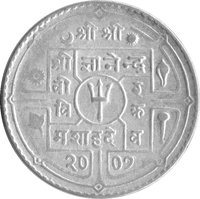
Year: 1950
Vikram Samvat Year: 2007
Issuer: Nepal 
Ruler: Gyanendra Bir Bikram Shah
Currency:
(since 1932)
Demonetized: Yes
References
KM: #Click to copy to clipboard731
Numista: #37030
Value
Exchange value: ½ NPR
Obverse
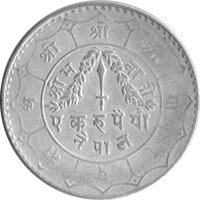
Reverse
Edge
Mintings
| Year | Mint Mark | Mintage | Quality | Collection |
|---|---|---|---|---|
| 1950 | — | — |
Historical background
In 1950, Nepal’s currency system was in a state of transition, deeply intertwined with its political upheaval. The Rana regime, which had held autocratic power for over a century, was nearing its end amid the pro-democracy movement. Monetarily, the country operated on a dual system: the silver Mohar was the official coinage of the Kingdom, but the more dominant and practical currency was the Indian Rupee. Nepal’s economy was effectively pegged to and dependent on India's, with Indian notes circulating widely for larger transactions, especially in the Tarai and for trade. This reflected Nepal’s lack of a independent central bank and its economic integration with British India, a legacy of the 1924 treaty.
The institutional framework for currency was outdated. The Nepal Mint produced metallic coins, but the system lacked modern paper currency issued by a central monetary authority. Banknotes did exist, but they were primarily "Moru Notes" – handwritten, promissory notes issued by individual royal treasuries (Gol Khana) and certain trusted merchants, leading to inconsistencies and limited acceptance. This informal and fragmented system was inadequate for a modernizing economy and created complexities for trade and administration.
The political revolution of 1950-51, which overthrew the Rana oligarchy, set the stage for major monetary reform. The restoration of King Tribhuvan and the move towards a constitutional monarchy created the impetus for financial sovereignty. This directly led to the establishment of the Nepal Rastra Bank in 1956 as the central bank and the introduction of the modern Nepalese Rupee in 1955, replacing the Mohar at a rate of 2 Mohars = 1 Rupee. Therefore, the currency situation in 1950 represents the final chapter of an archaic system, poised on the brink of a structured national monetary policy designed to assert economic independence.
The institutional framework for currency was outdated. The Nepal Mint produced metallic coins, but the system lacked modern paper currency issued by a central monetary authority. Banknotes did exist, but they were primarily "Moru Notes" – handwritten, promissory notes issued by individual royal treasuries (Gol Khana) and certain trusted merchants, leading to inconsistencies and limited acceptance. This informal and fragmented system was inadequate for a modernizing economy and created complexities for trade and administration.
The political revolution of 1950-51, which overthrew the Rana oligarchy, set the stage for major monetary reform. The restoration of King Tribhuvan and the move towards a constitutional monarchy created the impetus for financial sovereignty. This directly led to the establishment of the Nepal Rastra Bank in 1956 as the central bank and the introduction of the modern Nepalese Rupee in 1955, replacing the Mohar at a rate of 2 Mohars = 1 Rupee. Therefore, the currency situation in 1950 represents the final chapter of an archaic system, poised on the brink of a structured national monetary policy designed to assert economic independence.

✨ Legendary