

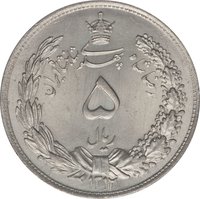
Obverse
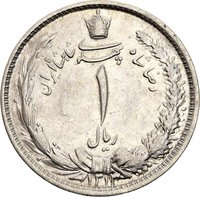
Description:
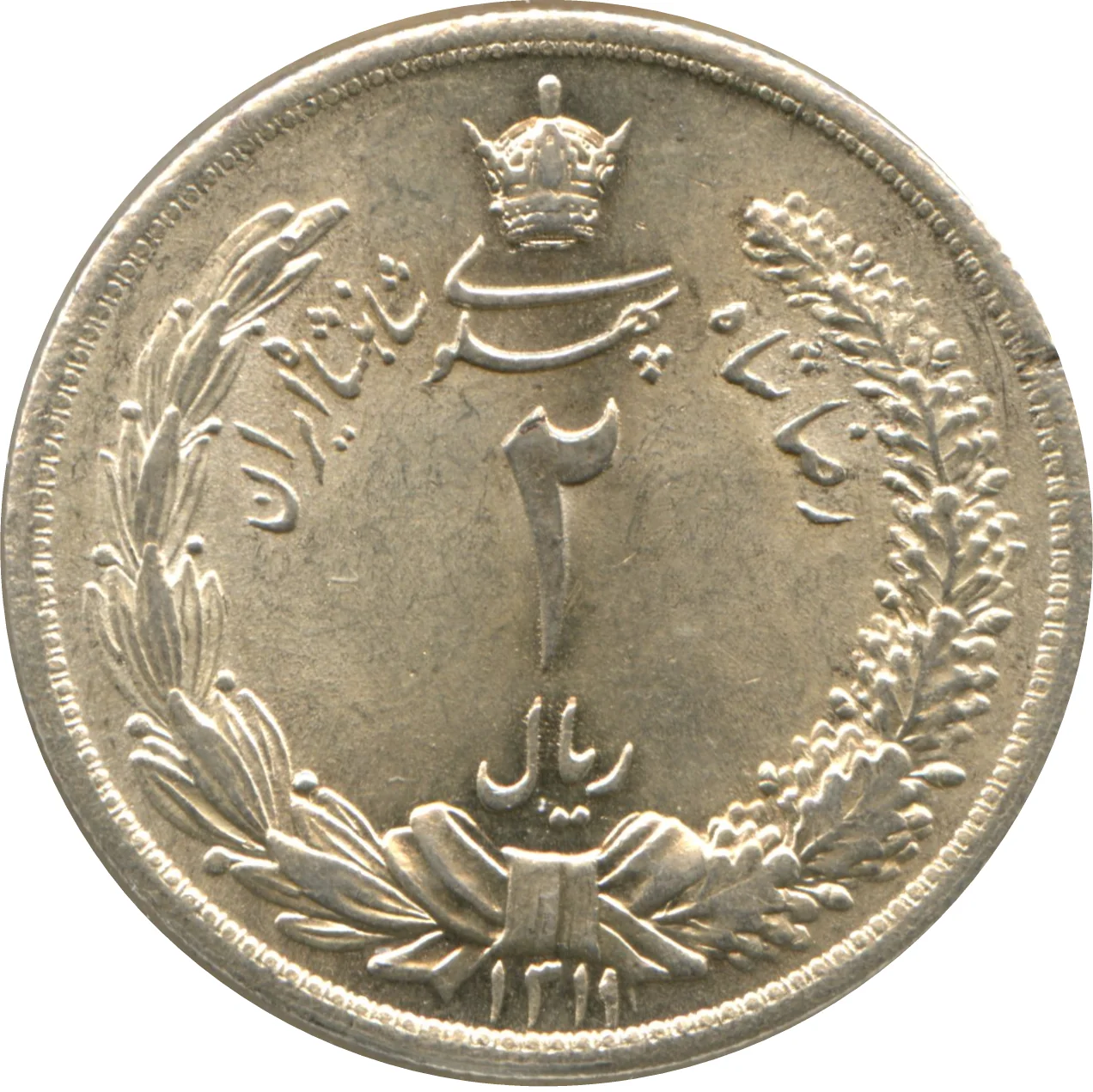
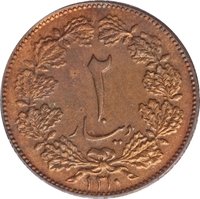
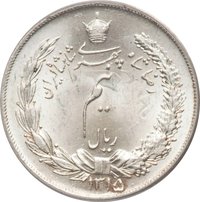
Reza Shah Pahlavi 2 Rials coin. Crown with oak and olive leaves.
Inscription:
رضا شاه پهـلوی شاهنشاه ایران
۲
ریال
۱۳۱۲
۲
ریال
۱۳۱۲
Translation:
Reza Shah Pahlavi, Shahanshah of Iran
2
Rials
1312
2
Rials
1312
Language: Persian
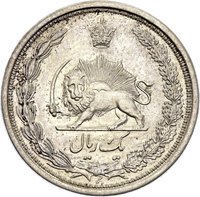
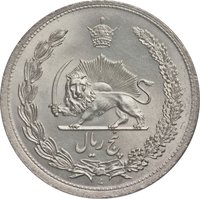
Reverse
Description:
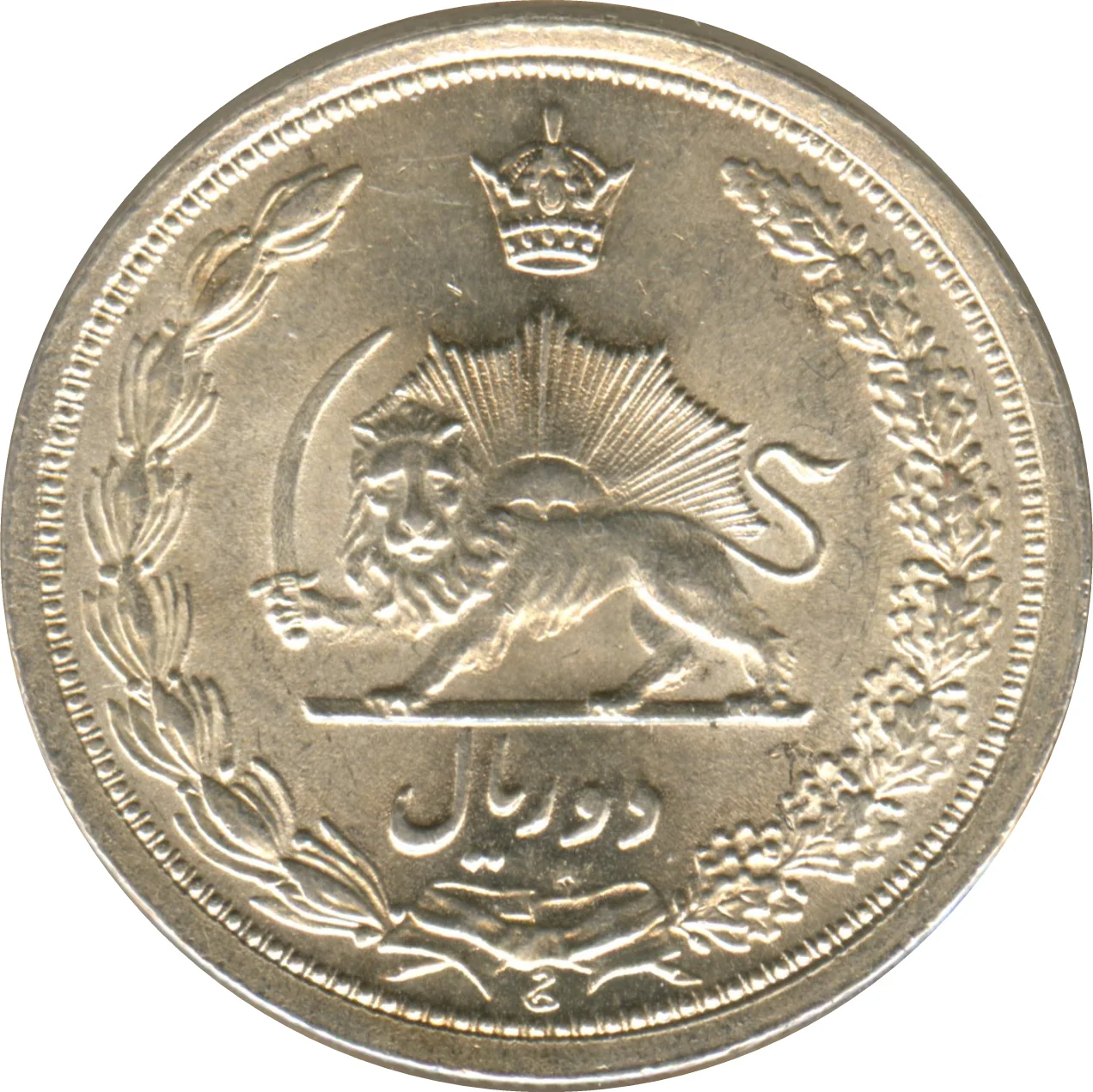
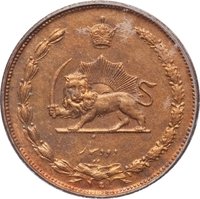
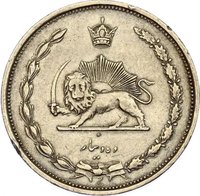
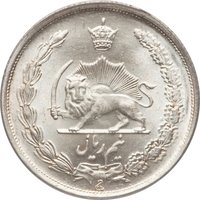
Pahlavi lion and sun emblem with oak and olive leaves.
Inscription:
دو ریال
Translation:
Two Rials
Language: Persian
Edge
Reeded
Mintings
| Year | Mint Mark | Mintage | Quality | Collection |
|---|---|---|---|---|
| 1931 | — | 6,145,000 | ||
| 1932 | — | 8,838,000 | ||
| 1933 | — | 19,175,000 | ||
| 1934 | — | 4,015,000 |
Historical background
In 1931, Iran's currency situation was characterized by significant instability and transition, largely stemming from the global economic shockwaves of the Great Depression. The country's monetary system was still based on the silver qiran, but its value had become highly volatile due to plummeting international silver prices. This depreciation caused severe inflation, disrupted foreign trade, and created a fiscal crisis for the government of Reza Shah Pahlavi, as the real value of tax revenues collected in silver collapsed. The situation exposed the vulnerabilities of an economy heavily reliant on a single commodity (silver) and underscored the need for a modern, centralized monetary authority.
The immediate catalyst for change was the British government's decision to abandon the gold standard in September 1931, which led to a sharp devaluation of the pound sterling. Since Iran's foreign reserves and trade were heavily tied to sterling, this event threatened further financial chaos. In response, the Iranian government moved decisively, passing the Monetary Act of 1931 in May (though some key provisions were enacted in 1930). This landmark legislation officially replaced the silver standard with a gold exchange standard, pegging the new gold rial to the British pound. Crucially, it also led to the establishment of the Bank Melli Iran as the sole issuer of banknotes, aiming to centralize control and move away from a disparate system of private and foreign bank note issuance.
Therefore, the currency situation in 1931 was one of crisis and foundational reform. The year marked the end of Iran's traditional silver-based currency and the beginning of a modern, state-controlled monetary system. While the new structure aimed to stabilize the economy and integrate it with the global financial system, its success remained uncertain, as it now tied Iran's currency to the fluctuating fortunes of the British pound during a period of worldwide economic turbulence.
The immediate catalyst for change was the British government's decision to abandon the gold standard in September 1931, which led to a sharp devaluation of the pound sterling. Since Iran's foreign reserves and trade were heavily tied to sterling, this event threatened further financial chaos. In response, the Iranian government moved decisively, passing the Monetary Act of 1931 in May (though some key provisions were enacted in 1930). This landmark legislation officially replaced the silver standard with a gold exchange standard, pegging the new gold rial to the British pound. Crucially, it also led to the establishment of the Bank Melli Iran as the sole issuer of banknotes, aiming to centralize control and move away from a disparate system of private and foreign bank note issuance.
Therefore, the currency situation in 1931 was one of crisis and foundational reform. The year marked the end of Iran's traditional silver-based currency and the beginning of a modern, state-controlled monetary system. While the new structure aimed to stabilize the economy and integrate it with the global financial system, its success remained uncertain, as it now tied Iran's currency to the fluctuating fortunes of the British pound during a period of worldwide economic turbulence.
Series: 1931 Iran circulation coins
🌟 Limited