

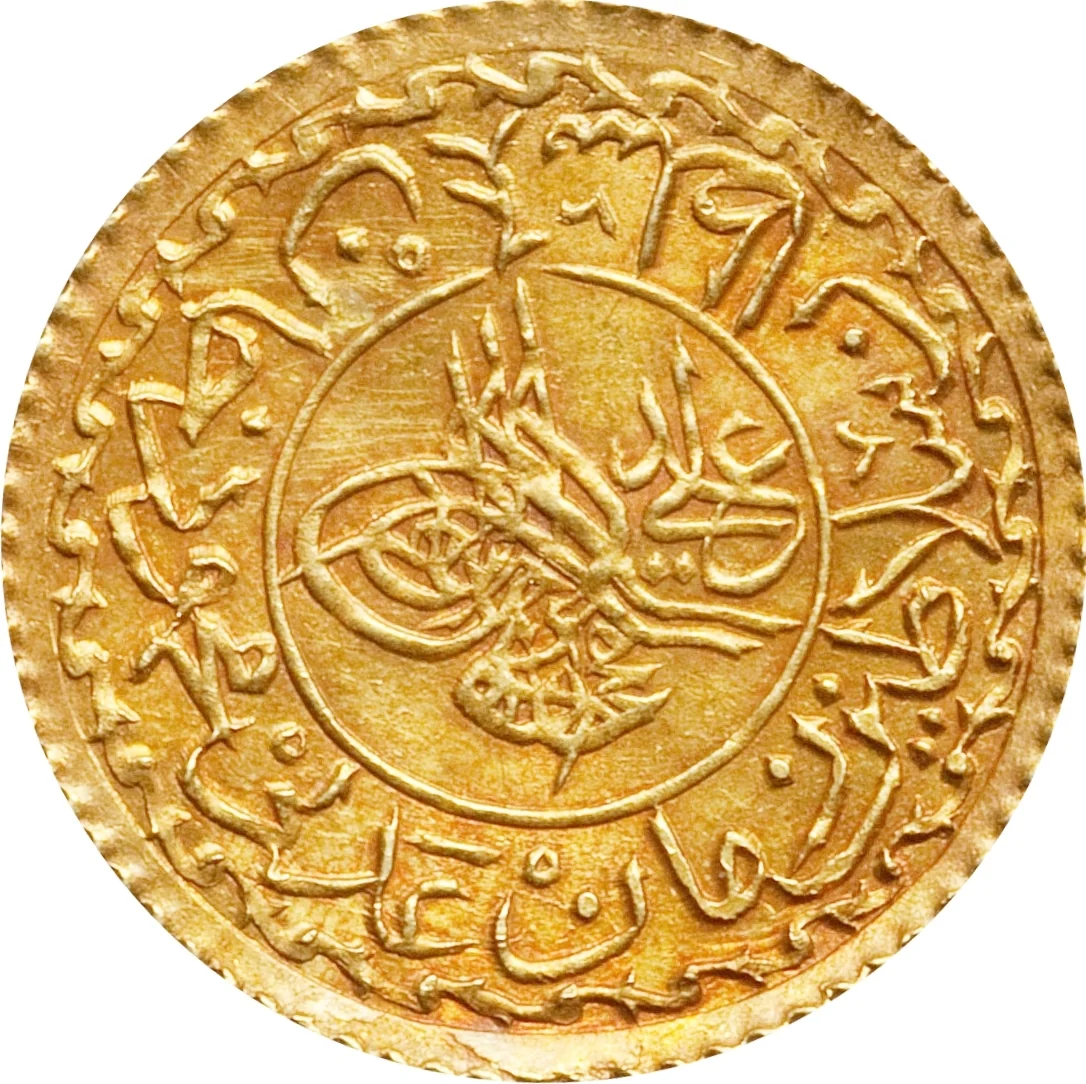
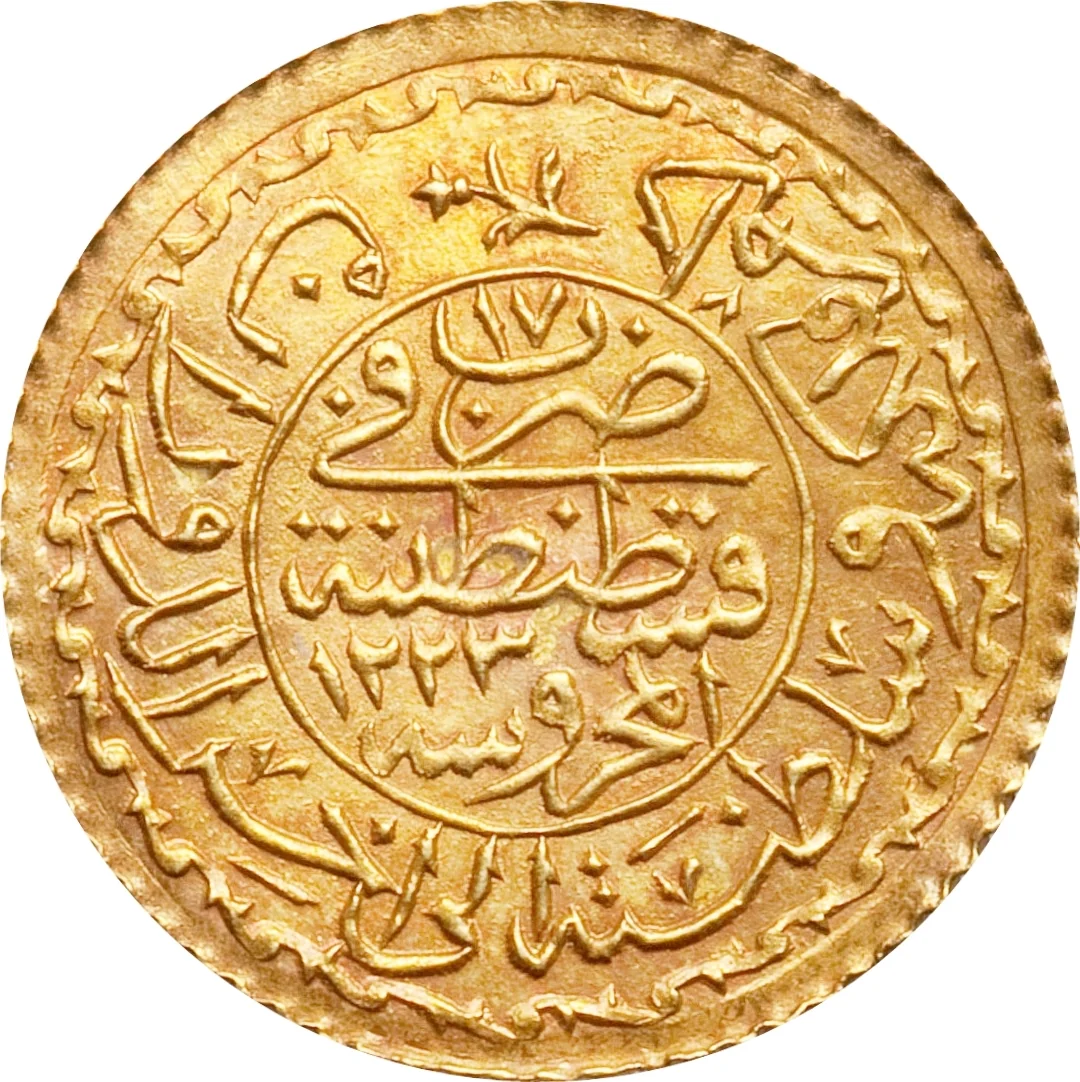
1 adli altin – Ottoman Empire
Add to wishlist
Turkey
Context
Years: 1823–1829
Country: Turkey
Issuer: Ottoman Empire
Ruler: Mahmud II
Currency:
(1688—1844)
Demonetized: Yes
Material
References
KM: #
Numista: #36945
Value
Bullion value: $184.74
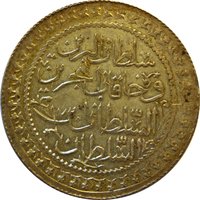
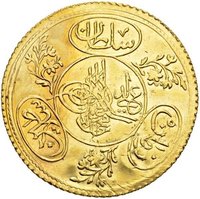
Obverse
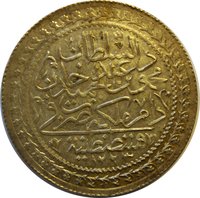
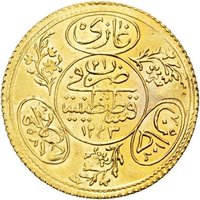
Reverse
Edge
Mints
| Name | Mark |
|---|---|
| Constantinople | — |
Mintings
| Year | Mint Mark | Mintage | Quality | Collection |
|---|---|---|---|---|
| 1823 | — | — | ||
| 1824 | — | — | ||
| 1825 | — | — | ||
| 1826 | — | — | ||
| 1827 | — | — | ||
| 1828 | — | — | ||
| 1829 | — | — |
Historical background
By 1823, the Ottoman Empire's currency system was in a state of profound crisis, characterized by severe depreciation and loss of confidence. The primary unit, the kuruş (piastre), had been repeatedly debased for decades to finance military campaigns and cover budget deficits. The state minted vast quantities of new, lower-silver-content kuruş, while older, purer coins were hoarded or melted down, leading to a chaotic circulation of coins of varying intrinsic value. This effectively created a dual system where the official esedi kuruş (accounting unit) and the market value of physical coins diverged sharply, causing widespread confusion in trade and tax collection.
The financial strain was exacerbated by the costly Greek War of Independence, which had begun in 1821. The rebellion not only cut off significant tax revenues from prosperous regions like the Morea but also demanded immense military expenditure for the Ottoman navy and army. With limited access to external credit, the Imperial Mint in Constantinople became a primary tool for funding the war, accelerating the debasement process. Consequently, the exchange rate against major European currencies like the British pound sterling and the French franc deteriorated rapidly, undermining both domestic and international commerce.
This monetary instability reflected the empire's broader struggle to adapt its pre-modern fiscal structures to the 19th-century world economy. While attempts at reform, such as those initiated under Sultan Mahmud II, were underway, they had not yet addressed the core monetary issues. The situation in 1823 was one of a fragile, inflationary economy where the state's financial weakness was visibly stamped onto the devalued coins in everyday use, eroding both economic stability and the government's credibility.
The financial strain was exacerbated by the costly Greek War of Independence, which had begun in 1821. The rebellion not only cut off significant tax revenues from prosperous regions like the Morea but also demanded immense military expenditure for the Ottoman navy and army. With limited access to external credit, the Imperial Mint in Constantinople became a primary tool for funding the war, accelerating the debasement process. Consequently, the exchange rate against major European currencies like the British pound sterling and the French franc deteriorated rapidly, undermining both domestic and international commerce.
This monetary instability reflected the empire's broader struggle to adapt its pre-modern fiscal structures to the 19th-century world economy. While attempts at reform, such as those initiated under Sultan Mahmud II, were underway, they had not yet addressed the core monetary issues. The situation in 1823 was one of a fragile, inflationary economy where the state's financial weakness was visibly stamped onto the devalued coins in everyday use, eroding both economic stability and the government's credibility.
💎 Extremely Rare