

1 fuang – Thailand
Add to wishlist
Thailand
Context
Year: 1860
Issuer: Thailand
Ruler: Phra Chom Klao
Currency:
(1869—1897)
Subdivision: 1 fuang = ⅛ Baht
Demonetized: Yes
Material
References
Y: #
Numista: #36784
Value
Bullion value: $4.96
Obverse
Description:
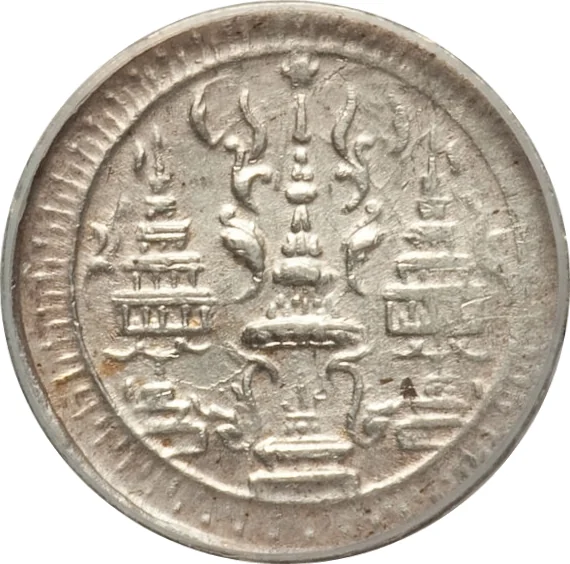
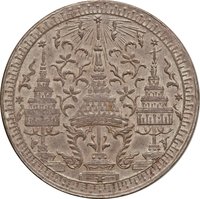
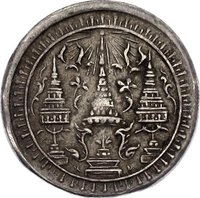
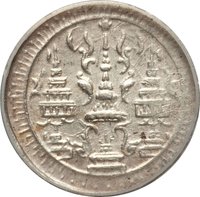
Royal monogram with Thai crown, nine-tiered umbrellas, and a prism atop a double-tiered tray.
Reverse
Description:
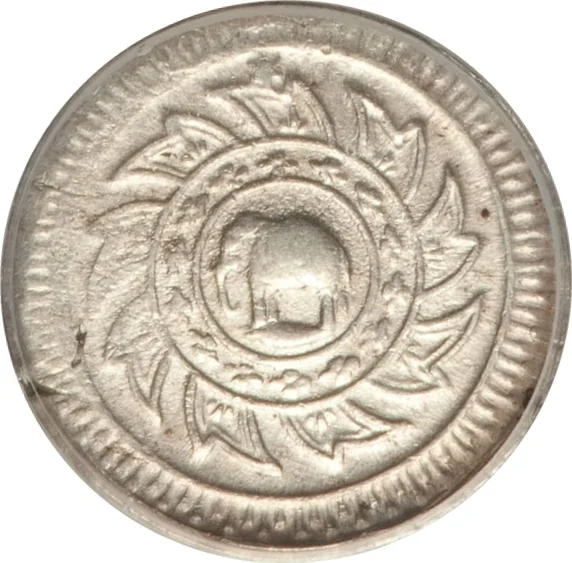
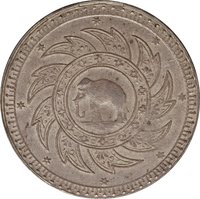
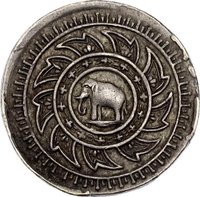
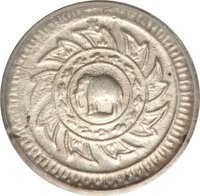
White Elephant within the Chakri dynasty's Chakra emblem.
Edge
Mintings
| Year | Mint Mark | Mintage | Quality | Collection |
|---|---|---|---|---|
| 1860 | — | — |
Historical background
In 1860, Thailand, then known as Siam, operated under a complex and fragmented pre-modern monetary system. The primary unit of account was the baht (or tical), a unit of weight for silver, but the actual circulating medium was a diverse array of physical objects. These included bullet-shaped silver coins known as pod duang, which were hand-struck and valued by weight, as well as cowrie shells, baked clay tokens, and foreign coins like Spanish and Mexican silver dollars. This system was highly inconvenient for trade, as transactions required meticulous weighing and assaying of metal, and the various media had fluctuating and regional values, hindering both internal commerce and growing international trade.
This monetary heterogeneity became an increasing problem as Siam was drawn deeper into the global economy through the Bowring Treaty of 1855. The treaty, which fixed import and export duties and granted extraterritorial rights to British subjects, spurred a rapid expansion in trade, particularly in rice and teak. Foreign merchants and diplomats consistently complained about the archaic currency, viewing it as an obstacle to efficient business. The Siamese monarchy, under King Mongkut (Rama IV), recognized that monetary reform was essential to modernize the state, strengthen sovereignty by controlling its own currency, and facilitate smoother fiscal administration.
Consequently, the 1860s marked a decisive transitional period. In 1860, the government took a major step by introducing the country's first flat coinage—machine-struck, round copper coins denominated in att and solot (fractions of the baht). This was followed in 1861 by the issuance of machine-struck silver baht coins, which began to circulate alongside the old pod duang. These reforms, initiated just before the reign of King Chulalongkorn, laid the foundational infrastructure for a unified, decimal-based national currency, setting Siam on a path toward the fully modern monetary system that would be consolidated in the late 19th century.
This monetary heterogeneity became an increasing problem as Siam was drawn deeper into the global economy through the Bowring Treaty of 1855. The treaty, which fixed import and export duties and granted extraterritorial rights to British subjects, spurred a rapid expansion in trade, particularly in rice and teak. Foreign merchants and diplomats consistently complained about the archaic currency, viewing it as an obstacle to efficient business. The Siamese monarchy, under King Mongkut (Rama IV), recognized that monetary reform was essential to modernize the state, strengthen sovereignty by controlling its own currency, and facilitate smoother fiscal administration.
Consequently, the 1860s marked a decisive transitional period. In 1860, the government took a major step by introducing the country's first flat coinage—machine-struck, round copper coins denominated in att and solot (fractions of the baht). This was followed in 1861 by the issuance of machine-struck silver baht coins, which began to circulate alongside the old pod duang. These reforms, initiated just before the reign of King Chulalongkorn, laid the foundational infrastructure for a unified, decimal-based national currency, setting Siam on a path toward the fully modern monetary system that would be consolidated in the late 19th century.
Series: 1860 Thailand circulation coins
💎 Very Rare