

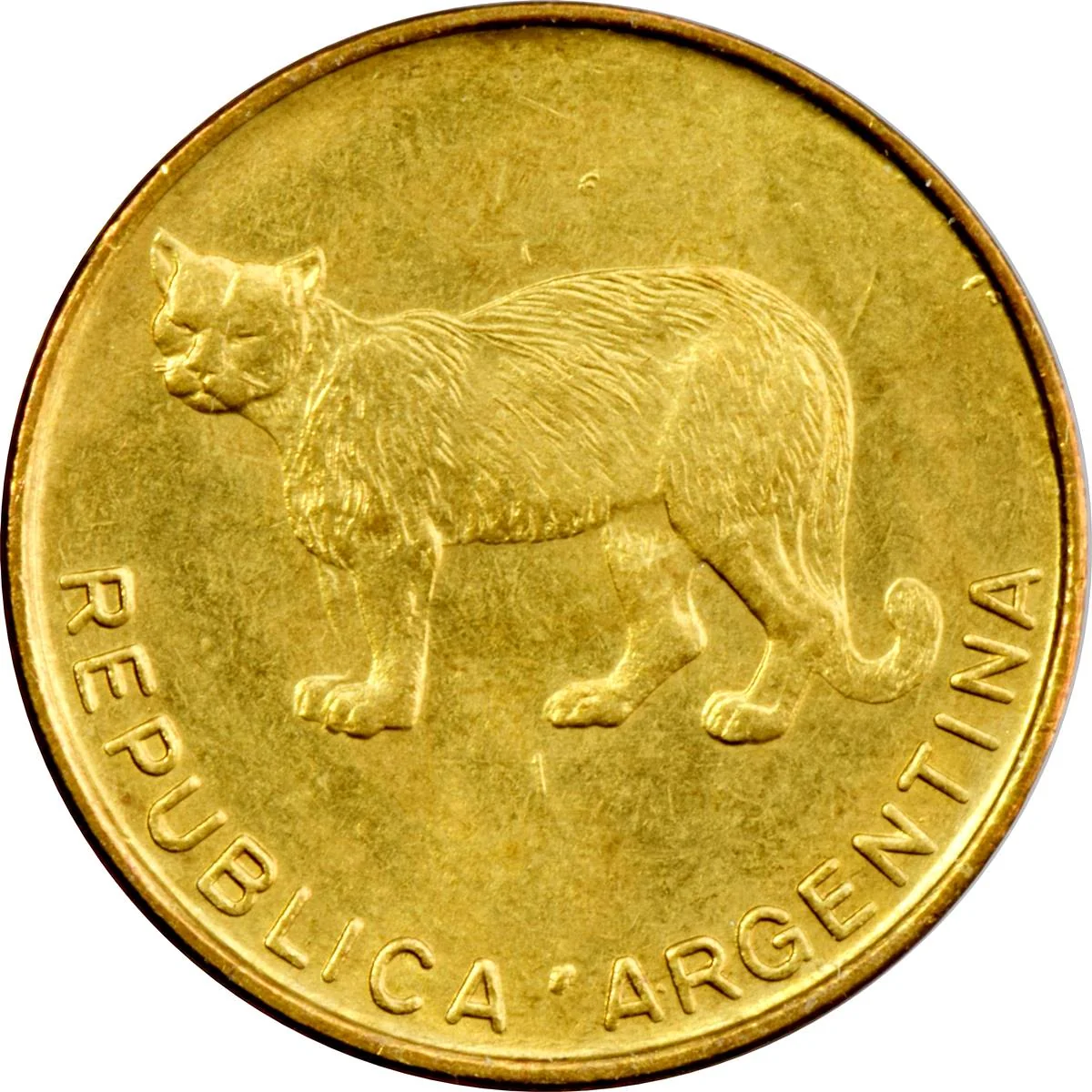
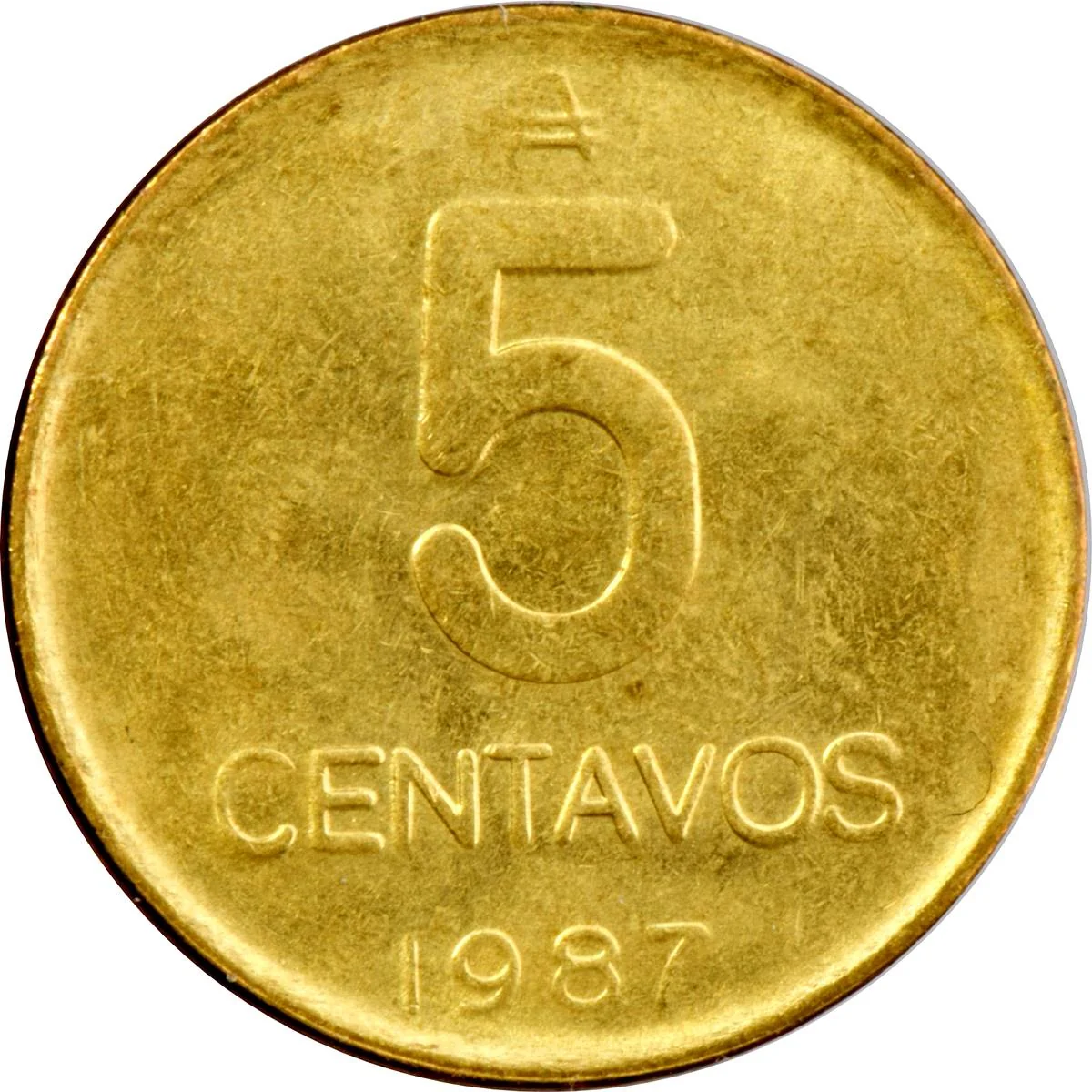
5 Centavos – Argentina
Argentina

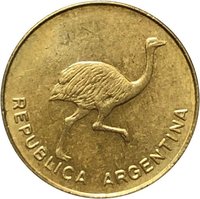
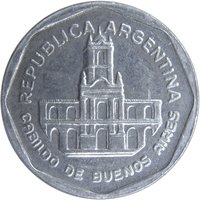
Obverse
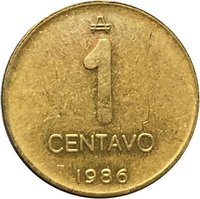
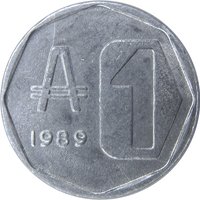
Reverse
Edge
Plain
Mints
| Name | Mark |
|---|---|
| Buenos Aires | — |
Mintings
| Year | Mint Mark | Mintage | Quality | Collection |
|---|---|---|---|---|
| 1986 | — | — | ||
| 1987 | — | 56,181,000 | ||
| 1988 | — | 23,895,000 |
Historical background
By 1986, Argentina was in the throes of a profound economic crisis, with its currency, the austral (introduced just the year before to replace the devalued peso argentino), already under severe strain. This period was defined by hyperinflation, which had been building for over a decade due to chronic fiscal deficits financed by the central bank, a massive external debt burden, and a loss of public confidence. The Austral Plan of 1985, a heterodox shock program under President Raúl Alfonsín, had provided only temporary relief, using a wage and price freeze to break inflationary inertia. However, by 1986, without sustained fiscal discipline, the underlying imbalances reasserted themselves, and inflation began to accelerate once more, eroding the austral's value at an alarming rate.
The currency situation was characterized by a rapid and unpredictable loss of purchasing power. Prices changed daily, and the public developed a behavior known as "flight from money," instantly converting australes into durable goods or stable foreign currencies like the US dollar at any opportunity. This dollarization of the economy further undermined monetary authority. The government resorted to frequent maxi-devaluations of the official exchange rate, but these were often behind the pace of inflation, creating a complex web of multiple exchange rates and a booming black market (the "dólar blue") where the austral traded at a significant discount.
Ultimately, 1986 marked the beginning of the failure of the Austral Plan and a return to the inflationary spiral that would define the remainder of the decade. Attempts to stabilize the currency through wage and price controls proved futile without addressing the core issue of the fiscal deficit. The erosion of the austral's value devastated real wages and savings, leading to widespread social unrest and setting the stage for even more severe hyperinflationary episodes in 1989 and 1990, which would eventually force a change of presidency and lead to the Convertibility Plan of 1991.
The currency situation was characterized by a rapid and unpredictable loss of purchasing power. Prices changed daily, and the public developed a behavior known as "flight from money," instantly converting australes into durable goods or stable foreign currencies like the US dollar at any opportunity. This dollarization of the economy further undermined monetary authority. The government resorted to frequent maxi-devaluations of the official exchange rate, but these were often behind the pace of inflation, creating a complex web of multiple exchange rates and a booming black market (the "dólar blue") where the austral traded at a significant discount.
Ultimately, 1986 marked the beginning of the failure of the Austral Plan and a return to the inflationary spiral that would define the remainder of the decade. Attempts to stabilize the currency through wage and price controls proved futile without addressing the core issue of the fiscal deficit. The erosion of the austral's value devastated real wages and savings, leading to widespread social unrest and setting the stage for even more severe hyperinflationary episodes in 1989 and 1990, which would eventually force a change of presidency and lead to the Convertibility Plan of 1991.
🌱 Very Common