

5 pounds – Gibraltar
Add to wishlist
United Kingdom
Context
Material
References
KM: #
Numista: #365714
Value
Exchange value: 5 GIP
Bullion value: $65.22
Inflation-adjusted value: 9.81 GIP
Obverse
Description:
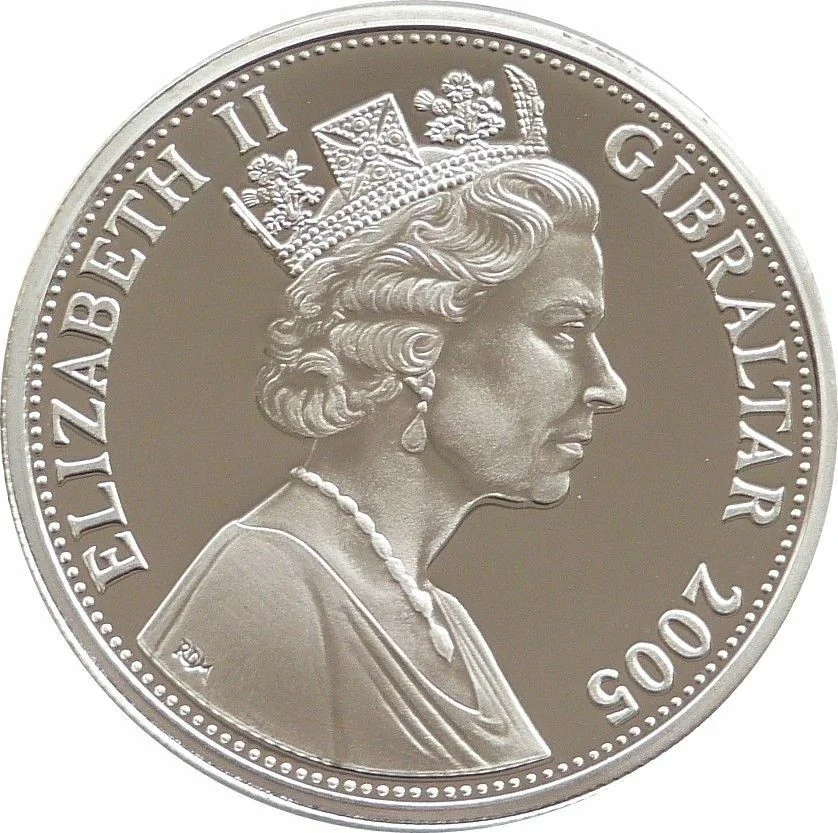
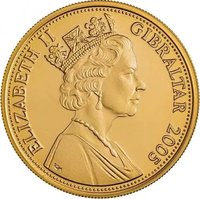
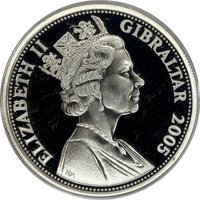
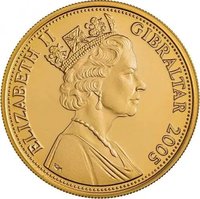
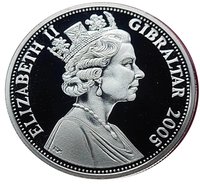
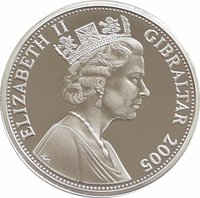
Bust of Elizabeth II
Inscription:
ELIZABETH II GIBRALTAR 2005
RDM
RDM
Script: Latin
Engraver: Raphael David Maklouf
Reverse
Description:
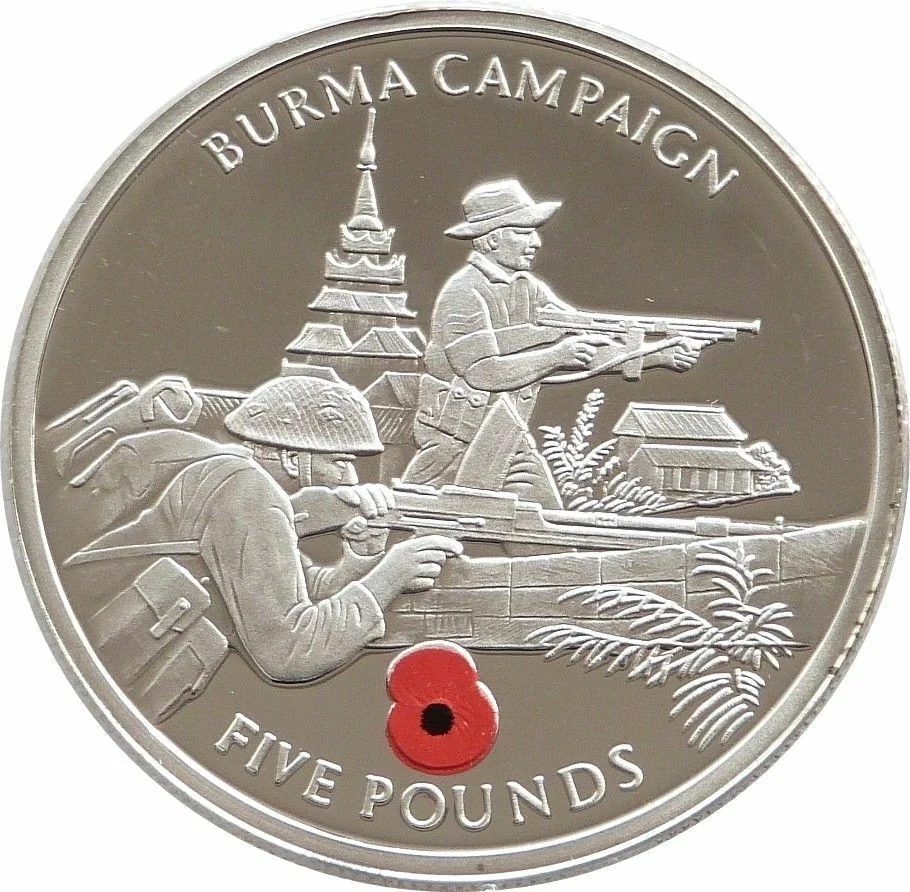
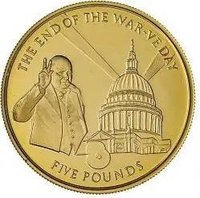
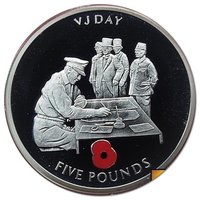
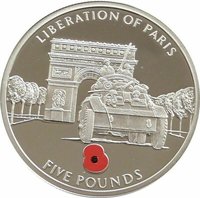
Soldiers firing near an Asian temple.
Inscription:
BURMA CAMPAIGN
FIVE POUNDS
FIVE POUNDS
Script: Latin
Engraver: David Cornell
Edge
Reeded
Mints
| Name | Mark |
|---|---|
| Tower Mint | — |
Mintings
| Year | Mint Mark | Mintage | Quality | Collection |
|---|---|---|---|---|
| 2005 | — | — | Proof |
Historical background
In 2005, Gibraltar's currency situation was defined by its unique political status as a British Overseas Territory and its practical economic integration with neighboring Spain. The legal tender was, and remains, the Gibraltar pound (GIP), issued by the Government of Gibraltar and pegged at par with the British pound sterling (GBP). Sterling notes and coins also circulated freely and were accepted interchangeably with local currency, reflecting the territory's constitutional link to the United Kingdom. However, Gibraltar pound notes were not generally accepted in the UK, creating a one-sided currency flow.
Despite the official currency being the Gibraltar pound, the economic reality on the ground was one of significant de facto euroization due to Gibraltar's close ties with Spain. Spanish workers commuted daily, and tourism from the European mainland was vital. Consequently, many retail businesses, especially those in the main town area catering to visitors, readily accepted euros, though often at exchange rates less favorable than official banks. This created a dual-currency environment where both pounds and euros were used in daily transactions, with change sometimes given in a mixture of both.
The year 2005 fell within the period following Gibraltar's 2004 referendum, which overwhelmingly rejected the principle of shared sovereignty with Spain. This political context underpinned the currency dynamics, as any suggestion of moving away from the sterling peg was highly sensitive, seen as a matter of national identity and sovereignty. Therefore, while the euro was pragmatically accommodated for convenience, the formal commitment to the sterling peg remained politically unshakeable, ensuring monetary stability aligned with the UK while managing the practical needs of a border economy.
Despite the official currency being the Gibraltar pound, the economic reality on the ground was one of significant de facto euroization due to Gibraltar's close ties with Spain. Spanish workers commuted daily, and tourism from the European mainland was vital. Consequently, many retail businesses, especially those in the main town area catering to visitors, readily accepted euros, though often at exchange rates less favorable than official banks. This created a dual-currency environment where both pounds and euros were used in daily transactions, with change sometimes given in a mixture of both.
The year 2005 fell within the period following Gibraltar's 2004 referendum, which overwhelmingly rejected the principle of shared sovereignty with Spain. This political context underpinned the currency dynamics, as any suggestion of moving away from the sterling peg was highly sensitive, seen as a matter of national identity and sovereignty. Therefore, while the euro was pragmatically accommodated for convenience, the formal commitment to the sterling peg remained politically unshakeable, ensuring monetary stability aligned with the UK while managing the practical needs of a border economy.
Series: World War II
✨ Legendary