

5 yuan – People's Republic of China
Add to wishlist
Circulating commemorative coins
Commemoration: Mount Huangshan
China
Context
Year: 2022
Country: China
Issuer: People's Republic of China
Period:
(since 1949)
Currency:
(since 1955)
Material
Weight: 11.49 g
Thickness: 2.26 mm
Shape: Square with rounded corners
Composition: Brass
Magnetic: No
Technique: Milled
Alignment: Medal alignment
flip
References
Numista: #365701
Value
Exchange value: 5 CNY
Inflation-adjusted value: 5.09 CNY
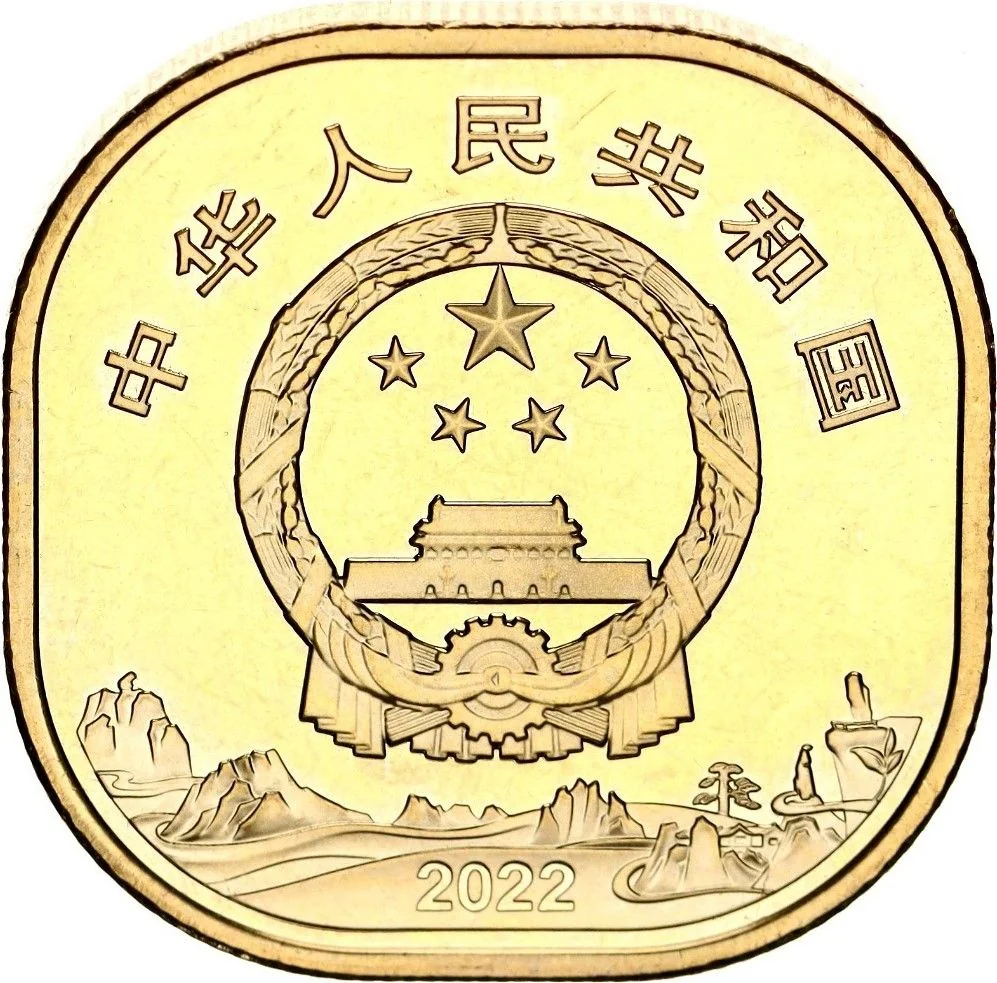
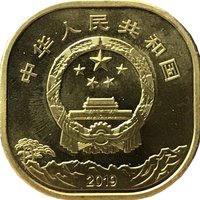
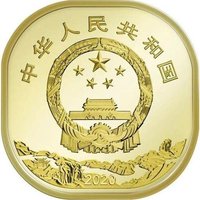
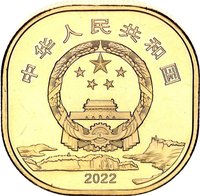
Obverse
Inscription:
中华人民共和国
2022
2022
Translation:
People's Republic of China
2022
2022
Script: Chinese (simplified)
Language: Chinese
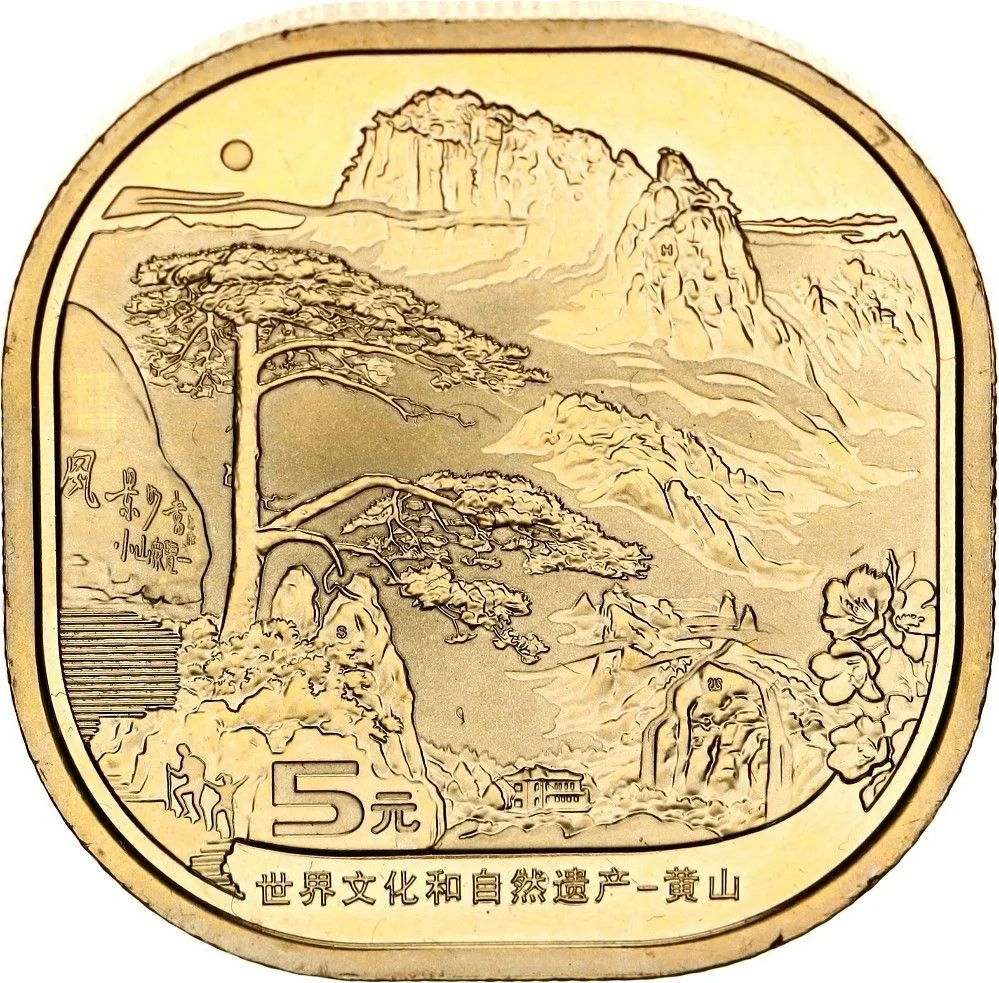
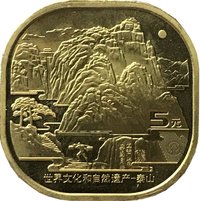
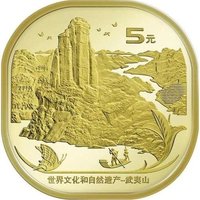
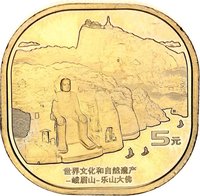
Reverse
Inscription:
5元
世界文化和自然遗产—黄山
世界文化和自然遗产—黄山
Translation:
Five Yuan
World Cultural and Natural Heritage—Mount Huangshan
World Cultural and Natural Heritage—Mount Huangshan
Script: Chinese (simplified)
Language: Chinese
Edge
Mintings
| Year | Mint Mark | Mintage | Quality | Collection |
|---|---|---|---|---|
| 2022 | — | — |
Historical background
In 2022, the People's Republic of China's currency, the renminbi (RMB), experienced significant volatility against a surging US dollar, driven by divergent monetary policies. While the US Federal Reserve aggressively raised interest rates to combat inflation, the People's Bank of China (PBOC) maintained an accommodative stance to support a domestic economy weakened by strict COVID-19 lockdowns and a property sector crisis. This policy divergence led to sustained capital outflow pressures and a sharp depreciation of the RMB, which weakened past the psychologically important 7-per-dollar level in September for the first time in two years.
Authorities responded with a multi-pronged approach to stabilize the currency and manage expectations. The PBOC utilized its toolkit, including setting stronger-than-expected daily midpoint fixings, lowering the foreign exchange reserve requirement ratio for financial institutions, and issuing verbal warnings against speculative trading. Crucially, China's substantial foreign exchange reserves, strict capital controls, and state-dominated financial system provided the authorities with powerful levers to prevent a disorderly decline, prioritizing stability over market-driven fluctuations.
The currency's weakness presented a complex trade-off for policymakers. A weaker RMB benefited export competitiveness, a critical economic pillar during weak domestic demand. However, it also raised the cost of imports, exacerbated dollar-denominated debt burdens for Chinese firms, and risked triggering further capital flight. Ultimately, 2022 highlighted the RMB's managed float regime in action, where market forces were allowed to express directional pressure, but within strict boundaries set by the state to ensure financial stability and align with broader macroeconomic goals.
Authorities responded with a multi-pronged approach to stabilize the currency and manage expectations. The PBOC utilized its toolkit, including setting stronger-than-expected daily midpoint fixings, lowering the foreign exchange reserve requirement ratio for financial institutions, and issuing verbal warnings against speculative trading. Crucially, China's substantial foreign exchange reserves, strict capital controls, and state-dominated financial system provided the authorities with powerful levers to prevent a disorderly decline, prioritizing stability over market-driven fluctuations.
The currency's weakness presented a complex trade-off for policymakers. A weaker RMB benefited export competitiveness, a critical economic pillar during weak domestic demand. However, it also raised the cost of imports, exacerbated dollar-denominated debt burdens for Chinese firms, and risked triggering further capital flight. Ultimately, 2022 highlighted the RMB's managed float regime in action, where market forces were allowed to express directional pressure, but within strict boundaries set by the state to ensure financial stability and align with broader macroeconomic goals.


🌱 Fairly Common