

2 lire – Vatican City
Add to wishlist
Vatican City
Context
Years: 1970–1977
Issuer: Vatican City
Ruler: Paul VI
Currency:
(1929—2001)
Demonetization: 6 January 1996
Total mintage: 1,019,000
Material
References
KM: #
Numista: #3633
Value
Exchange value: 2 VAL
Obverse
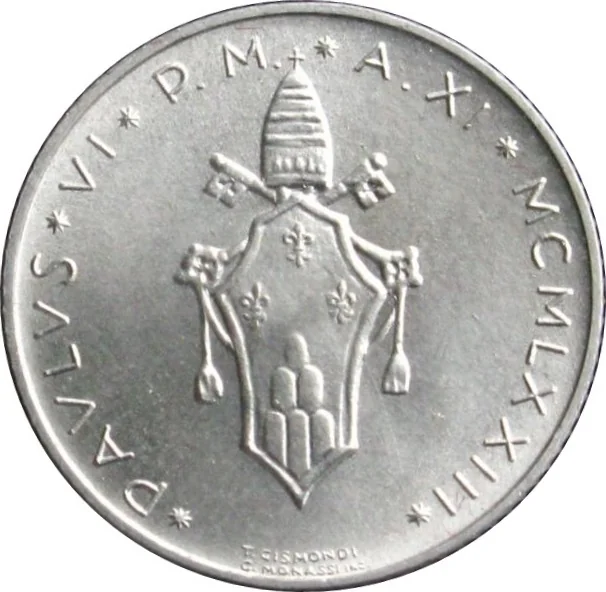
Description:
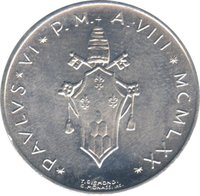
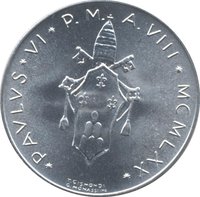
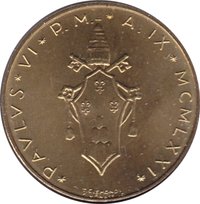
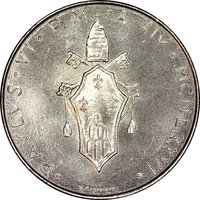
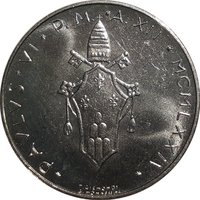
Vatican City's arms and date.
Inscription:
PAVLVS VI * P.M.* A.XV * MCMLXXVII*
Script: Latin
Engraver: Tomas Gismondi
Reverse
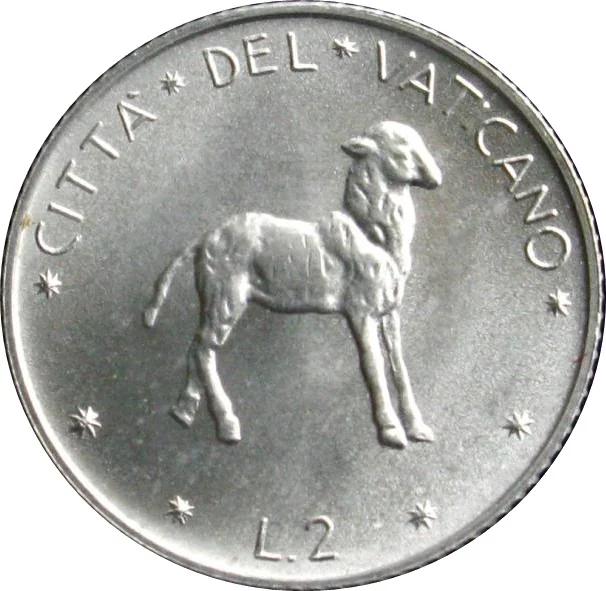
Description:
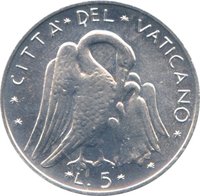
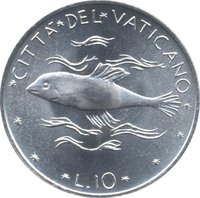
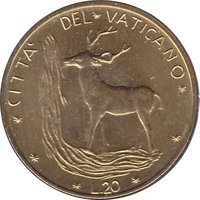
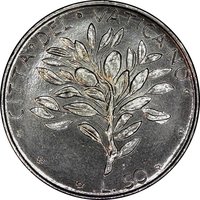
Lamb with country name above, denomination below.
Inscription:
CITTA' DEL VATICANO
L2
L2
Translation:
Vatican City
Script: Latin
Language: Italian
Engraver: Tomas Gismondi
Edge
Milled
Categories
| Animal> Sheep |
| Symbols> Coat of Arms |
| Symbol> Fleur-de-lis |
Mintings
| Year | Mint Mark | Mintage | Quality | Collection |
|---|---|---|---|---|
| 1970 | — | 100,000 | ||
| 1971 | — | 110,000 | ||
| 1972 | — | 110,000 | ||
| 1973 | — | 132,000 | ||
| 1974 | — | 132,000 | ||
| 1975 | — | 150,000 | ||
| 1976 | — | 150,000 | ||
| 1977 | — | 135,000 |
Historical background
In 1970, the currency situation in Vatican City was defined by its unique status as a sovereign city-state without an independent monetary system. Like today, it did not mint its own circulating currency for general economic activity. Instead, its operational finances relied on the Italian lira, as outlined in the 1929 Lateran Treaty that established Vatican City's sovereignty. This treaty granted the Vatican the right to issue its own coins, but these were primarily commemorative and numismatic pieces, struck in limited quantities and valued in lire, intended for collectors rather than for daily commerce within its walls.
The year 1970, however, was significant as it marked the final series of Vatican coins issued under the authority of Pope Paul VI that were still denominated in the Italian lira ("L."). These coins, though legal tender in Italy and San Marino due to a monetary convention, were not a practical part of the Italian money supply. The Vatican's real financial engine was (and remains) the Institute for the Works of Religion (IOR), often called the Vatican Bank, which managed assets and conducted transactions in various international currencies, including the US dollar and, crucially, the Italian lira for regional expenses.
This arrangement was stable but entirely dependent on Italy's monetary system. The backdrop of the early 1970s was a period of increasing economic turbulence in Italy, with inflation beginning to rise, foreshadowing the "Years of Lead" economic crisis. This dependency meant that the Vatican's local currency stability was indirectly tied to the Italian economy's health. The situation would remain largely unchanged until 2002, when the Vatican, following Italy's lead, adopted the euro as its official currency, transitioning from the lira-based system that defined its practical monetary life in 1970.
The year 1970, however, was significant as it marked the final series of Vatican coins issued under the authority of Pope Paul VI that were still denominated in the Italian lira ("L."). These coins, though legal tender in Italy and San Marino due to a monetary convention, were not a practical part of the Italian money supply. The Vatican's real financial engine was (and remains) the Institute for the Works of Religion (IOR), often called the Vatican Bank, which managed assets and conducted transactions in various international currencies, including the US dollar and, crucially, the Italian lira for regional expenses.
This arrangement was stable but entirely dependent on Italy's monetary system. The backdrop of the early 1970s was a period of increasing economic turbulence in Italy, with inflation beginning to rise, foreshadowing the "Years of Lead" economic crisis. This dependency meant that the Vatican's local currency stability was indirectly tied to the Italian economy's health. The situation would remain largely unchanged until 2002, when the Vatican, following Italy's lead, adopted the euro as its official currency, transitioning from the lira-based system that defined its practical monetary life in 1970.
🌱 Very Common