

20000 Réis – Brazil
Brazil
Context

Material
References
KM: #Click to copy to clipboard463
Numista: #36322
Value
Bullion value: $2742.46
Obverse
Description:
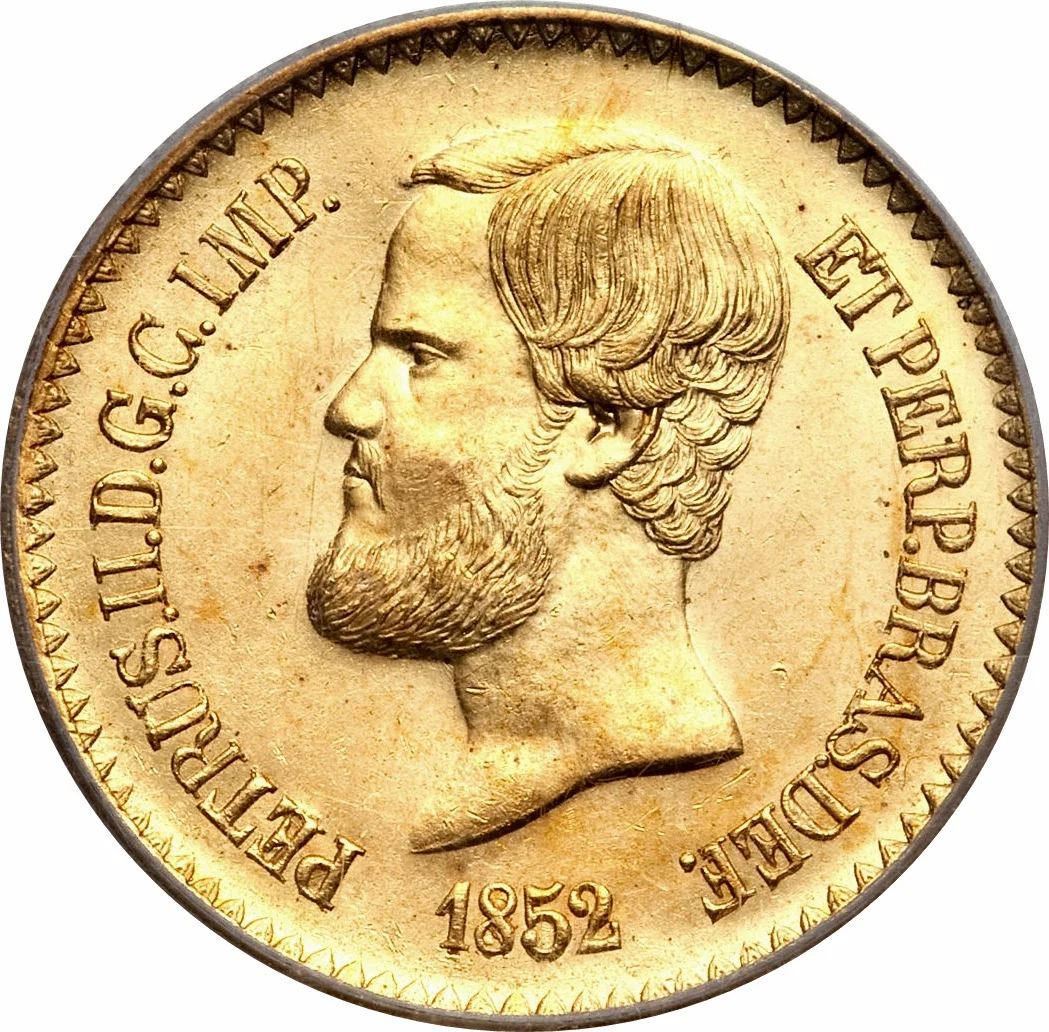
Pedro II's left bust, dated 1852, is flanked by the Latin inscriptions PETRUS II.D.G.C.IMP. and ET PERP.BRAS.DEF.
Inscription:
PETRUS.II.D.G.C.IMP. ET PERP.BRAS.DEF.
1852
1852
Translation:
Peter II, by the Grace of God, Constitutional Emperor and Perpetual Defender of Brazil.
1852
1852
Script: Latin
Language: Latin
Reverse
Edge
Reeded
Categories
| Symbols> Coat of Arms |
Mintings
| Year | Mint Mark | Mintage | Quality | Collection |
|---|---|---|---|---|
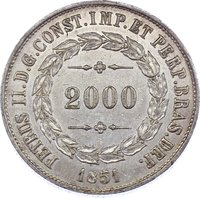
| 1851 | — | 302,553 | ||
| 1852 | — | 185,670 |
Historical background
In 1851, Brazil's currency system was a complex and unstable legacy of its colonial past and the economic turbulence following independence in 1822. The monetary landscape was characterized by a severe shortage of metallic coinage, particularly copper and silver, for everyday transactions. This scarcity was exacerbated by the widespread circulation of a multitude of foreign coins, alongside a confusing system of accounting based on the réis, which operated on a cumbersome scale of 1,000 réis (or milréis). The real value of coins in circulation often deviated wildly from their official face value, leading to chronic confusion, counterfeiting, and a profound lack of public confidence in the medium of exchange.
The core of the problem lay in the government's persistent issuance of paper money, known as papel-moeda, to cover chronic budget deficits, especially during conflicts like the Cisplatine War and the Ragamuffin War. By 1851, this paper currency was deeply depreciated, trading at a significant discount to its nominal value in gold. This created a damaging dual system where daily commerce relied on a patchwork of unreliable tokens, while larger domestic and international trade required gold or sterling bills of exchange. The situation stifled economic growth, complicated government finance, and hindered Brazil's integration into the global economy during a period of expanding coffee exports.
Recognizing this crisis, the 1850s became a pivotal decade for monetary reform. The groundwork was being laid in 1851, following the end of the Platine wars, which allowed the government to focus on domestic stability. The key legislative response came shortly after, with the Law of Impediments (Lei de Impedimentos) of 1853, which aimed to withdraw the devalued paper money from circulation. This set the stage for the more comprehensive reform of the Visconde de Itaboraí in 1853-1854, which ultimately established a new, unified currency based on gold, finally beginning the process of stabilizing Brazil's monetary system. Thus, 1851 represents the final year of a prolonged period of monetary chaos, immediately preceding the decisive reforms that would modernize the Brazilian economy.
The core of the problem lay in the government's persistent issuance of paper money, known as papel-moeda, to cover chronic budget deficits, especially during conflicts like the Cisplatine War and the Ragamuffin War. By 1851, this paper currency was deeply depreciated, trading at a significant discount to its nominal value in gold. This created a damaging dual system where daily commerce relied on a patchwork of unreliable tokens, while larger domestic and international trade required gold or sterling bills of exchange. The situation stifled economic growth, complicated government finance, and hindered Brazil's integration into the global economy during a period of expanding coffee exports.
Recognizing this crisis, the 1850s became a pivotal decade for monetary reform. The groundwork was being laid in 1851, following the end of the Platine wars, which allowed the government to focus on domestic stability. The key legislative response came shortly after, with the Law of Impediments (Lei de Impedimentos) of 1853, which aimed to withdraw the devalued paper money from circulation. This set the stage for the more comprehensive reform of the Visconde de Itaboraí in 1853-1854, which ultimately established a new, unified currency based on gold, finally beginning the process of stabilizing Brazil's monetary system. Thus, 1851 represents the final year of a prolonged period of monetary chaos, immediately preceding the decisive reforms that would modernize the Brazilian economy.
💎 Very Rare