

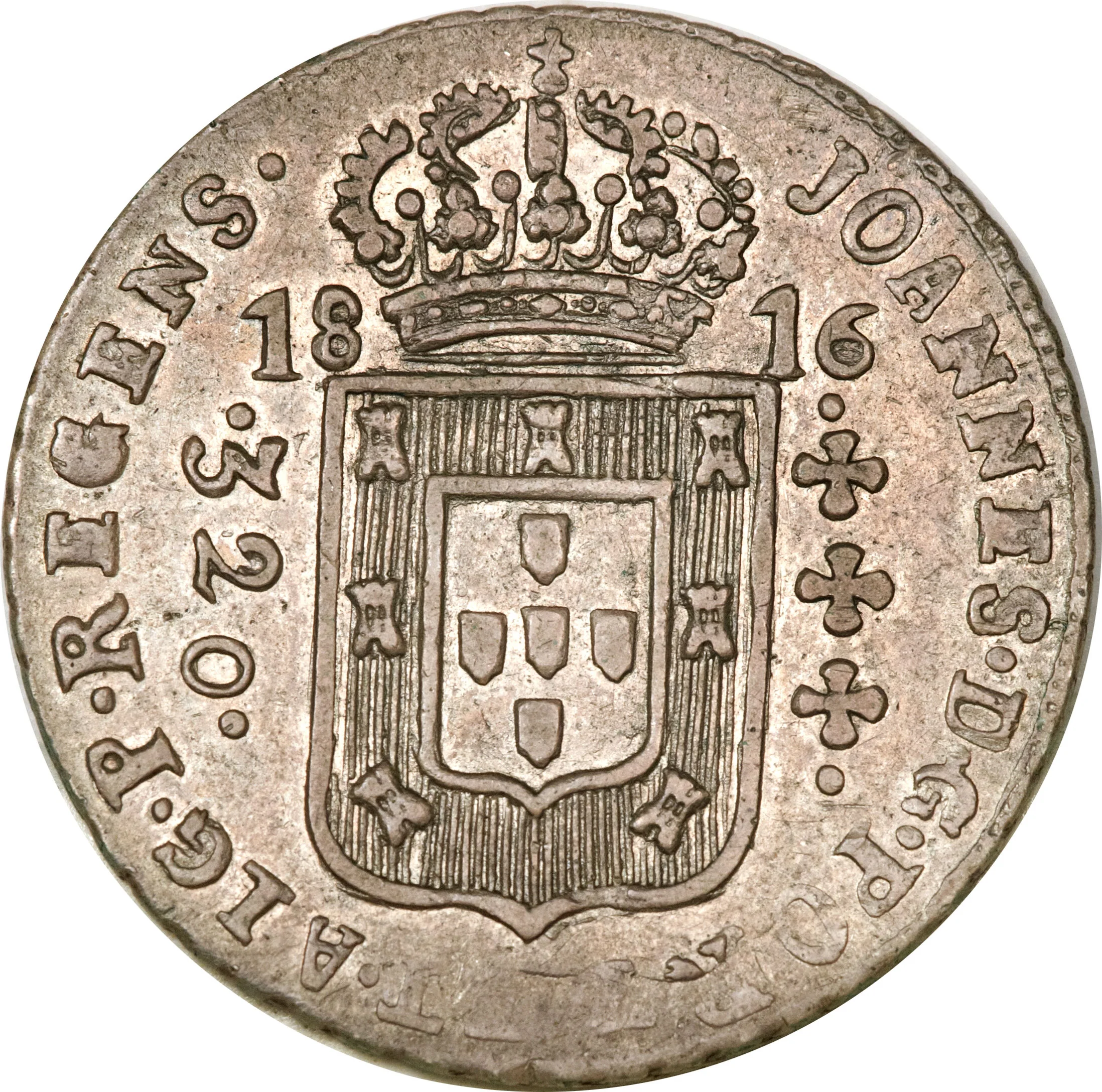
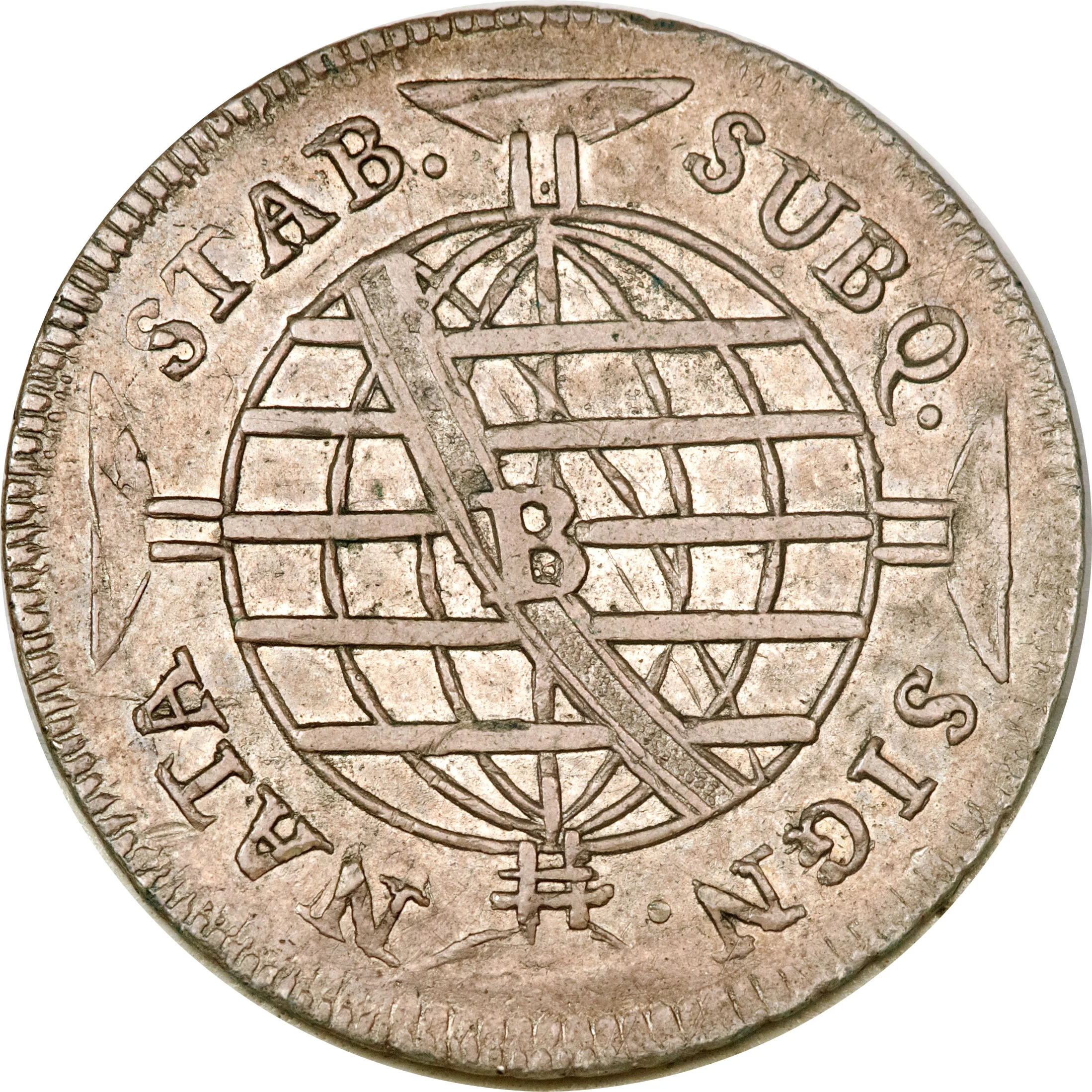

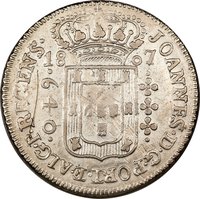
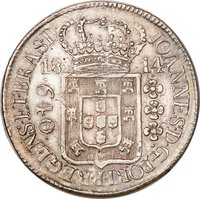
Obverse
Description:
Royal coin.
Inscription:
JOANNES. D. G. PORT. ET ALG. P. REGENS
18 16
320
18 16
320
Translation:
John, by the Grace of God, Prince Regent of Portugal and the Algarves
18 16
320
18 16
320
Script: Latin
Languages: Latin, Portuguese Abbreviation.
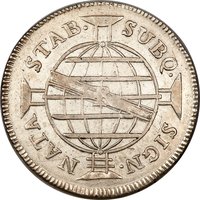
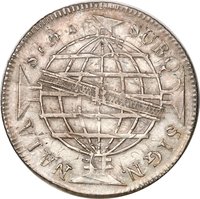
Reverse
Edge
Mintings
| Year | Mint Mark | Mintage | Quality | Collection |
|---|---|---|---|---|
| 1809 | R | 6,479 | ||
| 1810 | B | — | ||
| 1812 | R | 14,033 | ||
| 1812 | M | — | ||
| 1813 | R | 11,874 | ||
| 1814 | M | — | ||
| 1816 | B | — | ||
| 1816 | M | — | ||
| 1817 | R | 7,479 |
Historical background
In 1809, Brazil's currency situation was defined by scarcity, inconsistency, and the unique pressures of being the seat of the Portuguese Empire. Following the flight of the Portuguese royal court from Lisbon to Rio de Janeiro in 1808 to escape Napoleon's invasion, the colony experienced a sudden and dramatic transformation. The arrival of the court, its bureaucracy, and thousands of nobles created a surge in demand for goods and services, straining a monetary system that was historically underdeveloped and reliant on a chaotic mix of coinage from Portugal, Spain, and its American colonies.
The primary circulating medium was a bewildering array of metallic coins, most notably the real (plural: réis), but their physical supply was insufficient for the booming economy. This shortage was exacerbated by Portugal's own economic difficulties, which limited minting and shipments of new coin from Europe. To address the crisis, the Prince Regent Dom João authorized the establishment of the first official mint in Brazil, the Casa da Moeda do Brasil, which began operations in Rio de Janeiro in 1694 but saw renewed importance. In 1809, it was actively striking copper vilréis and silver patacões, but production struggled to keep pace with demand, leading to widespread use of cut and counterstamped foreign coins, particularly Spanish American pieces.
Furthermore, this period saw the first steps toward a paper money system. In 1808, the Banco do Brasil was founded, primarily to finance the state and facilitate commerce for the newly arrived elite. While its early banknotes were more like interest-bearing bonds and not yet a widespread circulating currency, their creation in 1809 marked a pivotal shift. The bank's notes began to alleviate the metallic coin shortage for large transactions, laying the foundational infrastructure for a future national financial system, even as the everyday economy in 1809 remained plagued by coin shortages, variable valuations, and a complex monetary landscape inherited from the colonial era.
The primary circulating medium was a bewildering array of metallic coins, most notably the real (plural: réis), but their physical supply was insufficient for the booming economy. This shortage was exacerbated by Portugal's own economic difficulties, which limited minting and shipments of new coin from Europe. To address the crisis, the Prince Regent Dom João authorized the establishment of the first official mint in Brazil, the Casa da Moeda do Brasil, which began operations in Rio de Janeiro in 1694 but saw renewed importance. In 1809, it was actively striking copper vilréis and silver patacões, but production struggled to keep pace with demand, leading to widespread use of cut and counterstamped foreign coins, particularly Spanish American pieces.
Furthermore, this period saw the first steps toward a paper money system. In 1808, the Banco do Brasil was founded, primarily to finance the state and facilitate commerce for the newly arrived elite. While its early banknotes were more like interest-bearing bonds and not yet a widespread circulating currency, their creation in 1809 marked a pivotal shift. The bank's notes began to alleviate the metallic coin shortage for large transactions, laying the foundational infrastructure for a future national financial system, even as the everyday economy in 1809 remained plagued by coin shortages, variable valuations, and a complex monetary landscape inherited from the colonial era.
💎 Extremely Rare