

100 tenge – Kazakhstan
Add to wishlist
Kazakhstan
Context
Material
Diameter: 33 mm
Weight: 15 g
Thickness: 2.35 mm
Shape: Round
Composition: Copper-nickel
Technique: Milled
Alignment: Medal alignment
flip
References
KM: #
Numista: #362302
Value
Exchange value: 100 KZT
Obverse
Description:
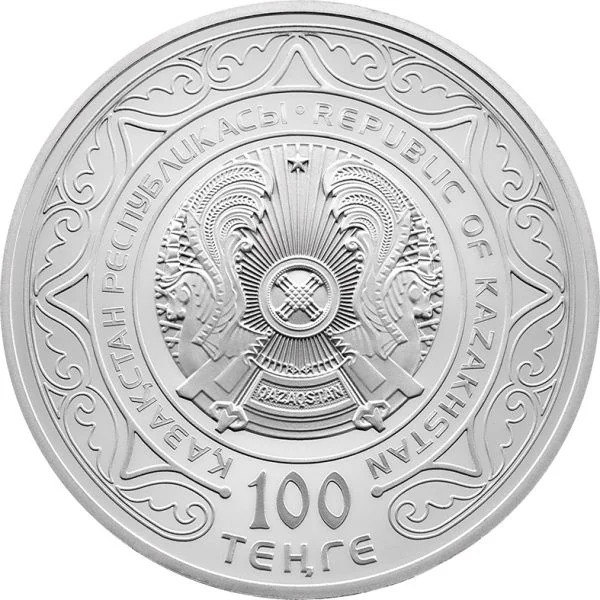
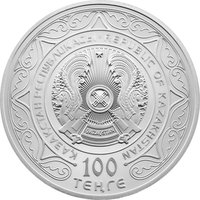
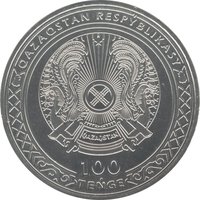
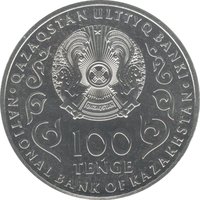
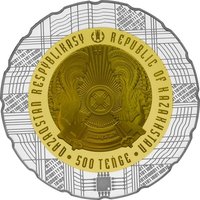
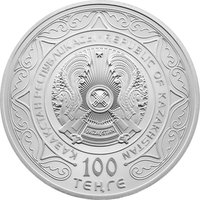
The coin features national ornaments around its edge, the State Emblem of Kazakhstan at its center surrounded by the country's name in Kazakh and English, and the denomination at the bottom.
Inscription:
ҚАЗАҚСТАН РЕСПУБЛИКАСЫ • REPUBLIC OF KAZAKHSTAN
100 ТЕҢГЕ
100 ТЕҢГЕ
Translation:
REPUBLIC OF KAZAKHSTAN
100 TENGE
100 TENGE
Reverse
Description:
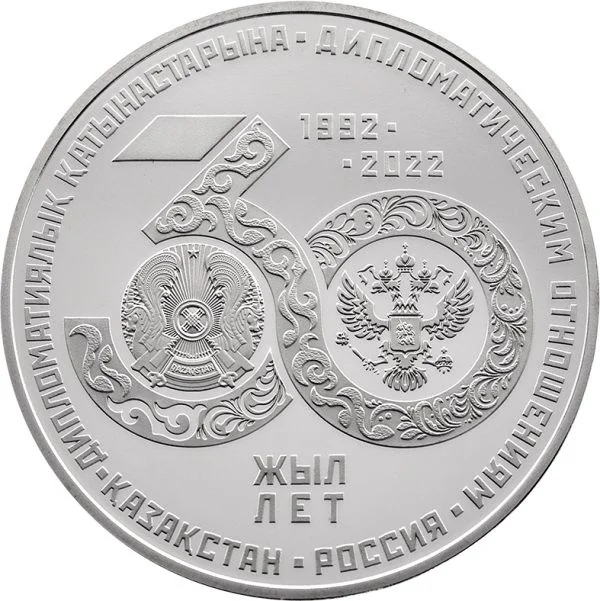
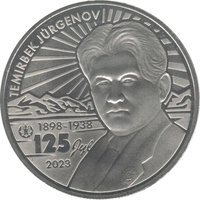
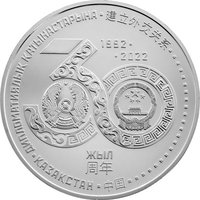
This coin marks 30 years of Kazakhstan-Russia diplomatic relations. Its center features the number "30" as an infinity symbol, enclosing the national emblems of both countries. Inscriptions are in Kazakh and Russian.
Inscription:
1992
2022
2022
Translation:
1992
2022
2022
Script: Cyrillic
Language: English
Edge
Categories
| Symbol> Double-headed eagle |
| Symbols> Coat of Arms |
Mints
| Name | Mark |
|---|---|
| Kazakhstan Mint | — |
Mintings
| Year | Mint Mark | Mintage | Quality | Collection |
|---|---|---|---|---|
| 2022 | — | 3,000 | Prooflike |
Historical background
In early 2022, Kazakhstan's currency, the tenge, was experiencing relative stability, bolstered by high global oil prices and a managed float regime supervised by the National Bank of Kazakhstan (NBK). This period of calm followed years of volatility after the 2015 shift to a free float. However, the underlying structure remained sensitive to external shocks, with the NBK maintaining a significant reserve buffer and occasionally intervening to smooth excessive fluctuations. The economy's heavy dependence on hydrocarbon exports meant the tenge's fate was closely tied to the price of oil and the economic health of its major trading partners, particularly Russia.
The geopolitical landscape dramatically shifted with Russia's invasion of Ukraine in February 2022. While high commodity prices initially provided a fiscal and current account surplus, the tenge faced intense pressure from secondary sanctions risk and regional uncertainty. The situation intensified in the wake of sweeping international sanctions against Russia, as Kazakhstan sought to carefully navigate its economic and political relationships. This led to significant volatility, with the tenge experiencing sharp depreciation against the US dollar in March, prompting the NBK to hike its base rate and intervene to stabilize the financial system.
By the latter half of 2022, the tenge had entered a new phase of pronounced weakness, becoming one of the worst-performing currencies globally that year. This was primarily driven by the creation of a wide sanctions-induced trade gap with Russia, as imports from its northern neighbor surged while export routes for Kazakh oil were disrupted. The NBK largely ceased its heavy interventions, allowing the currency to absorb the external shocks, which led to a depreciation of nearly 20% against the dollar between July and October. This depreciation, while challenging for inflation and borrowers, also reflected a market-driven adjustment to the radically altered post-invasion economic realities in the region.
The geopolitical landscape dramatically shifted with Russia's invasion of Ukraine in February 2022. While high commodity prices initially provided a fiscal and current account surplus, the tenge faced intense pressure from secondary sanctions risk and regional uncertainty. The situation intensified in the wake of sweeping international sanctions against Russia, as Kazakhstan sought to carefully navigate its economic and political relationships. This led to significant volatility, with the tenge experiencing sharp depreciation against the US dollar in March, prompting the NBK to hike its base rate and intervene to stabilize the financial system.
By the latter half of 2022, the tenge had entered a new phase of pronounced weakness, becoming one of the worst-performing currencies globally that year. This was primarily driven by the creation of a wide sanctions-induced trade gap with Russia, as imports from its northern neighbor surged while export routes for Kazakh oil were disrupted. The NBK largely ceased its heavy interventions, allowing the currency to absorb the external shocks, which led to a depreciation of nearly 20% against the dollar between July and October. This depreciation, while challenging for inflation and borrowers, also reflected a market-driven adjustment to the radically altered post-invasion economic realities in the region.
Series: Notable events and people
✨ Legendary