

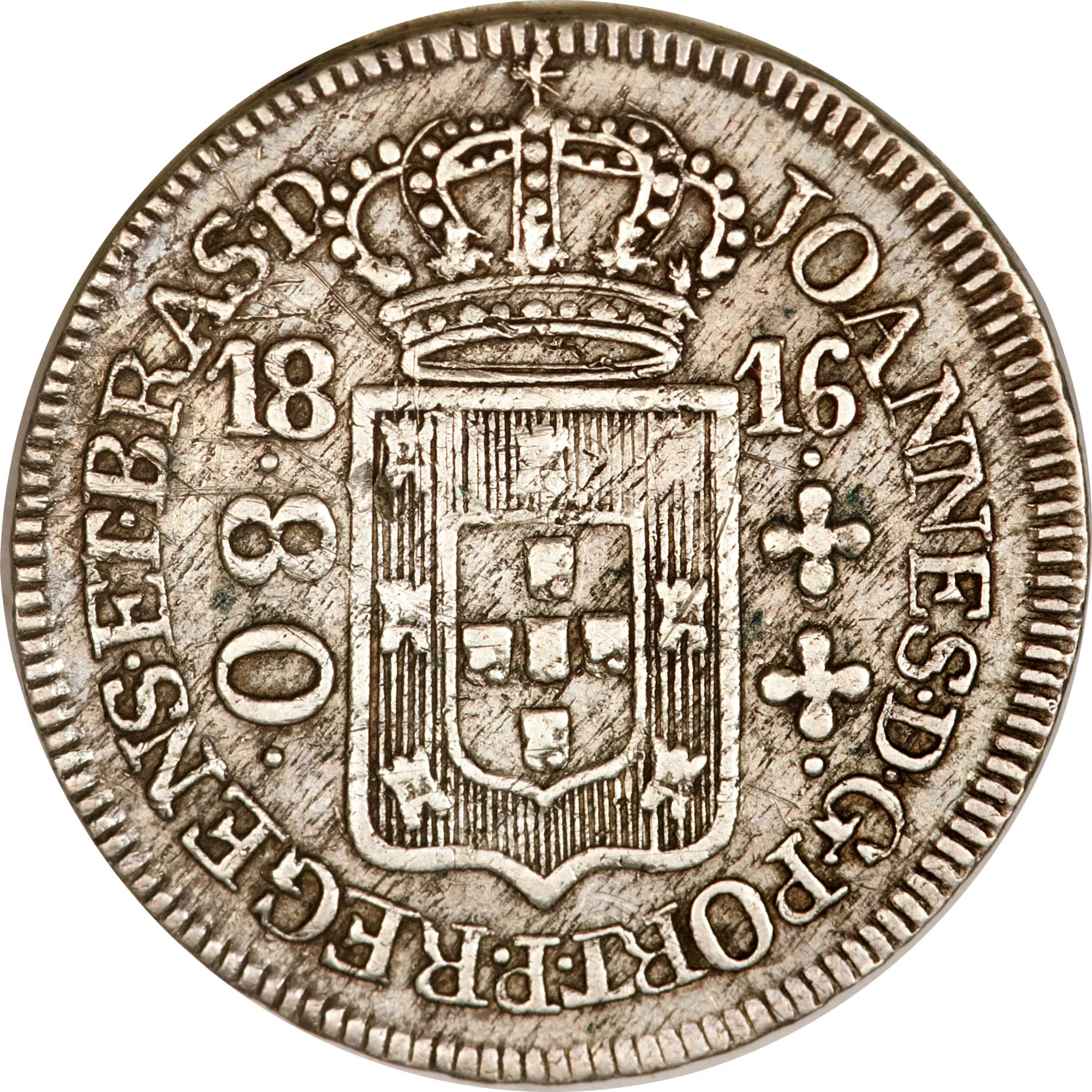

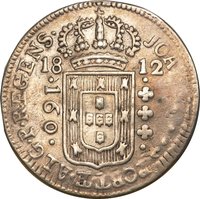
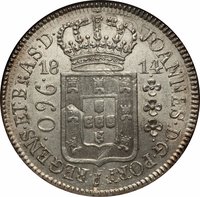
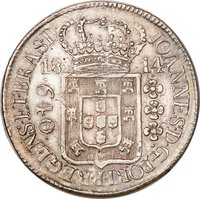
Obverse
Description:
Crest and title.
Inscription:
JOANNES.D.G.PORT.P.REGENS.ET.BRAS.D
18 16
80
18 16
80
Translation:
By the Grace of God, John, Prince of Portugal, Regent, and Lord of Brazil.
18 16
80
18 16
80
Script: Latin
Languages: Latin, Portuguese
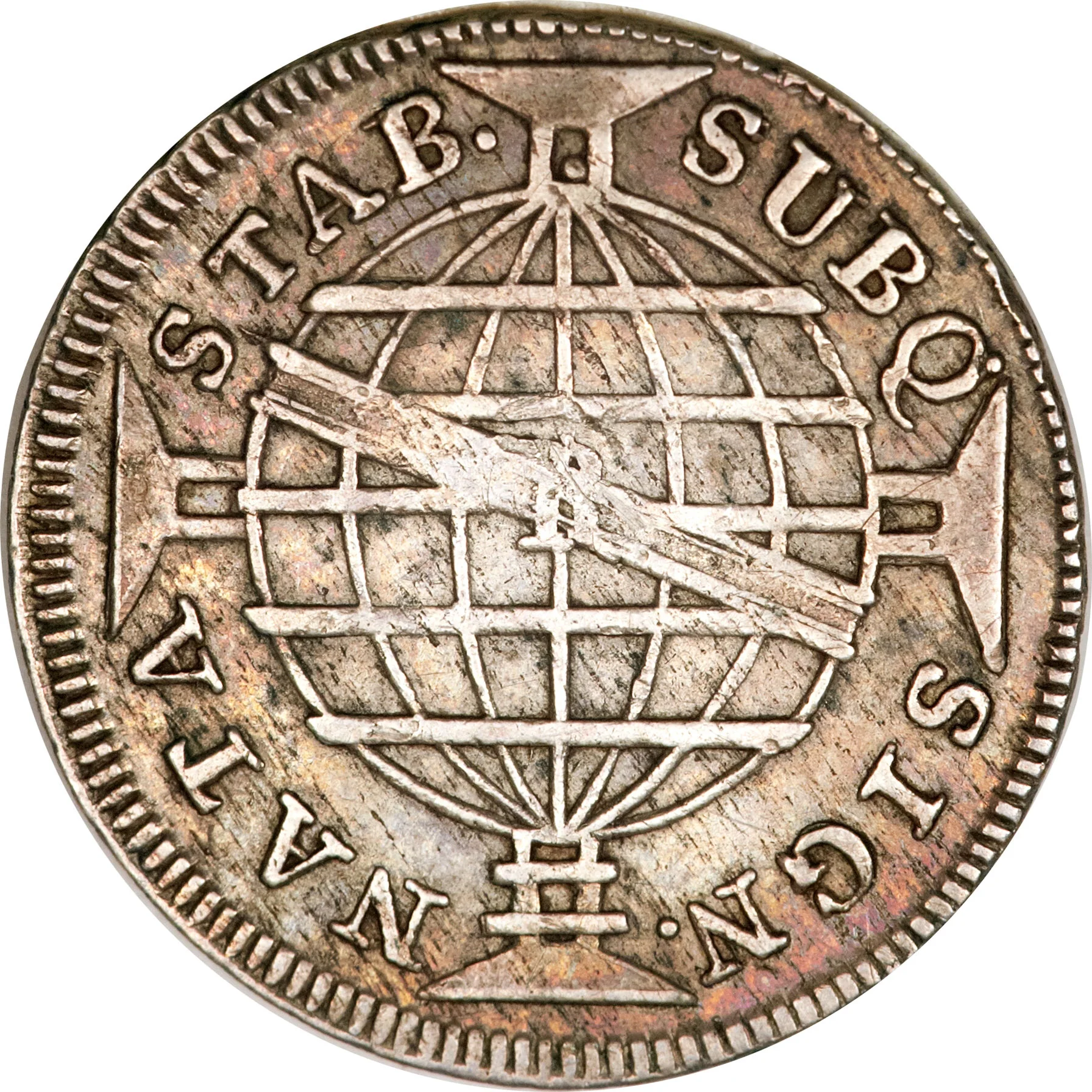
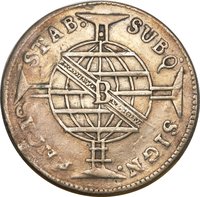
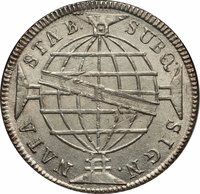
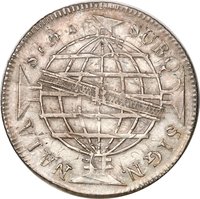
Reverse
Edge
Mints
| Name | Mark |
|---|---|
| Casa da Moeda do Brasil | R |
Historical background
In 1810, Brazil's currency situation was complex and strained, reflecting its unique political status as the seat of the Portuguese Empire. Following the flight of the Portuguese royal court from Lisbon to Rio de Janeiro in 1808 to escape Napoleon's invasion, Brazil was elevated from a colony to the de facto capital of the empire. This sudden shift created immense economic pressure, as the arrival of the court, its bureaucracy, and associated nobles dramatically increased local demand for goods and services, while government expenditures soared to fund the new imperial administration.
The monetary system was a fragmented mix of metallic and paper currency, plagued by scarcity and inflation. The primary circulating coin was the real (plural: réis), but the gold and silver coins in circulation were often worn, clipped, and of inconsistent value. To address the severe shortage of specie, the first official Brazilian bank, the Banco do Brasil, was founded in 1808 and began issuing paper notes. However, these early banknotes were not fully backed by precious metals and were primarily used to finance government debts and imports, leading to a rapid depreciation in their value and contributing to inflationary pressures.
Furthermore, the opening of Brazilian ports to "friendly nations" in 1808, chiefly Great Britain through the Treaty of 1810, intensified monetary challenges. The treaty granted British goods preferential tariff rates, leading to a flood of imports that drained gold and silver out of the country to pay for them. This trade imbalance, combined with the expanding money supply from banknote emissions, resulted in a significant decline in the external value of Brazilian currency. Thus, in 1810, the currency system was caught between the demands of a nascent state apparatus, uncontrolled issuance of paper money, and an unfavorable trade balance that depleted its metallic reserves.
The monetary system was a fragmented mix of metallic and paper currency, plagued by scarcity and inflation. The primary circulating coin was the real (plural: réis), but the gold and silver coins in circulation were often worn, clipped, and of inconsistent value. To address the severe shortage of specie, the first official Brazilian bank, the Banco do Brasil, was founded in 1808 and began issuing paper notes. However, these early banknotes were not fully backed by precious metals and were primarily used to finance government debts and imports, leading to a rapid depreciation in their value and contributing to inflationary pressures.
Furthermore, the opening of Brazilian ports to "friendly nations" in 1808, chiefly Great Britain through the Treaty of 1810, intensified monetary challenges. The treaty granted British goods preferential tariff rates, leading to a flood of imports that drained gold and silver out of the country to pay for them. This trade imbalance, combined with the expanding money supply from banknote emissions, resulted in a significant decline in the external value of Brazilian currency. Thus, in 1810, the currency system was caught between the demands of a nascent state apparatus, uncontrolled issuance of paper money, and an unfavorable trade balance that depleted its metallic reserves.
💎 Extremely Rare