

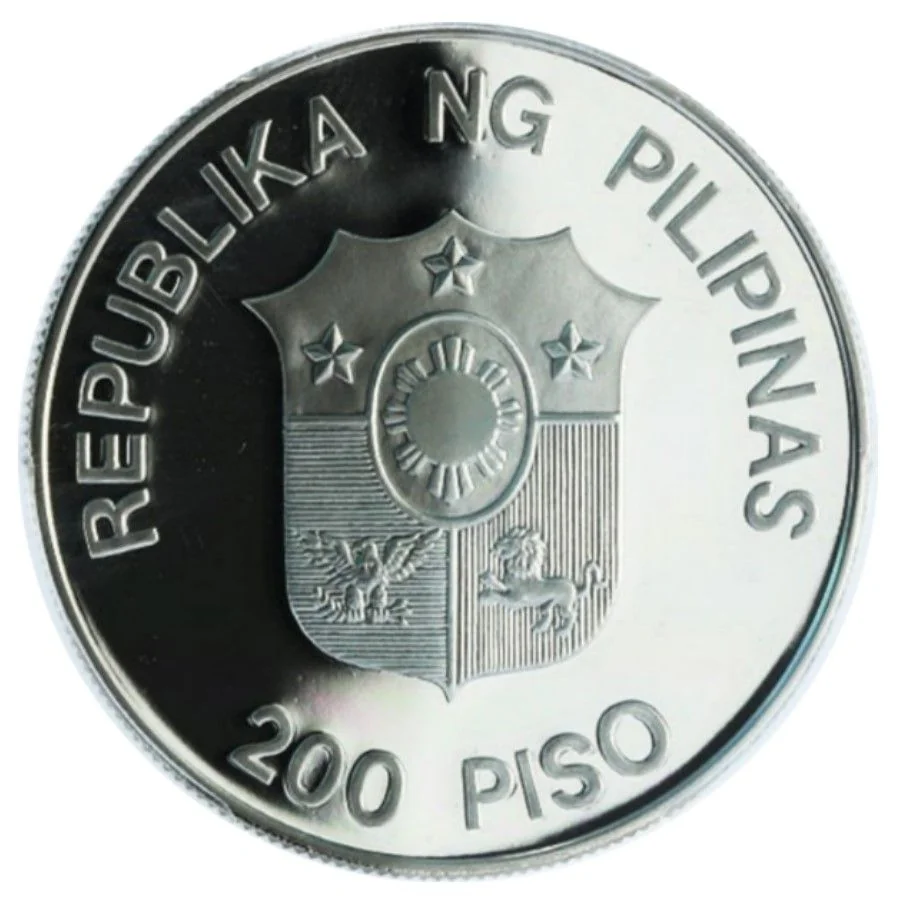
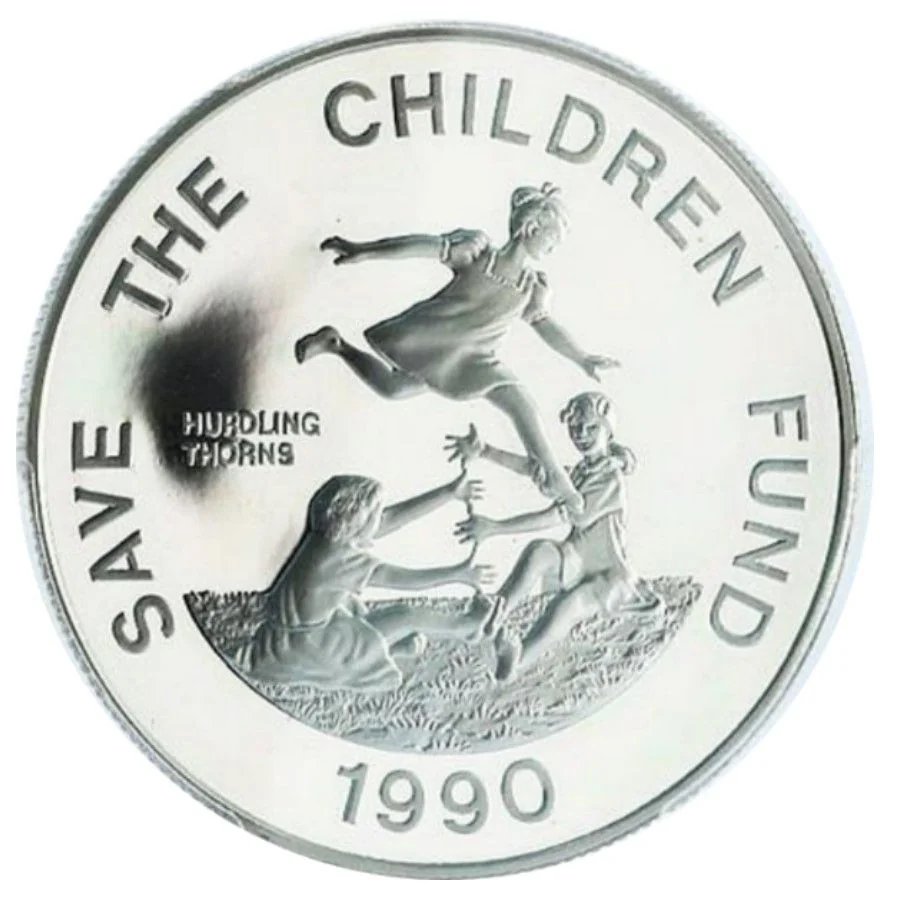
200 pesos – Philippines
Add to wishlist
Non-circulating coins
Commemoration: Save the Children Fund
Philippines
Context
Year: 1990
Issuer: Philippines
Period:
(since 1946)
Currency:
(since 1967)
Demonetization: 30 April 2019
Total mintage: 20,000
Material
References
KM: #
Numista: #140744
Value
Exchange value: 200 PHP
Bullion value: $57.95
Obverse
Reverse
Edge
Reeded
Categories
| Symbols> Coat of Arms |
Mints
| Name | Mark |
|---|---|
| Royal Mint | — |
Mintings
| Year | Mint Mark | Mintage | Quality | Collection |
|---|---|---|---|---|
| 1990 | — | 20,000 | Proof |
Historical background
The Philippines entered the 1990s under the weight of a severe foreign debt crisis and a legacy of political instability, which directly constrained its currency, the peso. The 1980s had been a "lost decade" of economic stagnation following the assassination of Benigno Aquino Jr. and the subsequent People Power Revolution that ousted Ferdinand Marcos in 1986. The new government of Corazon Aquino inherited massive external debt and was forced to implement austerity measures and seek debt rescheduling from international creditors. Consequently, the Central Bank of the Philippines operated in a defensive mode throughout the late 1980s, heavily intervening in the market and imposing strict exchange controls to conserve scarce foreign reserves, which led to a complex system of multiple exchange rates.
By 1990, the currency regime was in a state of controlled but pressured devaluation. The government maintained a "managed float" system, where the peso was pegged to the US dollar but periodically adjusted. High inflation, persistent trade deficits, and the lingering debt overhang created constant downward pressure on the peso's value. The Central Bank was frequently forced to devalue the currency officially to align with economic realities, moving from around ₱21 to the US dollar at the start of the decade to approximately ₱28 by 1992. This period was marked by frequent bouts of speculation against the peso, draining the country's international reserves and limiting its ability to finance essential imports.
The situation culminated in a critical juncture in 1990-1991, exacerbated by domestic and external shocks. The July 1990 earthquake, the eruption of Mount Pinatubo in June 1991, and the subsequent closure of U.S. military bases at Subic Bay and Clark dealt severe blows to infrastructure and the economy, further undermining confidence. These events strained fiscal resources and heightened investor uncertainty, leading to capital flight and intense pressure on the peso. This turbulent backdrop set the stage for the more significant foreign exchange crisis that would unfold later in the decade, ultimately pushing the Philippines to undertake major financial reforms, including the liberalization of foreign exchange controls in the early 1990s and the adoption of a more market-determined exchange rate system.
By 1990, the currency regime was in a state of controlled but pressured devaluation. The government maintained a "managed float" system, where the peso was pegged to the US dollar but periodically adjusted. High inflation, persistent trade deficits, and the lingering debt overhang created constant downward pressure on the peso's value. The Central Bank was frequently forced to devalue the currency officially to align with economic realities, moving from around ₱21 to the US dollar at the start of the decade to approximately ₱28 by 1992. This period was marked by frequent bouts of speculation against the peso, draining the country's international reserves and limiting its ability to finance essential imports.
The situation culminated in a critical juncture in 1990-1991, exacerbated by domestic and external shocks. The July 1990 earthquake, the eruption of Mount Pinatubo in June 1991, and the subsequent closure of U.S. military bases at Subic Bay and Clark dealt severe blows to infrastructure and the economy, further undermining confidence. These events strained fiscal resources and heightened investor uncertainty, leading to capital flight and intense pressure on the peso. This turbulent backdrop set the stage for the more significant foreign exchange crisis that would unfold later in the decade, ultimately pushing the Philippines to undertake major financial reforms, including the liberalization of foreign exchange controls in the early 1990s and the adoption of a more market-determined exchange rate system.
✨ Legendary