

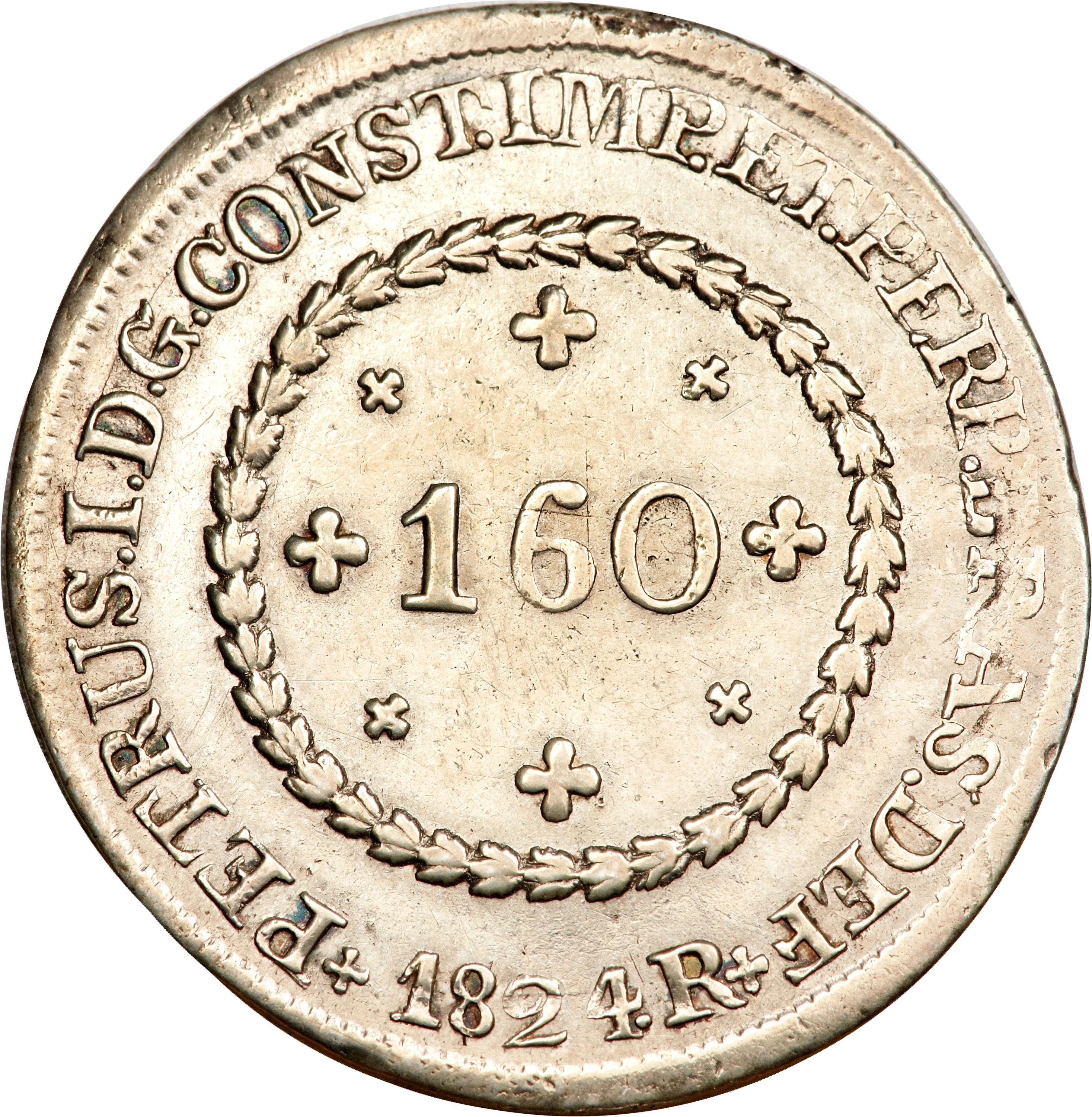
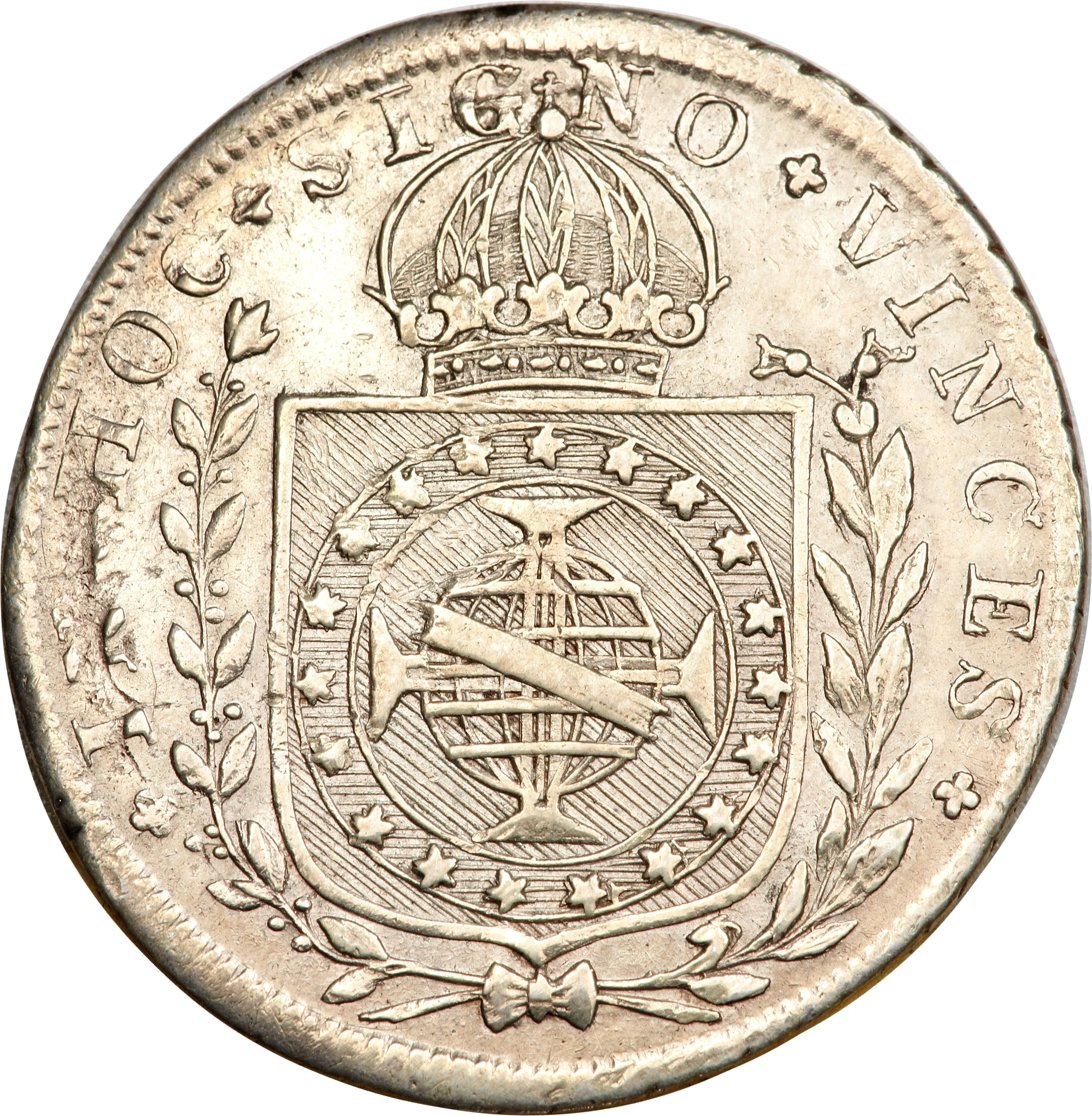
160 réis – Brazil
Add to wishlist
Brazil
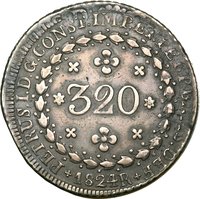
Obverse
Description:
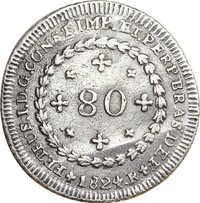
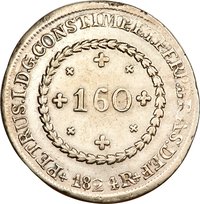
Denomination within floral wreath.
Inscription:
PETRUS.I.D.G.CONST.IMP.ET.PREP.BRAS.DEF
160
1824R
160
1824R
Script: Latin
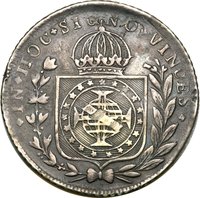
Reverse
Edge
Mints
| Name | Mark |
|---|---|
| Casa da Moeda do Brasil | R |
Historical background
In 1824, Brazil's currency situation was characterized by instability and fragmentation, a direct legacy of its colonial past and the turbulent process of independence declared just two years prior. The monetary system was a complex patchwork inherited from Portugal, primarily based on the réis (plural réis, denoted by the symbol "Rs$"). The standard unit was the mil-réis (1,000 réis), which served as the accounting basis for most transactions. However, the physical currency in circulation was a chaotic mix of Portuguese coins, older Brazilian mintings, and a flood of debased and counterfeit coins, leading to significant confusion and a lack of uniform value.
The root of the problem lay in a severe shortage of official, high-value metallic coinage. To address this chronic shortage, previous governments had allowed the circulation of low-quality copper coins and even privately issued tokens. Furthermore, the first independent Brazilian bank, the Banco do Brasil (founded in 1808), had issued paper notes, but these were not yet a trusted or widely accepted medium outside major commercial centers like Rio de Janeiro. Consequently, regional economies often relied on primitive barter or various foreign coins, undermining national economic integration and the authority of the new imperial government under Emperor Pedro I.
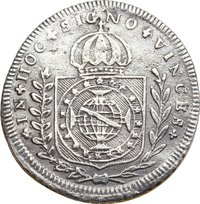
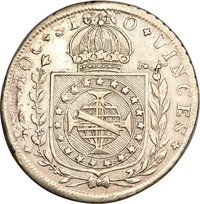
Recognizing that monetary chaos was a threat to both sovereignty and economic development, the imperial government took decisive action in 1824. A pivotal step was the issuance of a new, standardized national coinage. These coins, minted in copper (40 and 80 réis) and silver (960, 800, and 400 réis), prominently featured the Emperor's bust and the new national coat of arms, serving as potent symbols of a unified Brazilian state. This reform was a foundational attempt to consolidate monetary authority, promote confidence in the currency, and facilitate commerce, setting the stage for future, though still challenging, financial policies of the Brazilian Empire.
The root of the problem lay in a severe shortage of official, high-value metallic coinage. To address this chronic shortage, previous governments had allowed the circulation of low-quality copper coins and even privately issued tokens. Furthermore, the first independent Brazilian bank, the Banco do Brasil (founded in 1808), had issued paper notes, but these were not yet a trusted or widely accepted medium outside major commercial centers like Rio de Janeiro. Consequently, regional economies often relied on primitive barter or various foreign coins, undermining national economic integration and the authority of the new imperial government under Emperor Pedro I.
Recognizing that monetary chaos was a threat to both sovereignty and economic development, the imperial government took decisive action in 1824. A pivotal step was the issuance of a new, standardized national coinage. These coins, minted in copper (40 and 80 réis) and silver (960, 800, and 400 réis), prominently featured the Emperor's bust and the new national coat of arms, serving as potent symbols of a unified Brazilian state. This reform was a foundational attempt to consolidate monetary authority, promote confidence in the currency, and facilitate commerce, setting the stage for future, though still challenging, financial policies of the Brazilian Empire.
Series: 1824 Brazil circulation coins
💎 Extremely Rare