

50 lire – Vatican City
Add to wishlist
Vatican City
Context
Year: 1969
Issuer: Vatican City
Ruler: Paul VI
Currency:
(1929—2001)
Demonetization: 1 March 2002
Total mintage: 190,000
Material
Diameter: 24.8 mm
Weight: 6.2 g
Thickness: 2 mm
Shape: Round
Composition: Stainless steel
Technique: Milled
Alignment: Coin alignment
flip
References
KM: #
Numista: #3620
Value
Exchange value: 50 VAL
Obverse
Description:
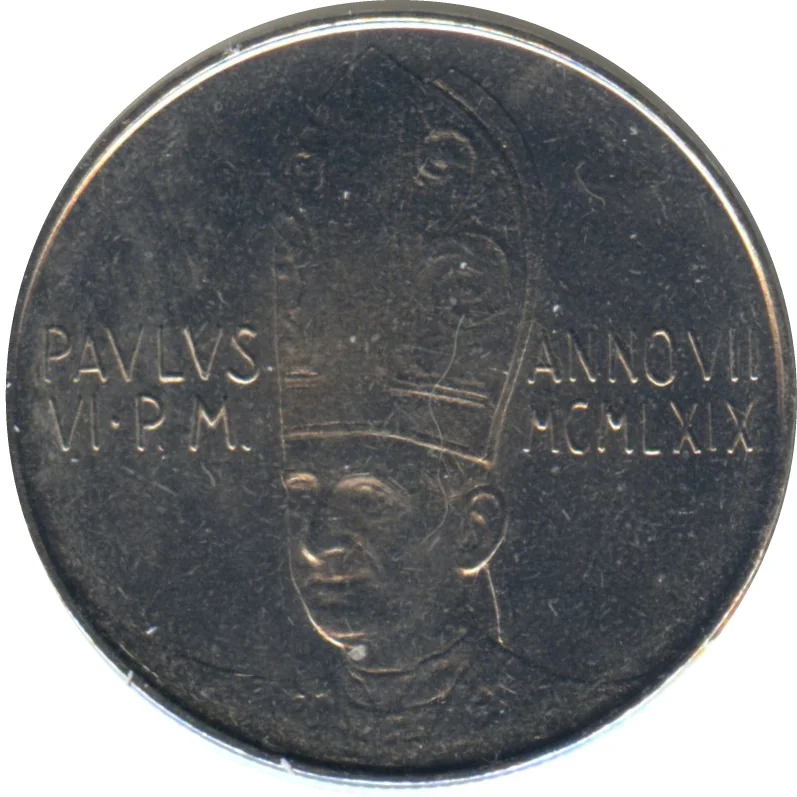
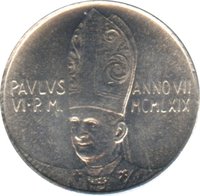
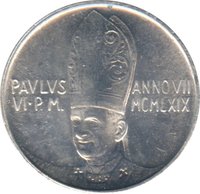
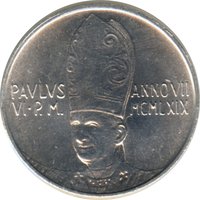
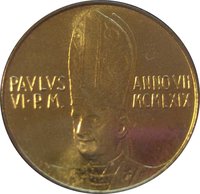
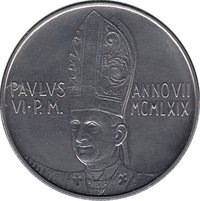
Paul VI, facing left, flanked by text.
Inscription:
PAVLVS VI·P.M.
ANNO VII MCMLXIX
ANNO VII MCMLXIX
Translation:
Paul VI Supreme Pontiff
Year 7 1969
Year 7 1969
Script: Latin
Language: Latin
Engraver: C. Ruffini
Reverse
Description:
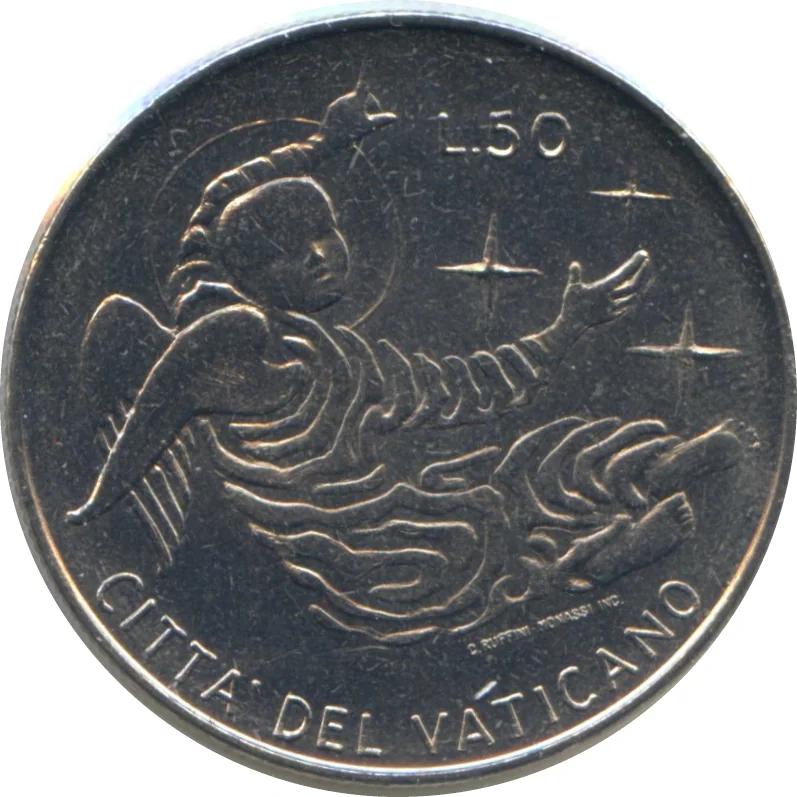
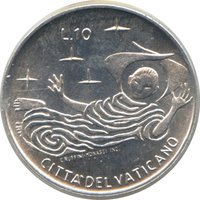
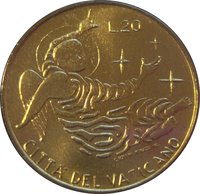
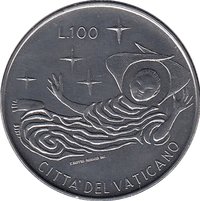
Angel of a nation.
Inscription:
L.50
C. RUFFINI - NORASSI INC.
CITTA' DEL VATICANO
C. RUFFINI - NORASSI INC.
CITTA' DEL VATICANO
Translation:
L.50
C. RUFFINI - NORASSI INC.
VATICAN CITY
C. RUFFINI - NORASSI INC.
VATICAN CITY
Script: Latin
Language: Italian
Engraver: C. Ruffini
Edge
Reeded
Categories
| Person> Religious figure |
| Object> Hat |
| Religion> Religious objects |
Mintings
| Year | Mint Mark | Mintage | Quality | Collection |
|---|---|---|---|---|
| 1969 | — | 190,000 |
Historical background
In 1969, Vatican City's currency situation was defined by its unique status as an enclave within Italy and its reliance on a series of international treaties. Since the 1929 Lateran Treaty, which established Vatican City as a sovereign state, Italy held the exclusive right to provide circulating coinage for the territory. Consequently, the Italian lira was the de facto everyday currency, used for all commercial transactions within the tiny city-state. The Vatican, however, also minted its own distinct lira coins, which had the same metallic composition, size, and value as their Italian counterparts and were legal tender within its borders and, by agreement, throughout Italy and San Marino.
This system of concurrent currencies was primarily symbolic of Vatican sovereignty rather than a practical monetary policy. The Vatican's annual coin issuance was limited by treaty to a fixed nominal value (initially 1 million lire, later increased), ensuring its coins would not disrupt the Italian money supply. These coins, featuring the image of the reigning pope and various religious motifs, were largely collected by numismatists and pilgrims rather than used in daily commerce, where Italian banknotes and coins predominated. The arrangement was financially and administratively convenient, as it spared the Holy See the complexity of managing an independent currency and central bank.
The year 1969 fell within the final decade of this stable, treaty-bound system. It was a period of continuity under Pope Paul VI, with Vatican lire coins being minted as commemorative issues. However, significant change was on the horizon. The global move away from the Bretton Woods system and periods of high inflation in Italy during the 1970s would eventually lead to a major renegotiation of the monetary agreements. This culminated in the 2000 Concordat, which replaced the lira-based system with one tied to the euro, allowing the Vatican to issue its own euro coins under strict European Central Bank quotas, thus modernizing the currency framework while preserving its symbolic sovereignty.
This system of concurrent currencies was primarily symbolic of Vatican sovereignty rather than a practical monetary policy. The Vatican's annual coin issuance was limited by treaty to a fixed nominal value (initially 1 million lire, later increased), ensuring its coins would not disrupt the Italian money supply. These coins, featuring the image of the reigning pope and various religious motifs, were largely collected by numismatists and pilgrims rather than used in daily commerce, where Italian banknotes and coins predominated. The arrangement was financially and administratively convenient, as it spared the Holy See the complexity of managing an independent currency and central bank.
The year 1969 fell within the final decade of this stable, treaty-bound system. It was a period of continuity under Pope Paul VI, with Vatican lire coins being minted as commemorative issues. However, significant change was on the horizon. The global move away from the Bretton Woods system and periods of high inflation in Italy during the 1970s would eventually lead to a major renegotiation of the monetary agreements. This culminated in the 2000 Concordat, which replaced the lira-based system with one tied to the euro, allowing the Vatican to issue its own euro coins under strict European Central Bank quotas, thus modernizing the currency framework while preserving its symbolic sovereignty.
🌱 Common