

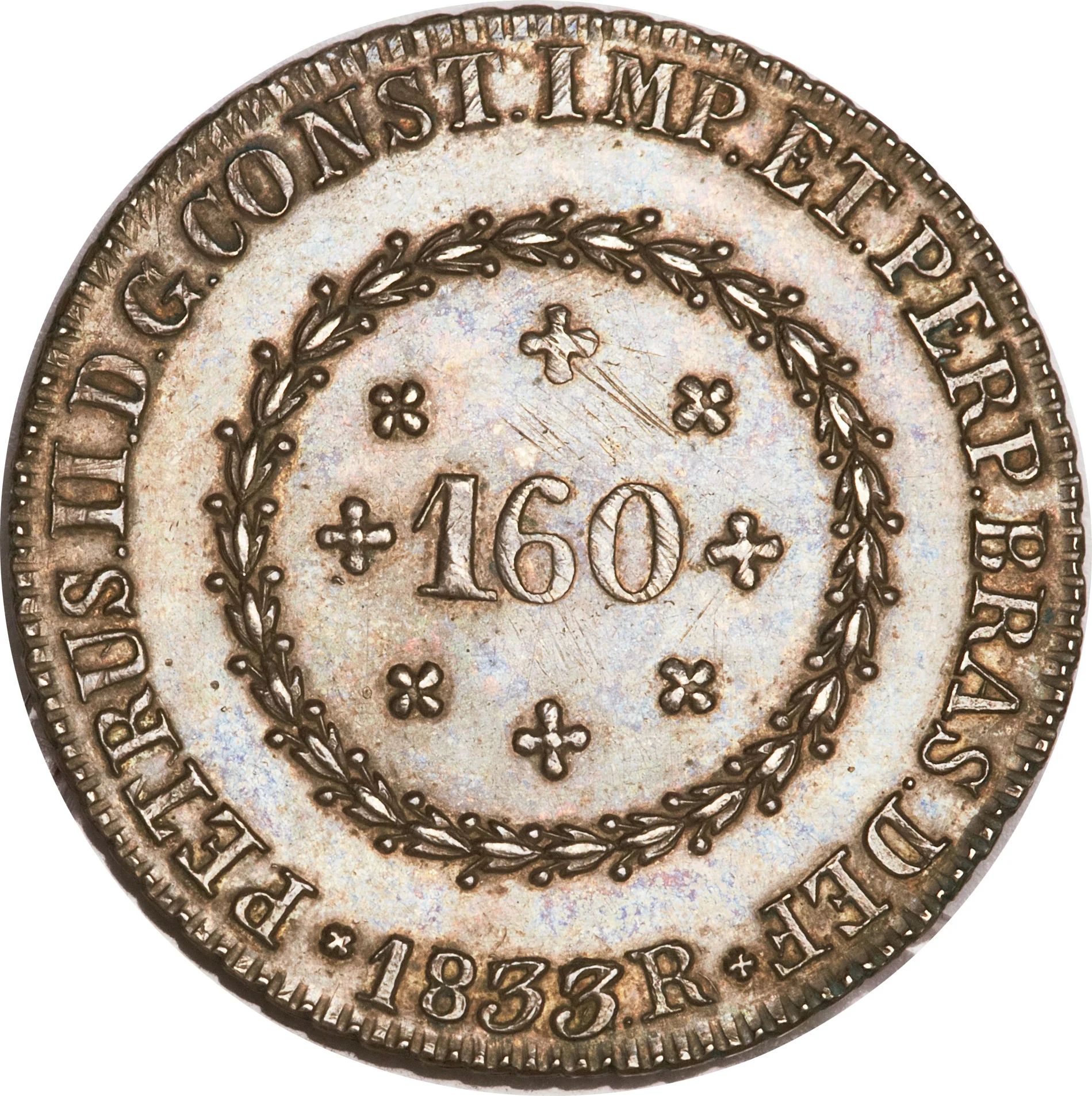
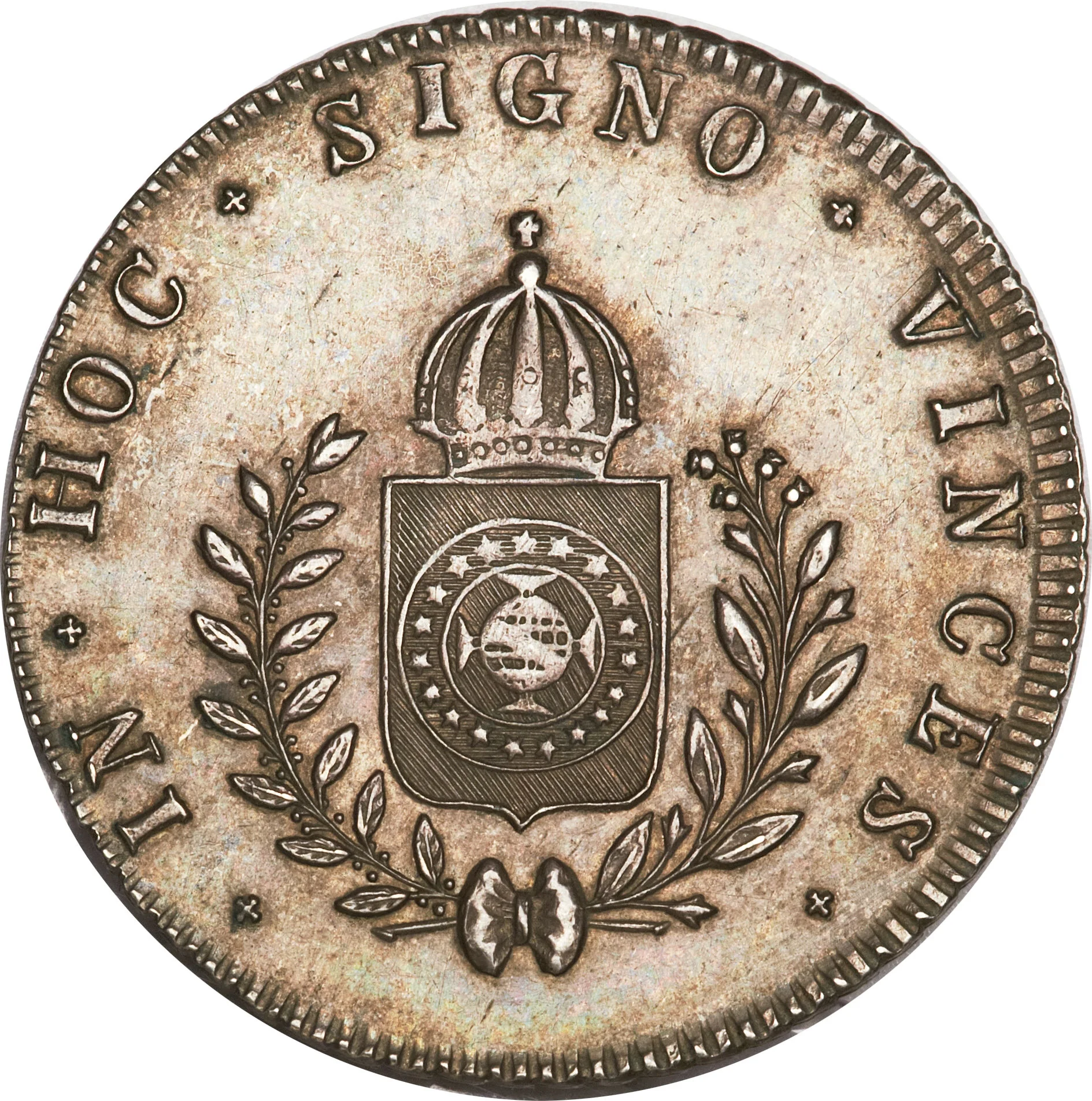

Obverse
Description:
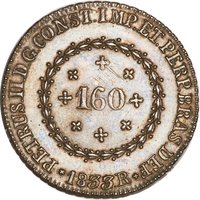
Denomination within floral wreath.
Inscription:
PETRUS.II.D.G.CONST.IMP.ET.PERP.BRAS.DEF
160
1833R
160
1833R
Script: Latin
Reverse
Edge
Mintings
| Year | Mint Mark | Mintage | Quality | Collection |
|---|---|---|---|---|
| 1833 | R | 492 |
Historical background
In 1833, Brazil was navigating a complex and unstable currency landscape in the aftermath of its independence from Portugal in 1822. The nation lacked a unified, state-issued paper currency, leading to a chaotic monetary system dominated by a proliferation of copper and silver coins, many of which were heavily worn, clipped, or counterfeit. The most common circulating medium was low-value copper réis coins, but their inconsistent weight and quality, combined with a severe shortage of higher-value silver coins for larger transactions, created chronic problems for commerce and public trust.
This period fell within the Regency era (1831-1840), a time of political fragility as the empire was ruled by regents for the child emperor Pedro II. The government's limited authority and frequent regional revolts hindered any decisive monetary reform. To address the coin shortage, private banks and even commercial entities began issuing their own paper notes and vales (promissory notes), but without centralized regulation, this further fragmented the system. The result was widespread confusion over exchange rates and the real value of money, which varied significantly from province to province, stifling internal trade and economic development.
The underlying issue was a profound lack of state monetary sovereignty. The imperial government, financially strained and politically weakened, had not yet established a central bank or a standardized national currency. Consequently, Brazil's economy in 1833 operated on a precarious patchwork of degraded physical coinage and unregulated private paper, a situation that reflected the broader challenges of constructing a stable and unified national state during a turbulent decade. This monetary disarray would persist until more forceful reforms were implemented later in the empire, particularly with the establishment of the Banco do Brasil's second incarnation in the 1850s.
This period fell within the Regency era (1831-1840), a time of political fragility as the empire was ruled by regents for the child emperor Pedro II. The government's limited authority and frequent regional revolts hindered any decisive monetary reform. To address the coin shortage, private banks and even commercial entities began issuing their own paper notes and vales (promissory notes), but without centralized regulation, this further fragmented the system. The result was widespread confusion over exchange rates and the real value of money, which varied significantly from province to province, stifling internal trade and economic development.
The underlying issue was a profound lack of state monetary sovereignty. The imperial government, financially strained and politically weakened, had not yet established a central bank or a standardized national currency. Consequently, Brazil's economy in 1833 operated on a precarious patchwork of degraded physical coinage and unregulated private paper, a situation that reflected the broader challenges of constructing a stable and unified national state during a turbulent decade. This monetary disarray would persist until more forceful reforms were implemented later in the empire, particularly with the establishment of the Banco do Brasil's second incarnation in the 1850s.
✨ Legendary