

2½ gulden – Netherlands Antilles
Add to wishlist
Netherlands
Context
Year: 1964
Country: Netherlands
Issuer: Netherlands Antilles
Ruler: Juliana
Currency:
(since 1828)
Demonetized: Yes
Total mintage: 162,400
Material
References
KM: #
Numista: #14070
Value
Exchange value: 2.5 ANG
Bullion value: $45.10
Inflation-adjusted value: 19.54 ANG
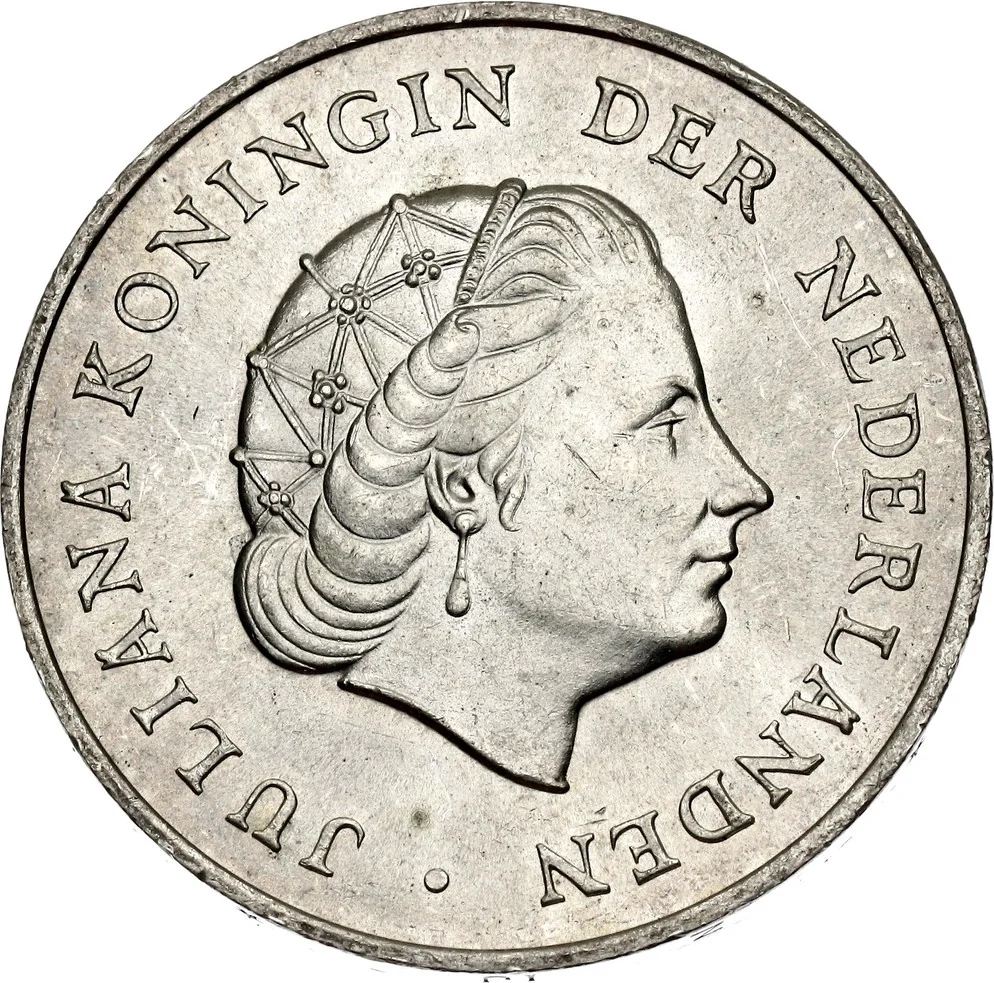
Obverse
Description:
Queen Juliana facing right.
Inscription:
JULIANA KONINGIN DER NEDERLANDEN
Translation:
Juliana Queen of the Netherlands
Script: Latin
Language: Dutch
Engraver: Ludwig Oswald Wenckebach
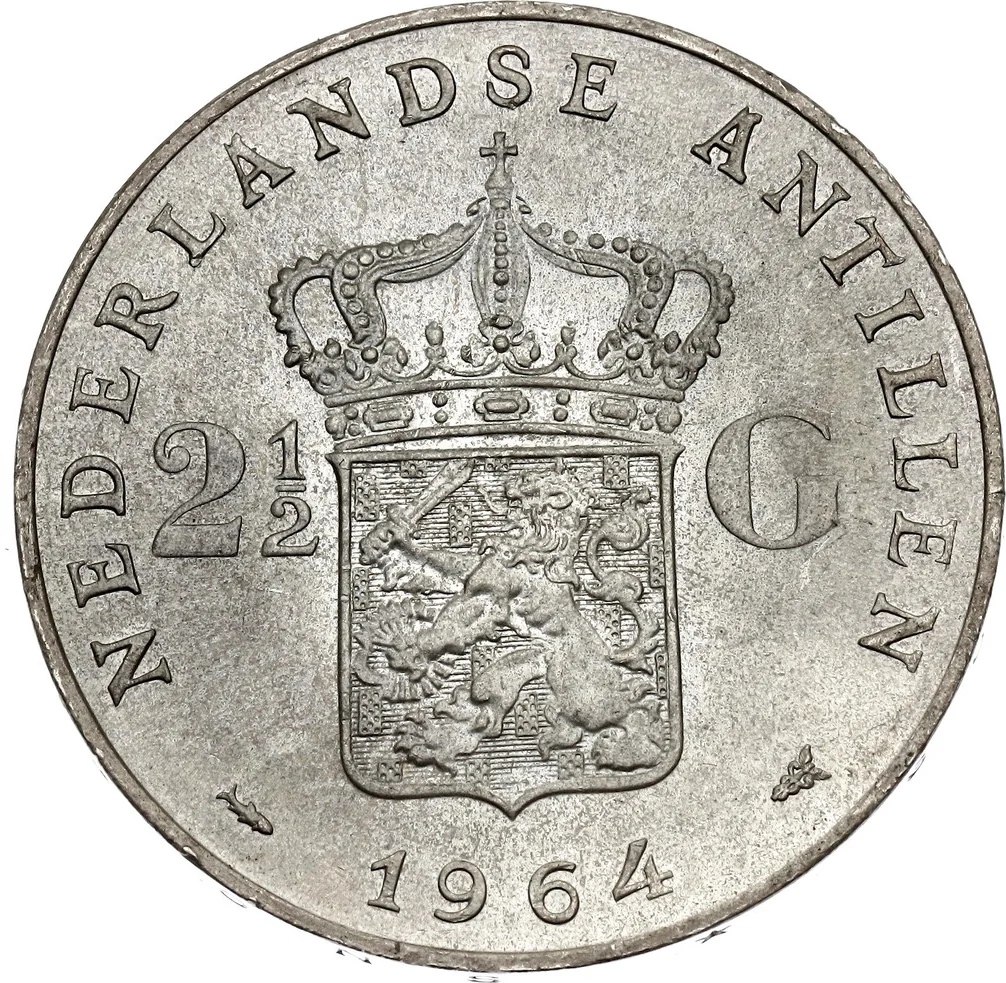
Reverse
Description:
Coat of arms flanking value.
Inscription:
NEDERLANDSE ANTILLEN
2½ G
1964
2½ G
1964
Translation:
NETHERLANDS ANTILLES
2½ CENTS
1964
2½ CENTS
1964
Script: Latin
Engraver: Ludwig Oswald Wenckebach
Edge
Mints
| Name | Mark |
|---|---|
| Royal Dutch Mint | — |
Mintings
| Year | Mint Mark | Mintage | Quality | Collection |
|---|---|---|---|---|
| 1964 | — | 162,400 | ||
| 1964 | — | — | Proof |
Historical background
In 1964, the currency situation in the Netherlands Antilles was defined by its unique political status and economic ties. As an autonomous country within the Kingdom of the Netherlands, the territory used the Netherlands Antillean guilder (ANG), which had been pegged to the US dollar at a fixed rate of 1.79 ANG = 1 USD since 1971. However, in 1964, this peg was different; the guilder was still linked to the Dutch guilder, reflecting the islands' colonial-era financial integration with the Netherlands. The central monetary authority was the Bank of the Netherlands Antilles, established in 1962, which managed the currency and foreign reserves.
The economy relied heavily on oil refining, particularly at the large Shell facility on Curaçao, which processed Venezuelan crude. This industry generated significant foreign exchange earnings, primarily in US dollars, and underpinned the currency's stability. The US dollar's widespread use in commerce, especially in tourism and the oil sector, created a de facto dual-currency environment alongside the official Antillean guilder. This dollar dependency was a key feature, influencing both daily transactions and the territory's broader financial policy.
This period was one of transition and stability. The fixed exchange rate regime provided predictability for international trade and investment, crucial for the oil-based economy. However, it also meant the islands' monetary policy was largely dictated by the need to maintain the peg, limiting independent tools to address local economic fluctuations. The currency arrangement of 1964 thus reflected a balance between European political ties, American economic influence, and the demands of a small, open island economy.
The economy relied heavily on oil refining, particularly at the large Shell facility on Curaçao, which processed Venezuelan crude. This industry generated significant foreign exchange earnings, primarily in US dollars, and underpinned the currency's stability. The US dollar's widespread use in commerce, especially in tourism and the oil sector, created a de facto dual-currency environment alongside the official Antillean guilder. This dollar dependency was a key feature, influencing both daily transactions and the territory's broader financial policy.
This period was one of transition and stability. The fixed exchange rate regime provided predictability for international trade and investment, crucial for the oil-based economy. However, it also meant the islands' monetary policy was largely dictated by the need to maintain the peg, limiting independent tools to address local economic fluctuations. The currency arrangement of 1964 thus reflected a balance between European political ties, American economic influence, and the demands of a small, open island economy.
🌱 Common