

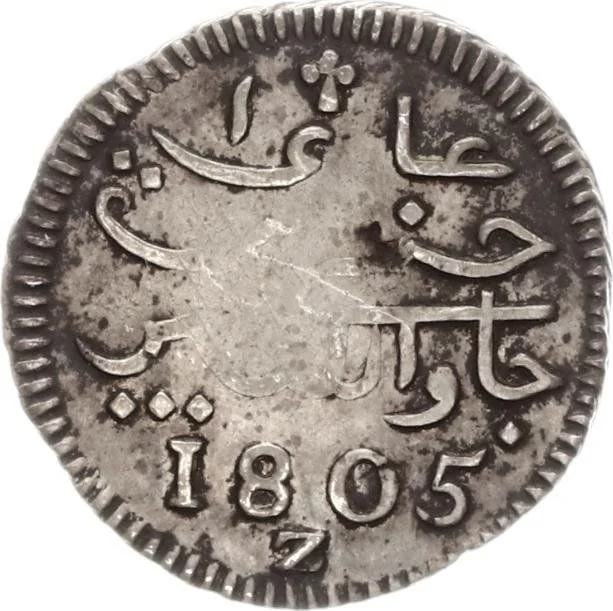
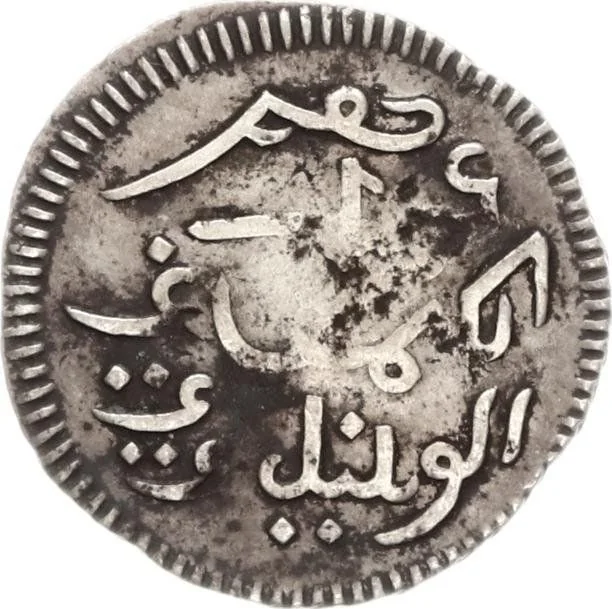
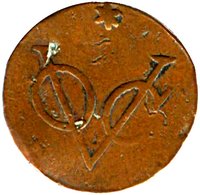
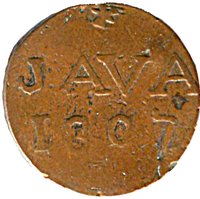
Mintings
| Year | Mint Mark | Mintage | Quality | Collection |
|---|---|---|---|---|
| 1805 | — | — | ||
| 1806 | — | — |
Historical background
In 1805, the currency situation in Java was complex and transitional, reflecting the island's shift from the Dutch East India Company (VOC) administration to direct Dutch colonial rule under the Batavian Republic and, by 1806, the Kingdom of Holland. The primary circulating medium was a chaotic mix of physical coins, including Spanish-American silver dollars (reales), Dutch guilders, and a vast array of other foreign and local coins from across the archipelago and Asia. This proliferation created significant problems with valuation and exchange, as the intrinsic silver content of coins often differed from their declared nominal value, leading to frequent fraud and economic instability.
The system was further complicated by the widespread use of paper money, primarily in the form of credit paper issued by the former VOC and later by the colonial government. This paper currency, essential for larger transactions and government salaries, suffered from severe depreciation due to over-issuance and a lack of public confidence, especially following the VOC's bankruptcy in 1799. Consequently, a sharp divide existed between the "heavy" (silver) and "light" (depreciated paper) money systems, with merchants and the populace preferring scarce silver coin for everyday trade, forcing the government to constantly grapple with a debilitating shortage of specie.
Recognizing this monetary crisis as an impediment to colonial control and trade, Governor-General Herman Willem Daendels (1808-1811) would soon initiate drastic reforms. Although his major currency decrees came after 1805, the situation in that year was one of mounting pressure for standardization. The authorities were moving towards establishing a unified currency based on the Dutch guilder, aiming to suppress the variety of coins in circulation and restore faith in government-issued money, thereby setting the stage for the more centralized fiscal control characteristic of the 19th-century colonial state.
The system was further complicated by the widespread use of paper money, primarily in the form of credit paper issued by the former VOC and later by the colonial government. This paper currency, essential for larger transactions and government salaries, suffered from severe depreciation due to over-issuance and a lack of public confidence, especially following the VOC's bankruptcy in 1799. Consequently, a sharp divide existed between the "heavy" (silver) and "light" (depreciated paper) money systems, with merchants and the populace preferring scarce silver coin for everyday trade, forcing the government to constantly grapple with a debilitating shortage of specie.
Recognizing this monetary crisis as an impediment to colonial control and trade, Governor-General Herman Willem Daendels (1808-1811) would soon initiate drastic reforms. Although his major currency decrees came after 1805, the situation in that year was one of mounting pressure for standardization. The authorities were moving towards establishing a unified currency based on the Dutch guilder, aiming to suppress the variety of coins in circulation and restore faith in government-issued money, thereby setting the stage for the more centralized fiscal control characteristic of the 19th-century colonial state.
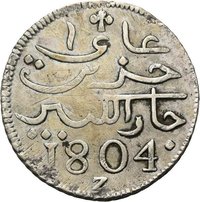
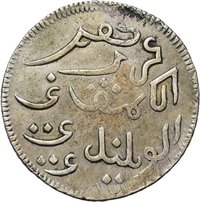
✨ Legendary