

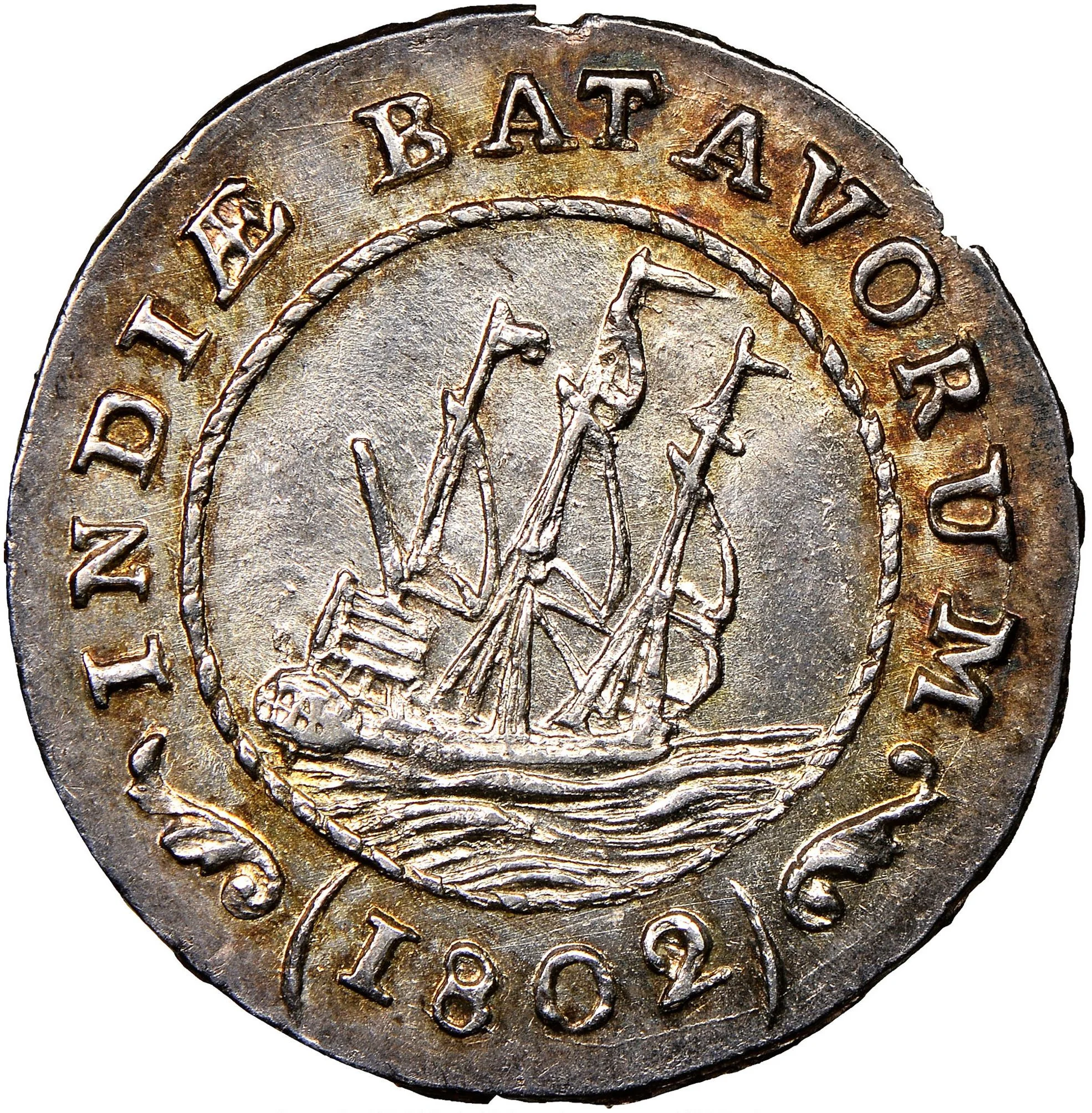
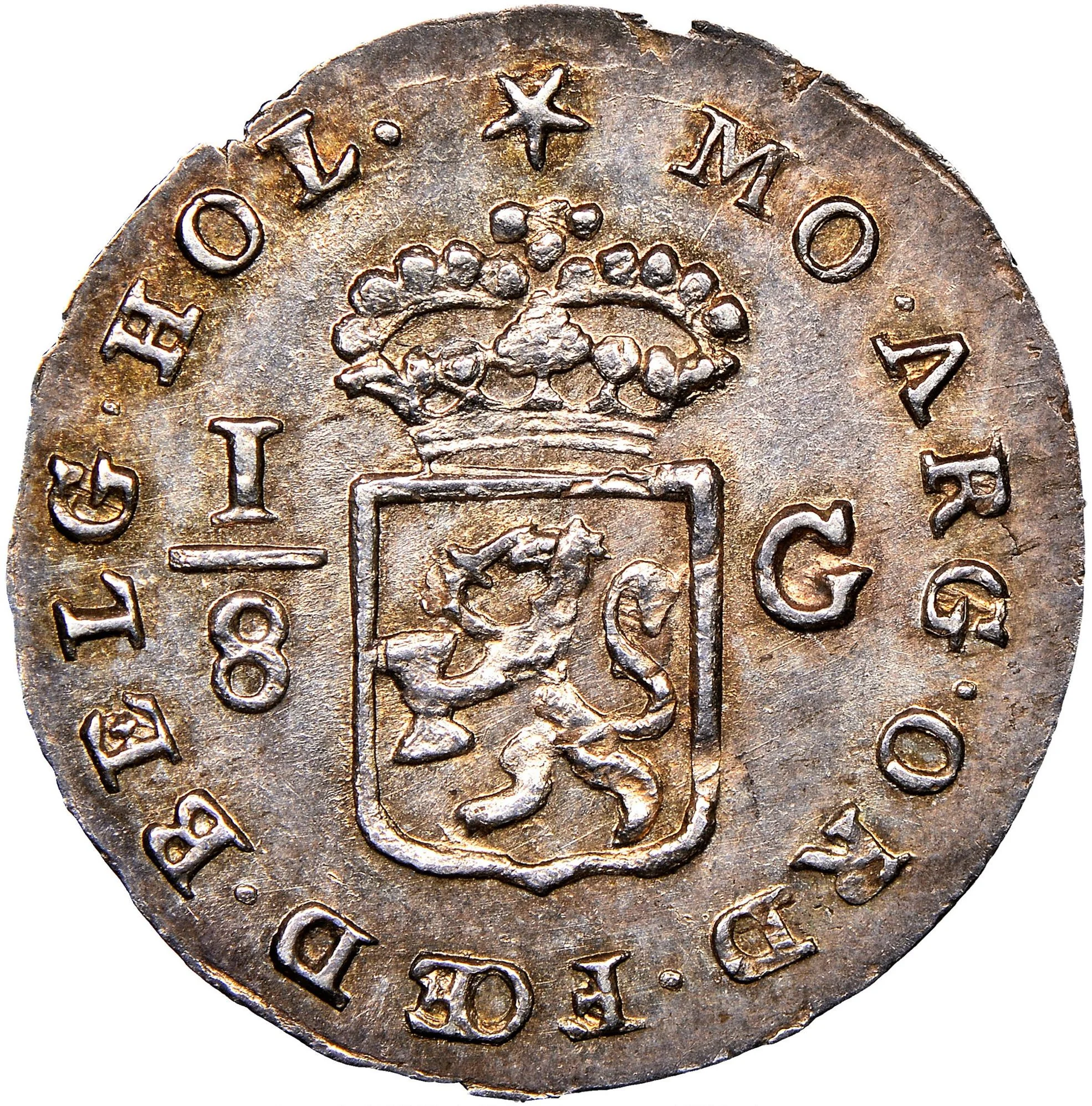
⅛ Gulden – Netherlands East Indies
Indonesia
Context
Year: 1802
Country: Indonesia 
Issuer: Netherlands East Indies
Period:
(1800—1806)
Currency:
(1726—1854)
Demonetized: Yes
Material
References
KM: #Click to copy to clipboard80
Numista: #361720
Value
Bullion value: $3.49
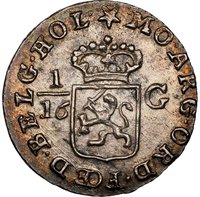
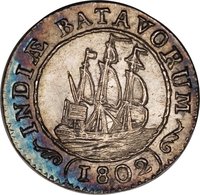
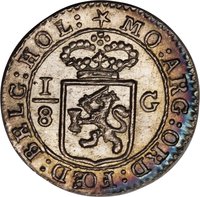
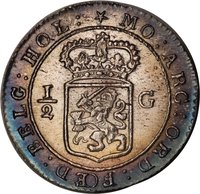
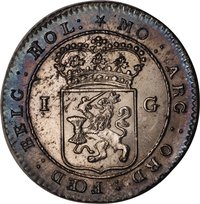
Obverse
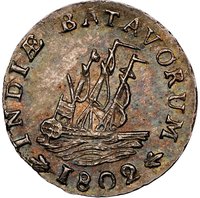
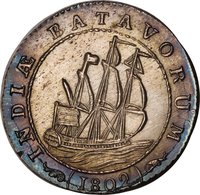
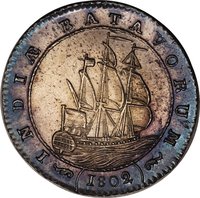
Reverse
Edge
Categories
| Transportation> Watercraft |
Mintings
| Year | Mint Mark | Mintage | Quality | Collection |
|---|---|---|---|---|
| 1802 | — | — |
Historical background
In 1802, the currency situation in the Netherlands East Indies (NEI) was complex and transitional, reflecting the colony's turbulent political context. The Dutch East India Company (VOC), which had long administered the archipelago, was formally dissolved in 1799 after years of bankruptcy and mismanagement. Its financial collapse left a legacy of severe monetary confusion, with a chaotic mix of debased VOC coinage, Spanish silver dollars (reales or "pieces of eight"), and various Asian currencies circulating at fluctuating values. This period coincided with the Napoleonic Wars in Europe, where the French Republic had transformed the Netherlands into the Batavian Republic, a French client state, further complicating direct control and economic policy for the distant colony.
The primary challenge was a critical shortage of trustworthy, full-value specie. While the Spanish dollar served as the dominant international trade coin, the everyday economy relied heavily on underweight and heavily worn VOC duiten (copper doits) and stuivers. The Batavian Republic's administration, operating from Batavia (modern Jakarta), attempted to impose order by officially recognizing the Spanish dollar as the standard and issuing paper money—known as "credit bills"—to compensate for the coin shortage. However, this government paper, a legacy from the late VOC period, suffered from severe depreciation and low public confidence, as it was not fully convertible to silver.
Therefore, the monetary landscape in 1802 was one of fragmented authority and competing mediums of exchange. The official system struggled with depreciating paper and inadequate coinage, while the actual markets functioned on a practical blend of foreign silver and discredited legacy coins. This instability would persist until the return of more direct Dutch control after the Napoleonic Wars, eventually leading to the formal introduction of the Netherlands Indies guilder in an effort to create a unified and reliable colonial currency system.
The primary challenge was a critical shortage of trustworthy, full-value specie. While the Spanish dollar served as the dominant international trade coin, the everyday economy relied heavily on underweight and heavily worn VOC duiten (copper doits) and stuivers. The Batavian Republic's administration, operating from Batavia (modern Jakarta), attempted to impose order by officially recognizing the Spanish dollar as the standard and issuing paper money—known as "credit bills"—to compensate for the coin shortage. However, this government paper, a legacy from the late VOC period, suffered from severe depreciation and low public confidence, as it was not fully convertible to silver.
Therefore, the monetary landscape in 1802 was one of fragmented authority and competing mediums of exchange. The official system struggled with depreciating paper and inadequate coinage, while the actual markets functioned on a practical blend of foreign silver and discredited legacy coins. This instability would persist until the return of more direct Dutch control after the Napoleonic Wars, eventually leading to the formal introduction of the Netherlands Indies guilder in an effort to create a unified and reliable colonial currency system.
✨ Legendary