


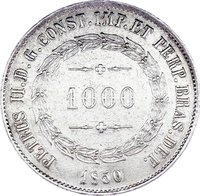
Obverse
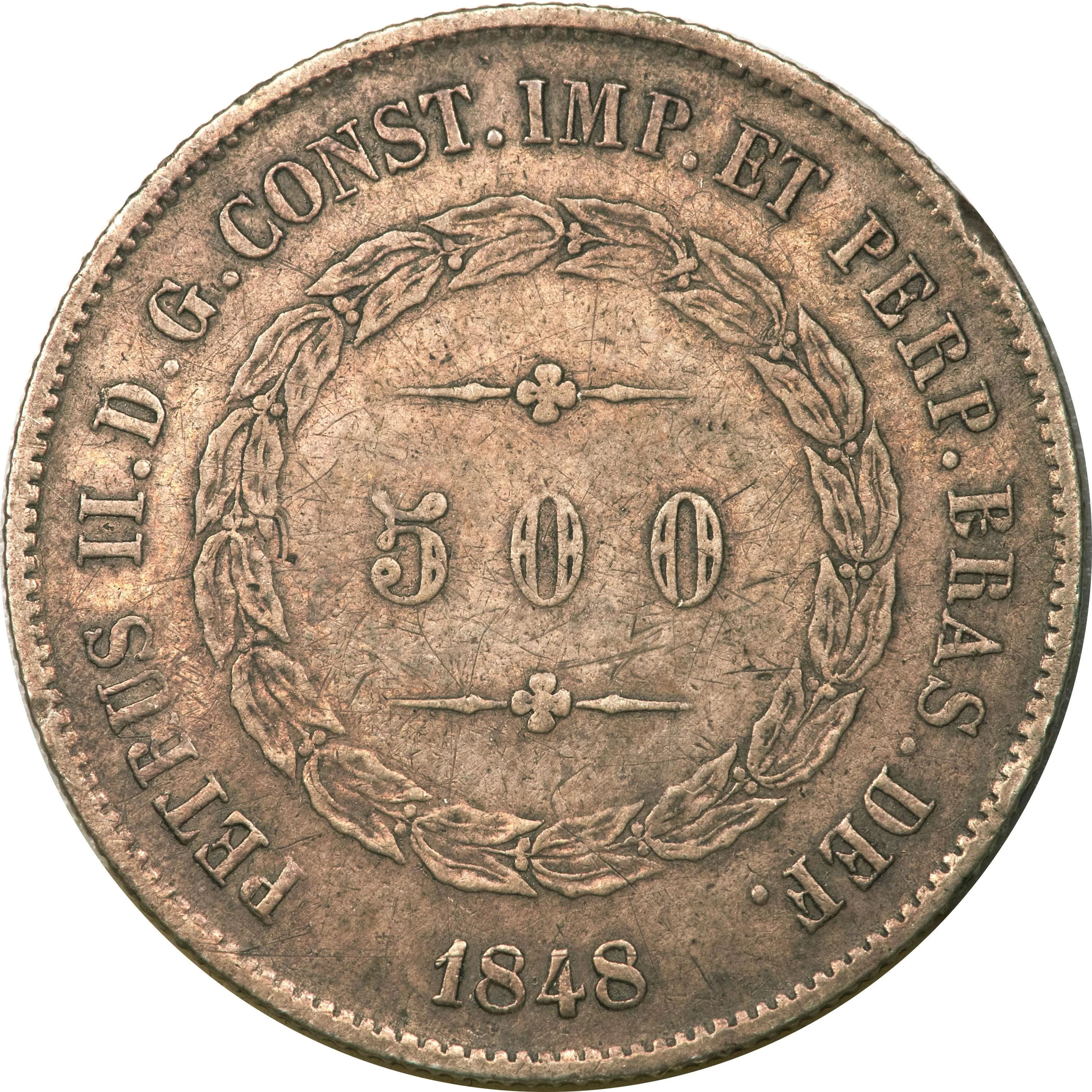
Description:
Leafy circle denomination.
Inscription:
PETRUS II.D.G.CONST.IMP.ET PERP. BRAS.DEF.
500
1848
500
1848
Script: Latin
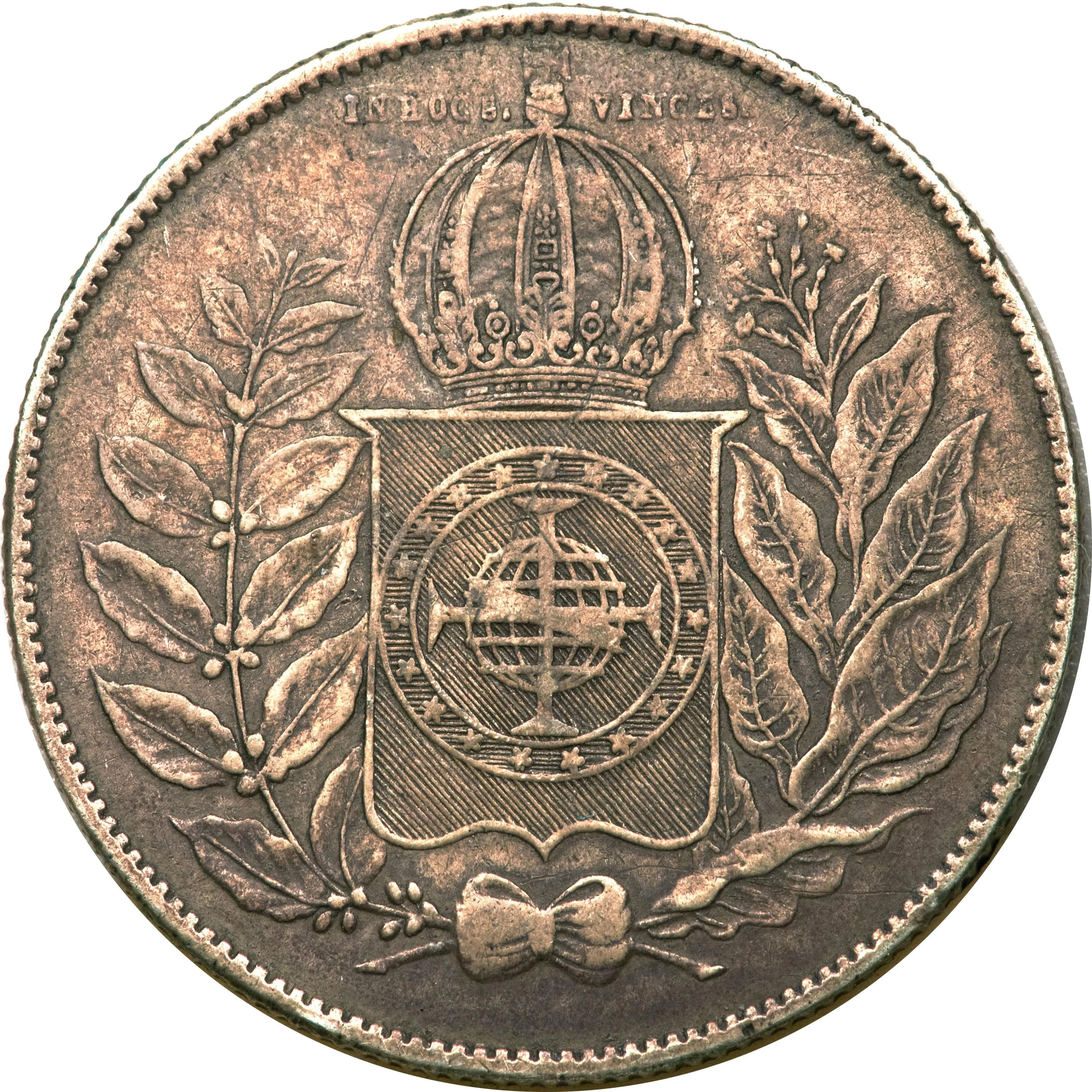
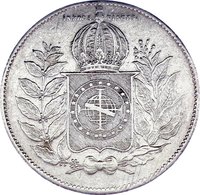
Reverse
Edge
Reeded
Mintings
| Year | Mint Mark | Mintage | Quality | Collection |
|---|---|---|---|---|
| 1848 | — | — | ||
| 1849 | — | 25,970 | ||
| 1850 | — | 66,572 | ||
| 1851 | — | 94,695 | ||
| 1852 | — | 167,469 |
Historical background
In 1848, Brazil's currency situation was characterized by profound instability and fragmentation, a legacy of the colonial period and the political turbulence following independence in 1822. The monetary system was a chaotic mix of copper, silver, and gold coins, both domestic and foreign, circulating at fluctuating values that varied from province to province. Most critically, the government had long relied on the inflationary expedient of issuing inconvertible paper money, known as papel-moeda, to cover chronic budget deficits, particularly from the costly Cisplatine War. This paper currency was not backed by gold or silver and traded at a significant and volatile discount against metallic coin, creating a destructive dual-system of exchange.
This monetary disorder severely hampered economic development and state finances. The depreciating paper money created uncertainty for merchants, discouraged foreign investment, and made tax collection problematic, as the government received devalued paper while many obligations, like foreign debt, required payment in gold. The situation was a central concern for the Conservative cabinets of the 1840s, who saw sound money as essential for national integration and credibility. Efforts to introduce uniformity, such as the Law of 3 October 1846, which aimed to standardize the metallic system based on a gold milréis, were undermined by the continued over-issuance of paper and a lack of sufficient specie reserves to back a true conversion.
Thus, by 1848, the currency question remained unresolved and a source of ongoing political debate. The year fell within the broader period of the Regresso and the consolidation of the Conservative Party's power, which prioritized centralization and financial orthodoxy. While the pivotal solution—the creation of a single, powerful bank of issue (the future Banco do Brasil) to gradually absorb the paper money—would be realized in the early 1850s, the landscape in 1848 was one of mounting pressure for reform. The chaotic currency system stood as a major obstacle to the Empire's project of modernizing the economy and strengthening the authority of the state in Rio de Janeiro over the provinces.
This monetary disorder severely hampered economic development and state finances. The depreciating paper money created uncertainty for merchants, discouraged foreign investment, and made tax collection problematic, as the government received devalued paper while many obligations, like foreign debt, required payment in gold. The situation was a central concern for the Conservative cabinets of the 1840s, who saw sound money as essential for national integration and credibility. Efforts to introduce uniformity, such as the Law of 3 October 1846, which aimed to standardize the metallic system based on a gold milréis, were undermined by the continued over-issuance of paper and a lack of sufficient specie reserves to back a true conversion.
Thus, by 1848, the currency question remained unresolved and a source of ongoing political debate. The year fell within the broader period of the Regresso and the consolidation of the Conservative Party's power, which prioritized centralization and financial orthodoxy. While the pivotal solution—the creation of a single, powerful bank of issue (the future Banco do Brasil) to gradually absorb the paper money—would be realized in the early 1850s, the landscape in 1848 was one of mounting pressure for reform. The chaotic currency system stood as a major obstacle to the Empire's project of modernizing the economy and strengthening the authority of the state in Rio de Janeiro over the provinces.
🌟 Uncommon