

10 laari – Maldives
Add to wishlist
Maldives
Context
Material
References
KM: #
Numista: #36165
Value
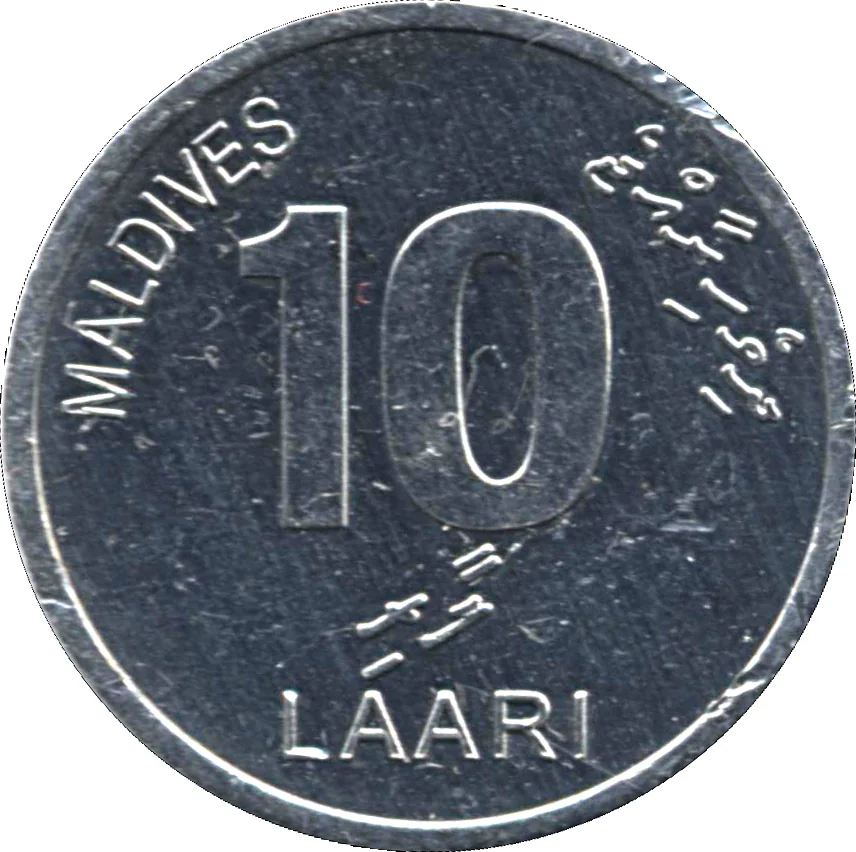
Exchange value: 0.10 MVR
Obverse
Description:
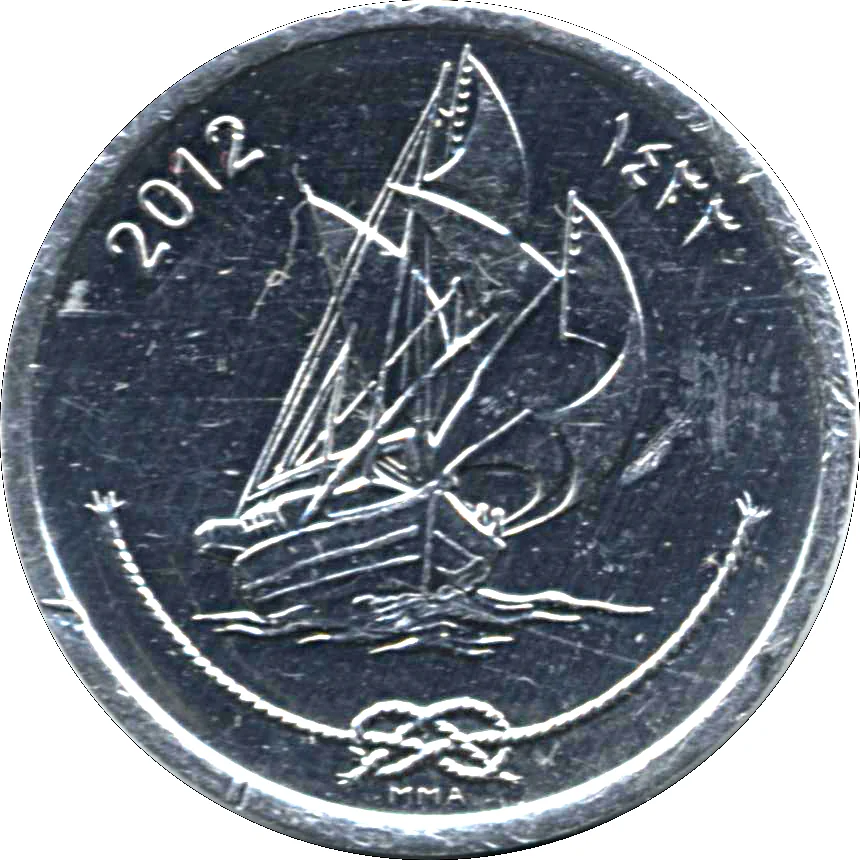
Traditional sailboat with full sails. Dates in Gregorian and AH flanking it. Nautical knot pattern below.
Inscription:
2012 ١٤٣٣
MMA
MMA
Reverse
Edge
Plain
Categories
| Transportation> Watercraft |
Mints
| Name | Mark |
|---|---|
| Royal Mint | — |
Mintings
| Year | Mint Mark | Mintage | Quality | Collection |
|---|---|---|---|---|
| 2012 | — | — |
Historical background
In 2012, the currency situation in the Maldives was characterized by significant pressure on the Maldivian Rufiyaa (MVR) and a growing foreign exchange crisis. The country was grappling with a persistent and large fiscal deficit, driven by high public spending on subsidies and a bloated civil service wage bill, coupled with low revenue generation. This led to excessive government borrowing from the central bank, the Maldives Monetary Authority (MMA), which fueled inflation and eroded foreign reserves. By mid-2012, usable reserves had dwindled to critically low levels, covering only about one month of imports, raising alarms about the nation's ability to meet its international payment obligations.
The MMA responded with a series of defensive measures to stabilize the currency. Most notably, it devalued the Rufiyaa by 20% in April 2012, moving from a fixed peg of 12.85 to the US dollar to a new peg of 15.42. This painful adjustment aimed to correct the overvalued exchange rate, boost tourism revenue in Rufiyaa terms, and discourage imports to improve the trade balance. Concurrently, the authority tightened monetary policy, raised reserve requirements for banks, and introduced stricter limits on foreign currency sales to conserve dwindling dollar reserves.
The underlying causes of the crisis were deeply structural, rooted in years of political instability and economic mismanagement. The situation underscored the Maldives' extreme vulnerability as a small, import-dependent economy reliant on a single industry—tourism. While the devaluation provided some short-term relief by aligning the official rate closer to the black-market rate, it also increased the cost of living for citizens and imported goods. The 2012 currency crisis ultimately highlighted the urgent need for fiscal consolidation and economic diversification, setting the stage for contentious negotiations with the International Monetary Fund (IMF) for a financial support program in the following years.
The MMA responded with a series of defensive measures to stabilize the currency. Most notably, it devalued the Rufiyaa by 20% in April 2012, moving from a fixed peg of 12.85 to the US dollar to a new peg of 15.42. This painful adjustment aimed to correct the overvalued exchange rate, boost tourism revenue in Rufiyaa terms, and discourage imports to improve the trade balance. Concurrently, the authority tightened monetary policy, raised reserve requirements for banks, and introduced stricter limits on foreign currency sales to conserve dwindling dollar reserves.
The underlying causes of the crisis were deeply structural, rooted in years of political instability and economic mismanagement. The situation underscored the Maldives' extreme vulnerability as a small, import-dependent economy reliant on a single industry—tourism. While the devaluation provided some short-term relief by aligning the official rate closer to the black-market rate, it also increased the cost of living for citizens and imported goods. The 2012 currency crisis ultimately highlighted the urgent need for fiscal consolidation and economic diversification, setting the stage for contentious negotiations with the International Monetary Fund (IMF) for a financial support program in the following years.
🌱 Very Common