

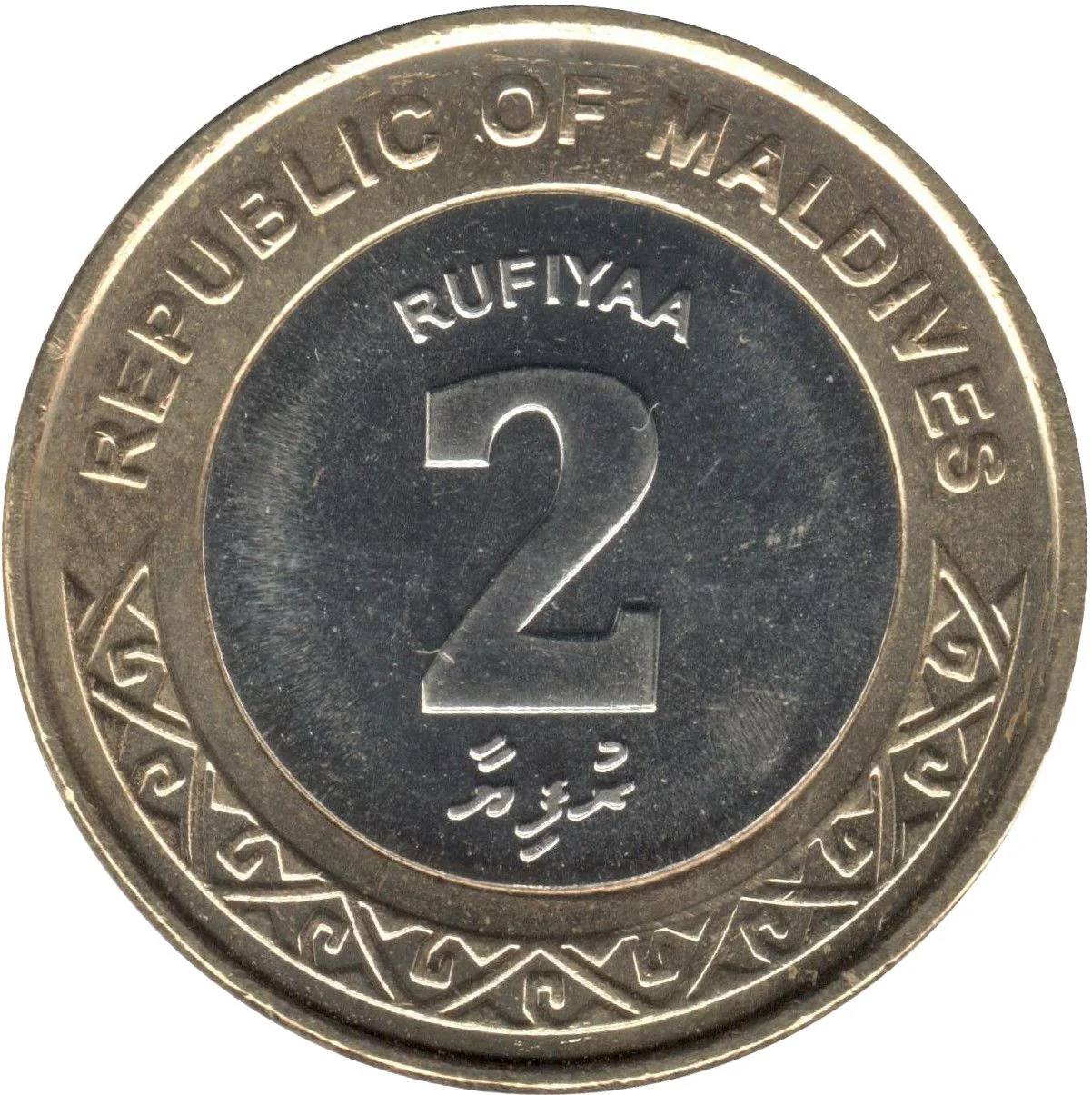
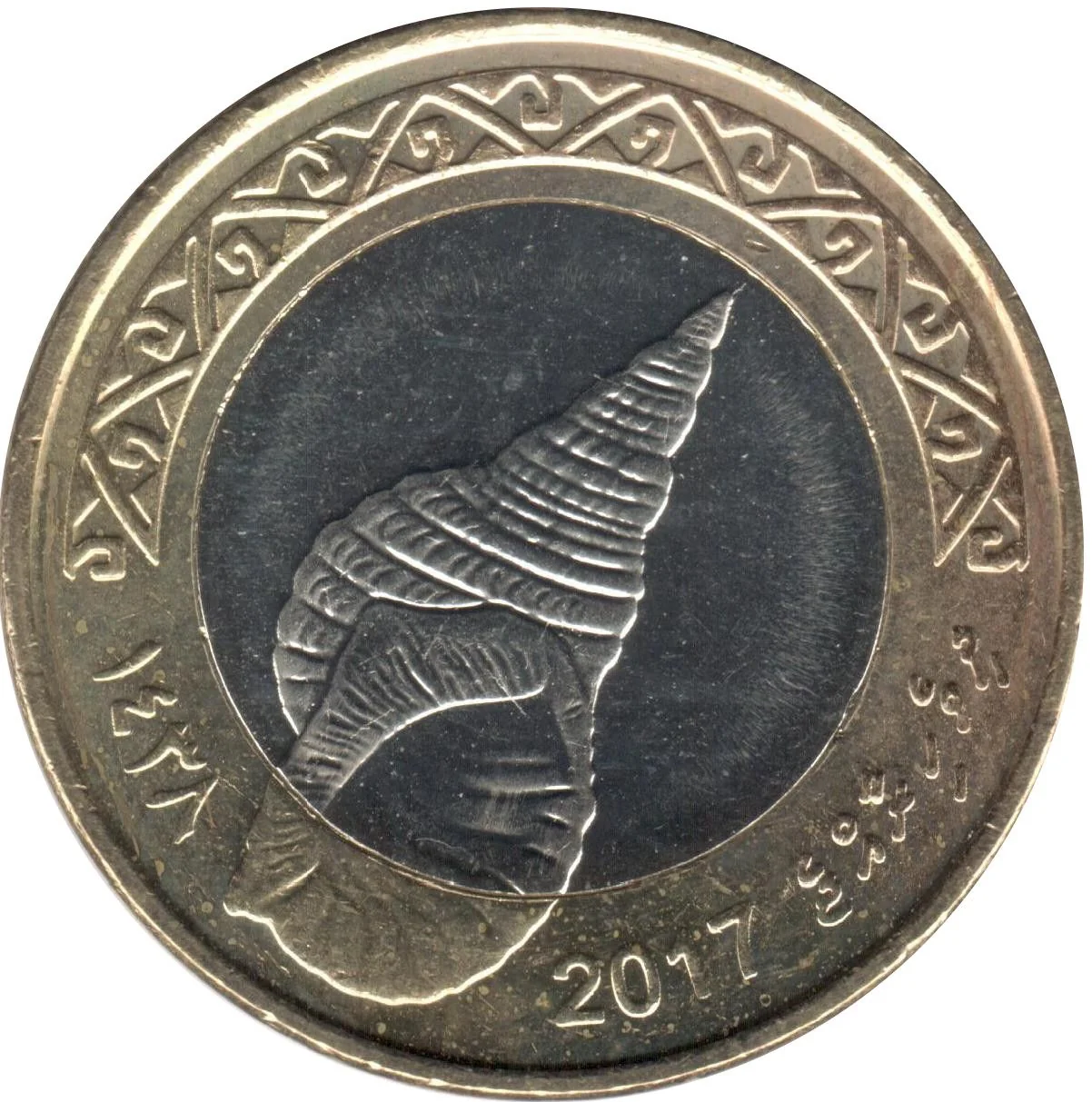
2 rufiyaa – Maldives
Add to wishlist
Maldives
Context
Material
References
KM: #
Numista: #117538
Value
Exchange value: 2 MVR
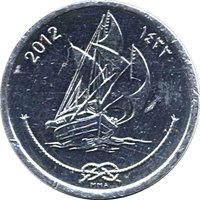
Obverse
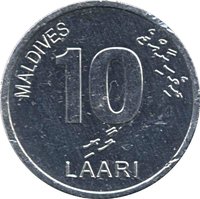
Reverse
Edge
Plain
Mints
| Name | Mark |
|---|---|
| Royal Mint | — |
Mintings
| Year | Mint Mark | Mintage | Quality | Collection |
|---|---|---|---|---|
| 2017 | — | — |
Historical background
In 2017, the Maldivian currency, the rufiyaa (MVR), was operating under a de facto peg to the US dollar, managed by the Maldives Monetary Authority (MMA). The official exchange rate was fixed at MVR 15.42 per US dollar for the rufiyaa, while a separate, more depreciated "tourist rate" of MVR 15.00 was applied to the US dollar-denominated "Maldives Currency Note" used in resorts. This dual-rate system was a legacy mechanism aimed at capturing foreign exchange from the vital tourism sector. However, the stability of the peg was under persistent strain due to chronic fiscal and trade imbalances.
The core economic challenge was a significant and growing import bill, driven by the need for almost all consumable goods and construction materials, which far outpaced the country's foreign exchange earnings from tourism and fisheries. This led to recurring balance of payments pressures and a heavy reliance on external borrowing to finance the deficit. Consequently, the MMA's usable foreign reserves were often low, raising concerns among international observers about the long-term sustainability of the dollar peg and the potential need for a devaluation to correct the external imbalance.
Despite these underlying vulnerabilities, the currency peg held throughout 2017. The government, under President Abdulla Yameen, maintained a policy of defending the fixed exchange rate, supported by continued access to foreign financing, notably from China and Saudi Arabia for major infrastructure projects. Therefore, while economists and institutions like the IMF frequently flagged the exchange rate regime as a risk to macroeconomic stability, the immediate currency situation in 2017 was one of artificial stability, masking deeper structural economic issues that threatened future volatility.
The core economic challenge was a significant and growing import bill, driven by the need for almost all consumable goods and construction materials, which far outpaced the country's foreign exchange earnings from tourism and fisheries. This led to recurring balance of payments pressures and a heavy reliance on external borrowing to finance the deficit. Consequently, the MMA's usable foreign reserves were often low, raising concerns among international observers about the long-term sustainability of the dollar peg and the potential need for a devaluation to correct the external imbalance.
Despite these underlying vulnerabilities, the currency peg held throughout 2017. The government, under President Abdulla Yameen, maintained a policy of defending the fixed exchange rate, supported by continued access to foreign financing, notably from China and Saudi Arabia for major infrastructure projects. Therefore, while economists and institutions like the IMF frequently flagged the exchange rate regime as a risk to macroeconomic stability, the immediate currency situation in 2017 was one of artificial stability, masking deeper structural economic issues that threatened future volatility.
🌱 Common