

400 réis (Discovery of Brazil) – Brazil
Add to wishlist
Circulating commemorative coins
Commemoration: 400th Anniversary of the Discovery of Brazil
Brazil
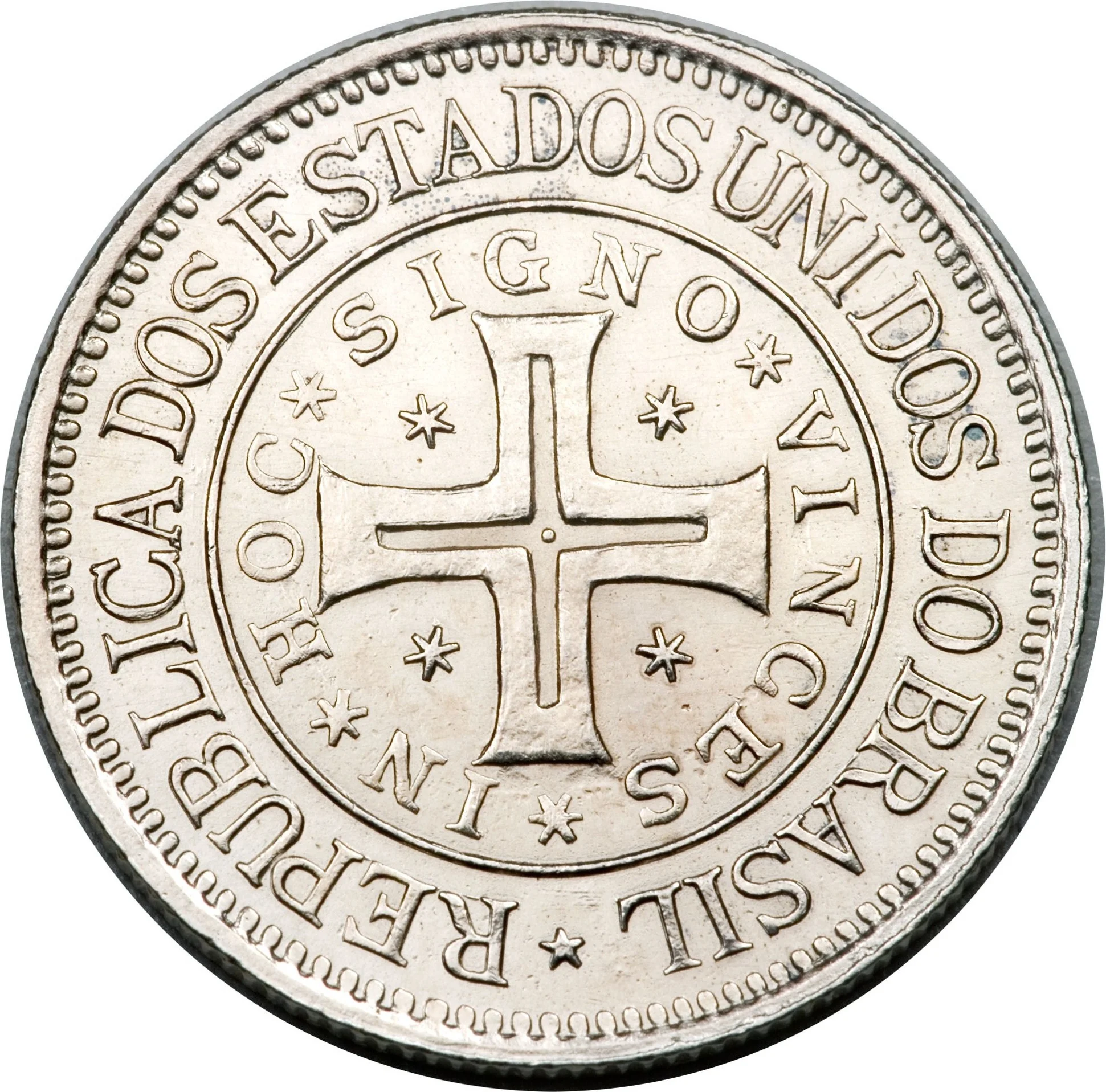
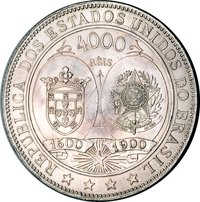
Obverse
Description:
Cross with corner rosettes.
Inscription:
REPUBLICA DOS ESTADOS UNIDOS DO BRASIL
IN HOC SIGNO VINCES
IN HOC SIGNO VINCES
Translation:
REPUBLIC OF THE UNITED STATES OF BRAZIL
IN THIS SIGN YOU WILL CONQUER
IN THIS SIGN YOU WILL CONQUER
Script: Latin
Languages: Latin, Portuguese
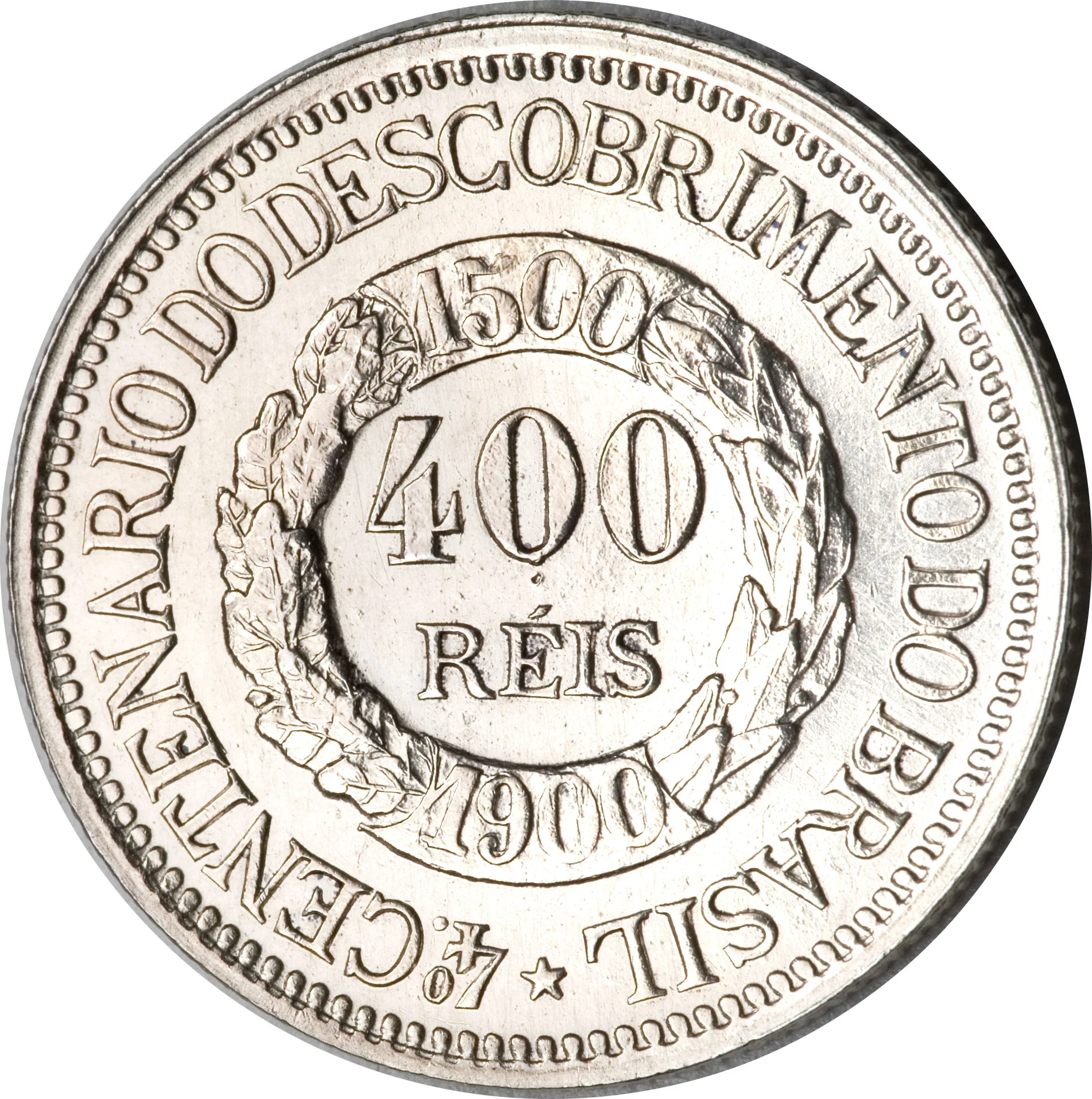
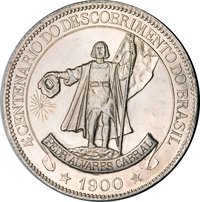
Reverse
Description:
Denominations divide dates; sprigs flank.
Inscription:
4º CENTENARIO DO DESCOBRIMENTO DO BRASIL
1500
400
RÉIS
1900
1500
400
RÉIS
1900
Translation:
Fourth Centenary of the Discovery of Brazil
1500
400
Reis
1900
1500
400
Reis
1900
Script: Latin
Language: Portuguese
Edge
Reeded
Mintings
| Year | Mint Mark | Mintage | Quality | Collection |
|---|---|---|---|---|
| 1900 | — | 55,000 |
Historical background
At the dawn of the 20th century, Brazil's currency situation was defined by the aftermath of the Encilhamento financial bubble and the enduring instability of the mil-réis. The 1890s, a period of speculative frenzy and easy credit under Finance Minister Rui Barbosa, had led to rampant inflation, a proliferation of bankruptcies, and a severe loss of confidence in the nation's financial system. By 1900, the country was grappling with the consequences: a deeply depreciated and volatile currency, with the mil-réis suffering from wild fluctuations in its exchange rate, particularly against the British pound sterling. This monetary fragility hampered foreign investment and complicated the government's efforts to service its substantial external debt, much of which was denominated in gold-backed currencies.
The underlying issue was the lack of a coherent monetary standard. Brazil operated on an inconvertible paper money system, meaning the mil-réis was not backed by or redeemable for gold. Its value was largely determined by the government's fiscal discipline—or lack thereof—and the balance of trade, which was heavily dependent on the global price of coffee. Periods of high coffee exports would temporarily strengthen the currency, while fiscal deficits, often financed by printing more money, led to inflationary devaluation. This created an unpredictable environment for both domestic business and international trade, as merchants faced constant exchange rate risk.
Recognizing that monetary chaos was an obstacle to modernization and economic growth, the federal government began a prolonged push for reform. The early 1900s saw initial, though unsuccessful, attempts to return to metal-backed convertibility. These efforts culminated in the pivotal 1906 Taubaté Agreement, a state-level intervention to support coffee prices, which had significant monetary implications by using foreign loans to stabilize exchange rates. This set the stage for the major reforms that would follow, most notably the creation of the Banco do Brasil as a central monetary authority in 1905 and, eventually, the currency revolution of the 1940s that introduced the cruzeiro. Thus, the currency situation in 1900 was a point of critical pressure, forcing the young republic to confront the necessity of centralized financial control and stability.
The underlying issue was the lack of a coherent monetary standard. Brazil operated on an inconvertible paper money system, meaning the mil-réis was not backed by or redeemable for gold. Its value was largely determined by the government's fiscal discipline—or lack thereof—and the balance of trade, which was heavily dependent on the global price of coffee. Periods of high coffee exports would temporarily strengthen the currency, while fiscal deficits, often financed by printing more money, led to inflationary devaluation. This created an unpredictable environment for both domestic business and international trade, as merchants faced constant exchange rate risk.
Recognizing that monetary chaos was an obstacle to modernization and economic growth, the federal government began a prolonged push for reform. The early 1900s saw initial, though unsuccessful, attempts to return to metal-backed convertibility. These efforts culminated in the pivotal 1906 Taubaté Agreement, a state-level intervention to support coffee prices, which had significant monetary implications by using foreign loans to stabilize exchange rates. This set the stage for the major reforms that would follow, most notably the creation of the Banco do Brasil as a central monetary authority in 1905 and, eventually, the currency revolution of the 1940s that introduced the cruzeiro. Thus, the currency situation in 1900 was a point of critical pressure, forcing the young republic to confront the necessity of centralized financial control and stability.
⭐ Rare