

2 dollars (Australian Involvement Vietnam War) – Australia
Add to wishlist
Non-circulating coins
Commemoration: 50th Anniversary Australian Involvement Vietnam War
Series: Lest We Forget
Australia
Context
Material

References
KM: #
Numista: #361205
Value
Exchange value: 2 AUD
Inflation-adjusted value: 2.19 AUD
Obverse
Description:
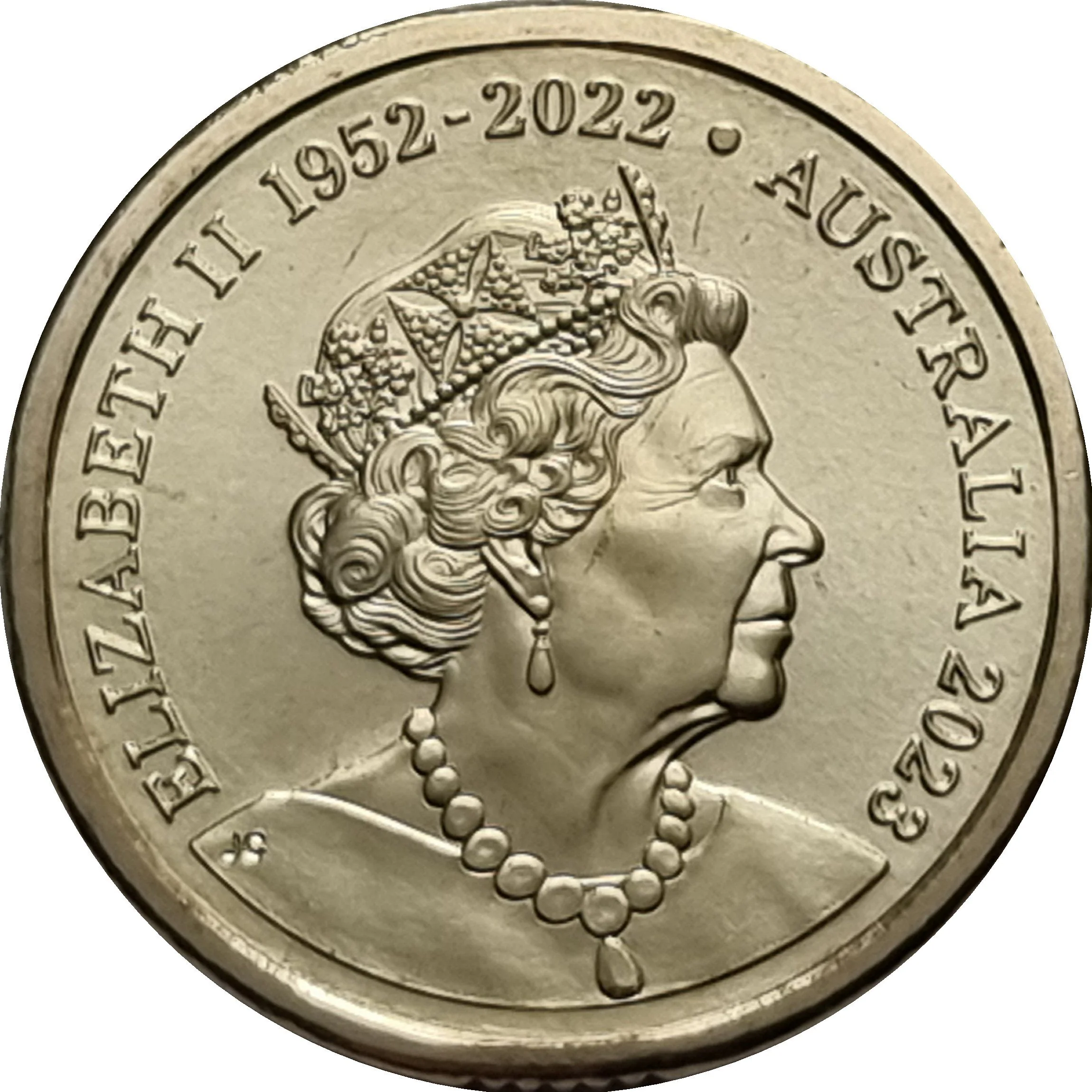
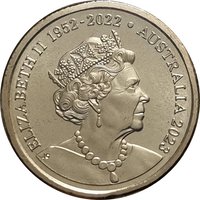
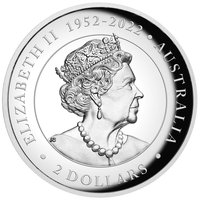
Memorial Obverse: sixth crowned portrait of Queen Elizabeth II facing right, wearing the George IV State Diadem and Victorian Coronation Necklace.
Inscription:
ELIZABETH II 1952-2022
AUSTRALIA 2023
JC
AUSTRALIA 2023
JC
Script: Latin
Designer: Jody Clark
Reverse
Description:
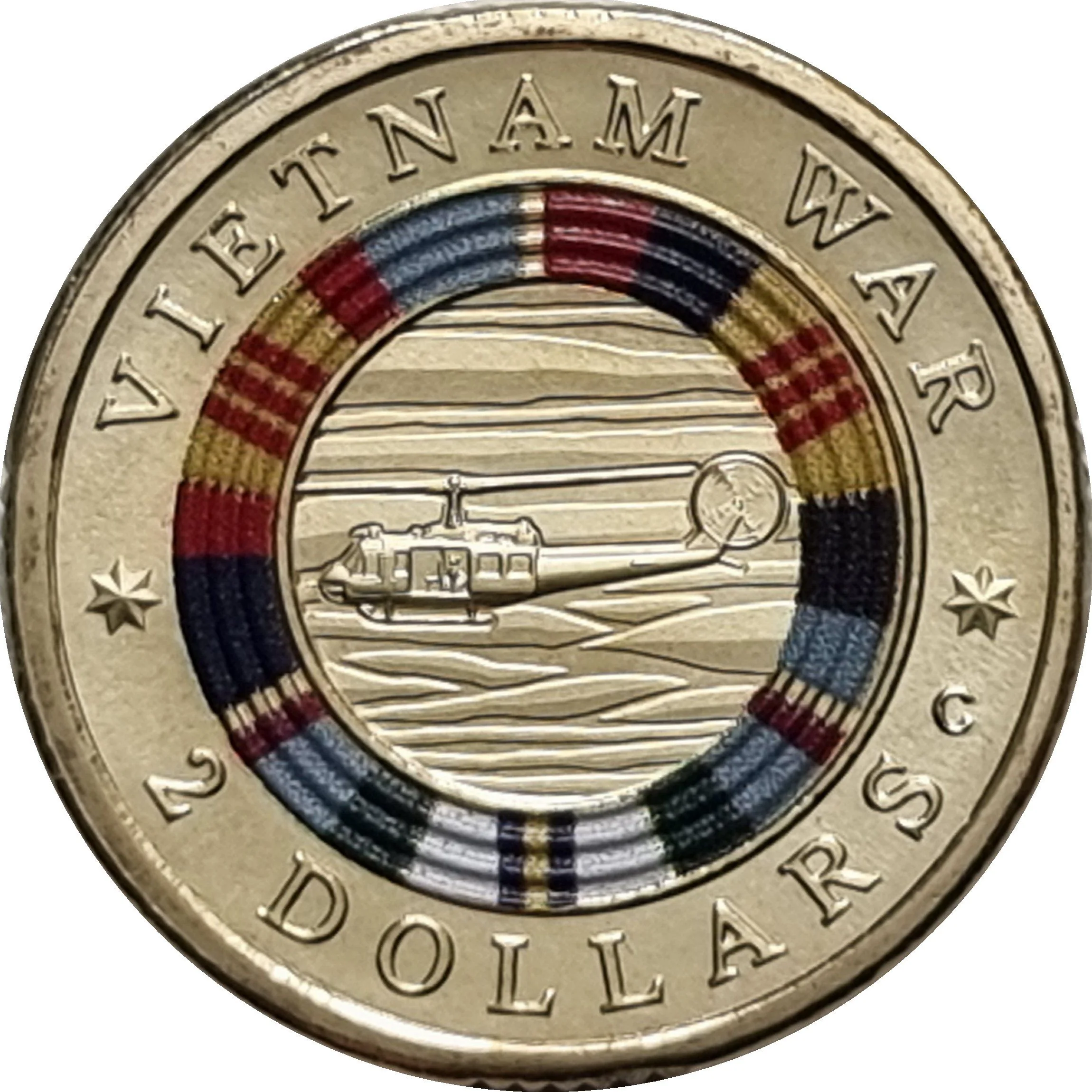
Iroquois helicopter centre encircled by military ribbon colours, text and two seven-pointed stars.
Inscription:
VIETNAM WAR
TWO DOLLARS C
TWO DOLLARS C
Script: Latin
Edge
Smooth with 4 short reeded segments (5 grooves each)
Categories
| Transportation> Aircraft |
| History> War |
Mints
| Name | Mark |
|---|---|
| Royal Australian Mint | C |
Mintings
| Year | Mint Mark | Mintage | Quality | Collection |
|---|---|---|---|---|
| 2023 | C | 80,000 | BU |
Historical background
In 2023, Australia's currency situation was defined by the Reserve Bank of Australia's (RBA) continued battle against persistent inflation. Having raised the official cash rate aggressively from a historic low of 0.10% in May 2022, the RBA implemented four further hikes in 2023, reaching 4.35% by November. This tightening cycle aimed to dampen demand and bring inflation, which peaked at 7.8% in late 2022, back within the target band of 2-3%. However, the pace of increases moderated as the year progressed, with the RBA adopting a more data-dependent approach amid signs of a slowing economy.
The Australian dollar (AUD) experienced significant volatility throughout the year, largely driven by shifting global risk sentiment and divergent central bank policies. Initially strengthening in the first quarter on China's economic reopening, the AUD later faced pressure from a resilient US dollar and concerns over a slowing Chinese economy—a key trading partner. Domestically, the currency was caught between supporting factors (high interest rates and commodity exports) and headwinds (weakening growth outlook). It traded in a wide range, from below US$0.63 in October to above US$0.68 in July, reflecting this uncertainty.
By year's end, the economic backdrop was one of cautious calibration. While inflation showed signs of moderating, it remained stubbornly above target, prompting the RBA to maintain a tightening bias. The housing market adjusted to higher borrowing costs, and consumer spending softened, pointing to the intended cooling effect of monetary policy. Consequently, the currency narrative shifted from one focused solely on inflation combat to a balancing act, weighing the risks of overtightening against the need to ensure inflation's return to target, setting a cautious stage for 2024.
The Australian dollar (AUD) experienced significant volatility throughout the year, largely driven by shifting global risk sentiment and divergent central bank policies. Initially strengthening in the first quarter on China's economic reopening, the AUD later faced pressure from a resilient US dollar and concerns over a slowing Chinese economy—a key trading partner. Domestically, the currency was caught between supporting factors (high interest rates and commodity exports) and headwinds (weakening growth outlook). It traded in a wide range, from below US$0.63 in October to above US$0.68 in July, reflecting this uncertainty.
By year's end, the economic backdrop was one of cautious calibration. While inflation showed signs of moderating, it remained stubbornly above target, prompting the RBA to maintain a tightening bias. The housing market adjusted to higher borrowing costs, and consumer spending softened, pointing to the intended cooling effect of monetary policy. Consequently, the currency narrative shifted from one focused solely on inflation combat to a balancing act, weighing the risks of overtightening against the need to ensure inflation's return to target, setting a cautious stage for 2024.
Series: Lest We Forget





⭐ Rare