

2 shillings – South Africa
Add to wishlist
South Africa
Context
Years: 1951–1952
Issuer: South Africa
Ruler: George VI
Currency:
(1825—1961)
Demonetization: 31 March 1961
Total mintage: 4,317,667
Material
References
KM: #
Numista: #3595
Value
Bullion value: $14.17
Obverse
Description:
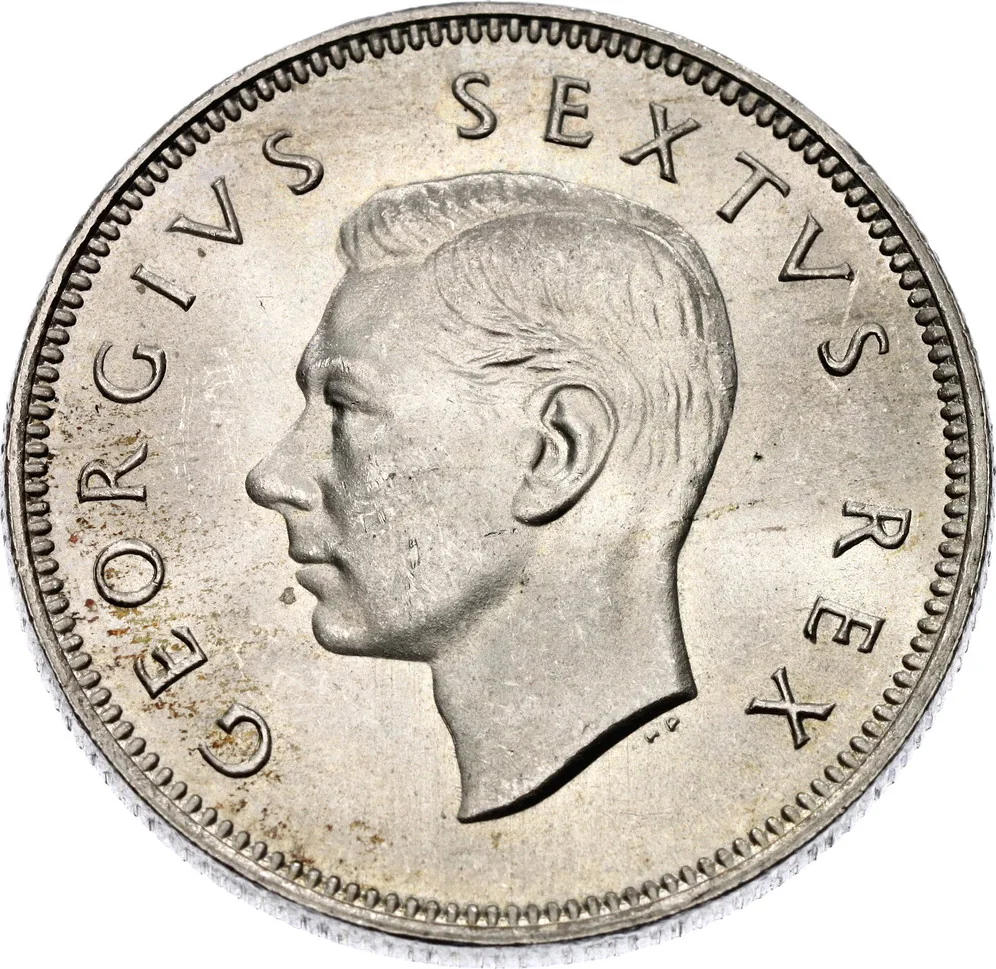
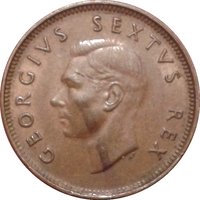
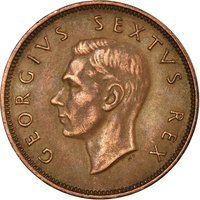
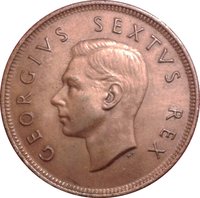
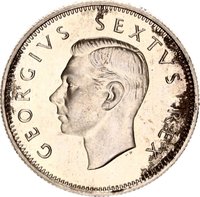
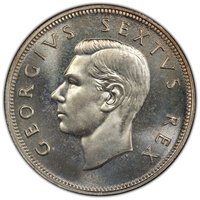
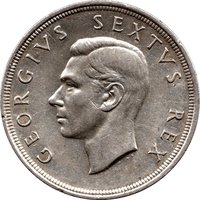
King George VI left-facing portrait, legend around, engraver's initials below.
Inscription:
GEORGIVS SEXTVS REX
HP
HP
Translation:
George the Sixth King
HP
HP
Script: Latin
Language: Latin
Engraver: Thomas Humphrey Paget
Reverse
Description:
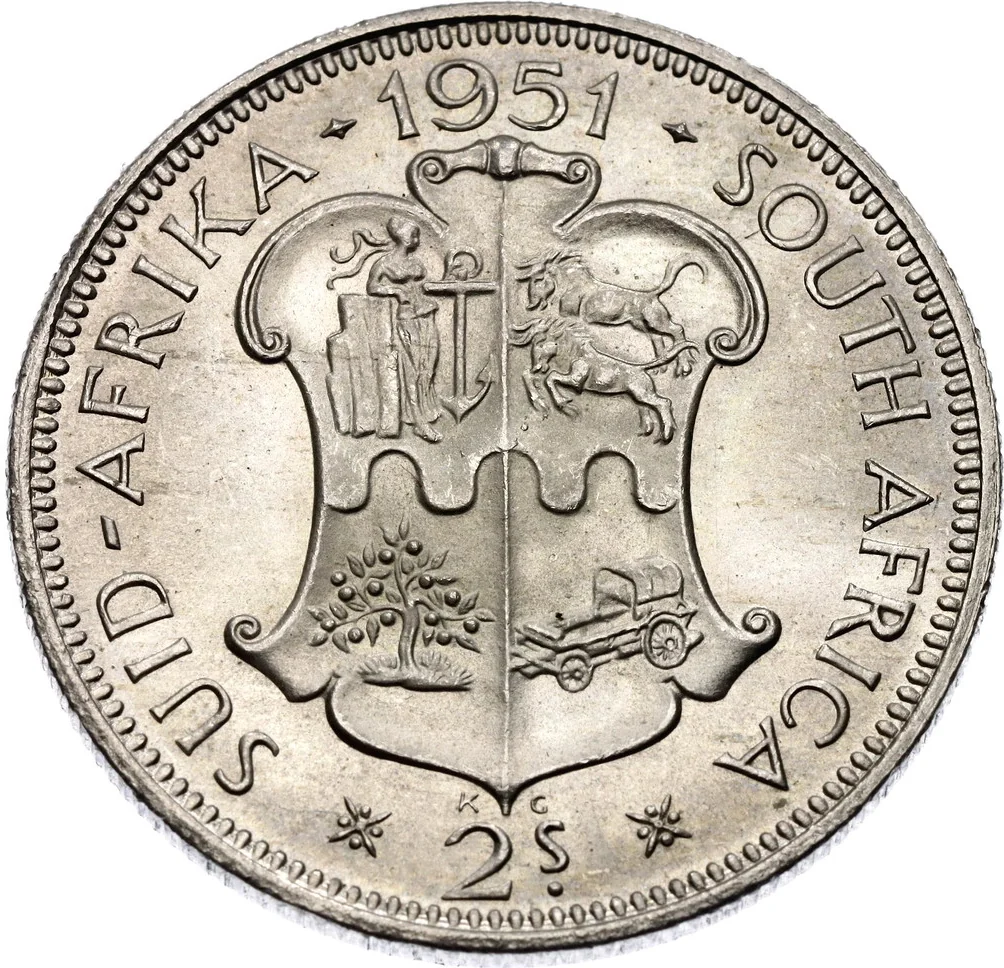
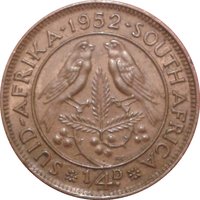
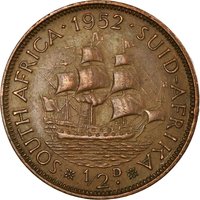
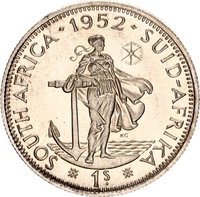
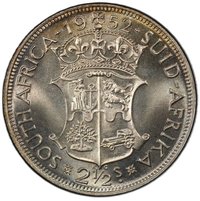
Quartered shield with date, surrounded by legend, denomination and initials below.
Inscription:
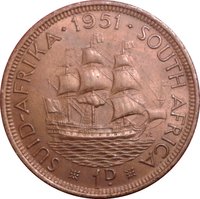
SUID-AFRIKA·1952·SOUTH AFRICA
K G
2S
K G
2S
Script: Latin
Engraver: George Kruger Gray
Edge
Reeded
Categories
| Symbols> Coat of Arms |
| Person> Monarch |
Mints
| Name | Mark |
|---|---|
| Pretoria | — |
Mintings
| Year | Mint Mark | Mintage | Quality | Collection |
|---|---|---|---|---|
| 1951 | — | 730,286 | ||
| 1951 | — | 2,000 | Proof | |
| 1952 | — | 15,500 | Proof | |
| 1952 | — | 3,569,881 |
Historical background
In 1951, South Africa's currency situation was defined by its recent transition to full monetary sovereignty and its deep integration into the Sterling Area. Following the victory of the National Party in 1948, the country had moved to establish greater economic independence from Britain. This culminated in the 1949 Decimal Coinage Act, which laid the groundwork to replace the British-style pounds, shillings, and pence with a decimal system, though the rand itself would not be introduced until 1961. The South African pound remained pegged to the British pound sterling, and the country held a significant portion of its reserves in London, tying its financial fortunes closely to the United Kingdom.
The period was marked by the economic pressures of the post-World War II boom and the implementation of apartheid. A major currency event occurred in late 1949 when, following the UK's devaluation of sterling by 30.5%, South Africa reluctantly followed suit, devaluing the South African pound by the same margin. This 1951 landscape was still feeling the effects of that devaluation, which aimed to boost gold mining revenues and agricultural exports—key pillars of the economy. The policy succeeded in stimulating these sectors, but also contributed to rising import costs and inflationary pressures, creating a complex economic environment.
Furthermore, the government's increasing isolation due to its apartheid policies began to subtly influence financial considerations. While not yet causing major capital flight in 1951, the political direction created underlying investor uncertainty. The currency system remained stable on the surface, underpinned by robust gold production, which provided a strong balance of payments. However, the foundations were being set for future monetary independence, and the economic priorities of the state were increasingly directed toward financing the expanding apartheid apparatus, with the currency system serving as a tool for both domestic control and international trade.
The period was marked by the economic pressures of the post-World War II boom and the implementation of apartheid. A major currency event occurred in late 1949 when, following the UK's devaluation of sterling by 30.5%, South Africa reluctantly followed suit, devaluing the South African pound by the same margin. This 1951 landscape was still feeling the effects of that devaluation, which aimed to boost gold mining revenues and agricultural exports—key pillars of the economy. The policy succeeded in stimulating these sectors, but also contributed to rising import costs and inflationary pressures, creating a complex economic environment.
Furthermore, the government's increasing isolation due to its apartheid policies began to subtly influence financial considerations. While not yet causing major capital flight in 1951, the political direction created underlying investor uncertainty. The currency system remained stable on the surface, underpinned by robust gold production, which provided a strong balance of payments. However, the foundations were being set for future monetary independence, and the economic priorities of the state were increasingly directed toward financing the expanding apartheid apparatus, with the currency system serving as a tool for both domestic control and international trade.

🌱 Common