

100 Zlotys – Poland
Non-circulating coins
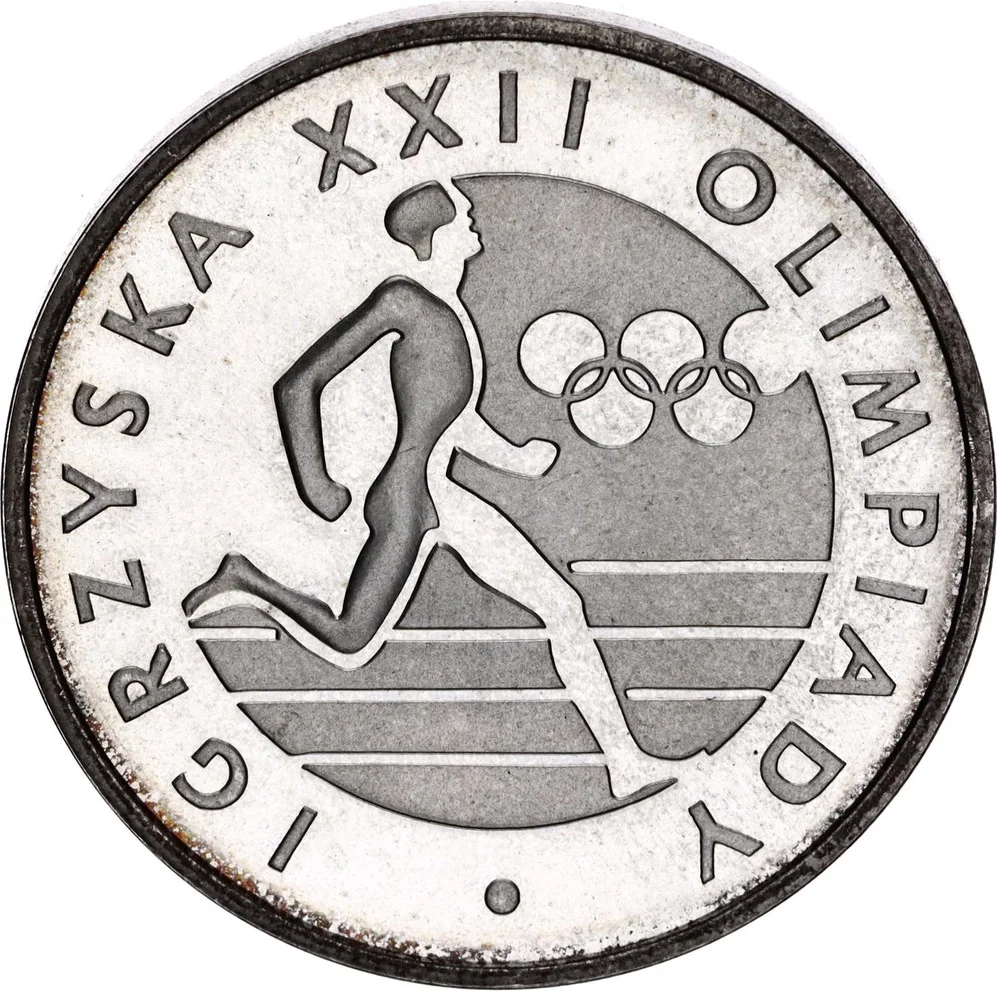
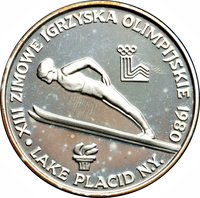
Commemoration: 1980 Olympic Games
Poland

Obverse
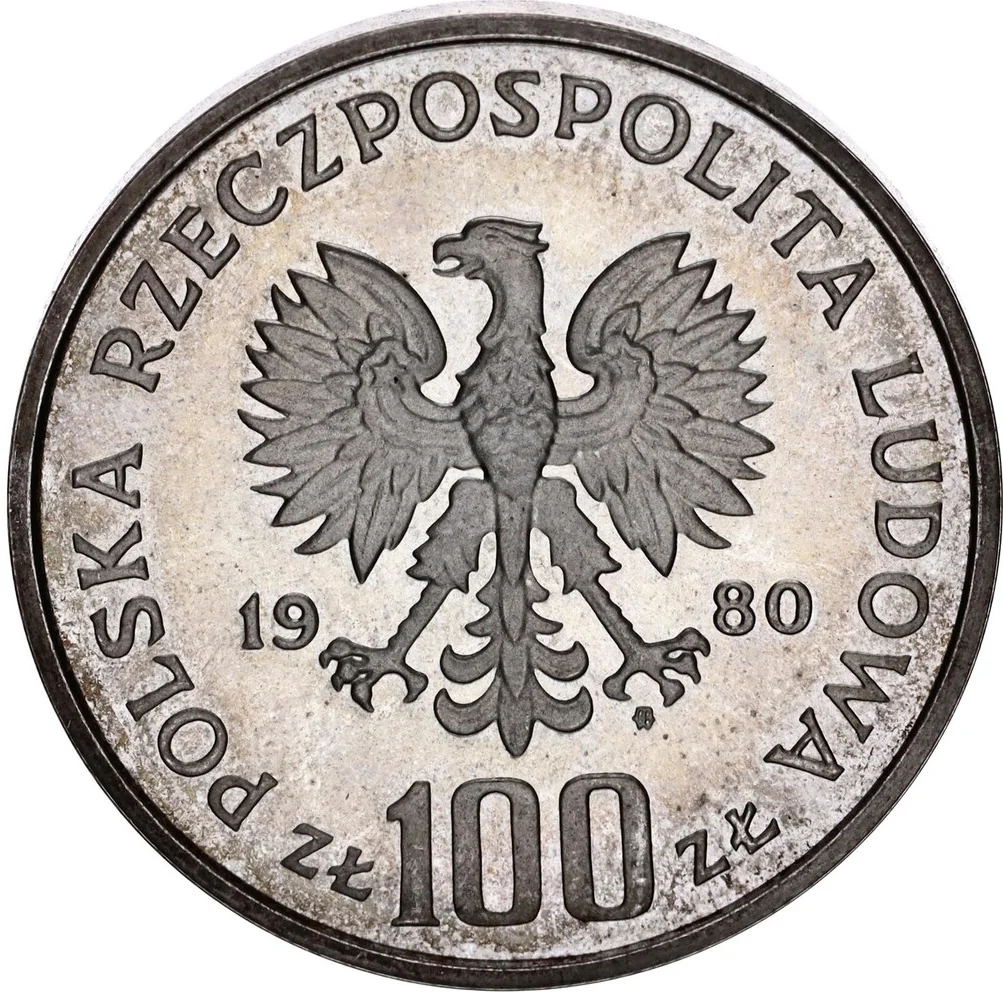
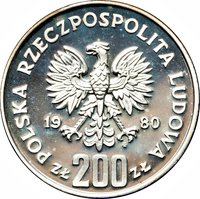
Inscription:
POLSKA RZECZPOSPOLITA LUDOWA
19 80
mw
ZŁ 100 ZŁ
19 80
mw
ZŁ 100 ZŁ
Translation:
PEOPLE'S REPUBLIC OF POLAND
19 80
mw
100 ZŁ ZŁ
19 80
mw
100 ZŁ ZŁ
Script: Latin
Language: Polish
Engraver: Stanisława Wątróbska-Frindt
Reverse
Edge
Plain
Categories
| Sport> Summer Olympic Games |
Mints
| Name | Mark |
|---|---|
| Mint of Poland | (MW) |
Mintings
| Year | Mint Mark | Mintage | Quality | Collection |
|---|---|---|---|---|
| 1980 | MW | 10,000 | Proof |
Historical background
By 1980, Poland's currency situation was a critical symptom of the deep structural crisis within its centrally planned economy. The Polish złoty (PLN) was a non-convertible currency, artificially pegged by the state and utterly divorced from its real market value. Officially, the exchange rate was around 30-40 złoty to the US dollar, but on the pervasive black market, the rate was closer to 200-250 złoty, revealing a vast gap between state fiction and economic reality. This duality reflected severe shortages of basic goods, as fixed prices and massive state subsidies led to empty shelves, rationing, and a thriving underground economy where hard currency or barter were often more useful than złoty.
The root causes were decades of economic mismanagement under the communist government, compounded by a crippling foreign debt burden from the 1970s. The policy of borrowing heavily from Western banks to finance industrial modernization and consumption had backfired, leaving Poland with over $20 billion in debt by 1980. To service this debt, the state exported what it could, further depriving the domestic market and fueling shortages. The economic strain, combined with the rise of the independent Solidarity trade union movement following the Gdańsk shipyard strikes in August 1980, created a period of intense social and political instability that further undermined confidence in the national currency.
Consequently, the złoty primarily functioned within the official state-controlled sector, while a parallel economy operated on US dollars, Deutsche Marks, and barter. The government, facing social unrest and the need for Western credit, was trapped: devaluing the złoty to a realistic rate would acknowledge economic failure and risk hyperinflation, while maintaining the fiction required ever-more oppressive subsidies and controls. This unsustainable currency regime symbolized the broader collapse of the Polish command economy, setting the stage for the austerity measures and dramatic reforms—including eventual currency redenomination and convertibility—that would follow in the next decade.
The root causes were decades of economic mismanagement under the communist government, compounded by a crippling foreign debt burden from the 1970s. The policy of borrowing heavily from Western banks to finance industrial modernization and consumption had backfired, leaving Poland with over $20 billion in debt by 1980. To service this debt, the state exported what it could, further depriving the domestic market and fueling shortages. The economic strain, combined with the rise of the independent Solidarity trade union movement following the Gdańsk shipyard strikes in August 1980, created a period of intense social and political instability that further undermined confidence in the national currency.
Consequently, the złoty primarily functioned within the official state-controlled sector, while a parallel economy operated on US dollars, Deutsche Marks, and barter. The government, facing social unrest and the need for Western credit, was trapped: devaluing the złoty to a realistic rate would acknowledge economic failure and risk hyperinflation, while maintaining the fiction required ever-more oppressive subsidies and controls. This unsustainable currency regime symbolized the broader collapse of the Polish command economy, setting the stage for the austerity measures and dramatic reforms—including eventual currency redenomination and convertibility—that would follow in the next decade.
💎 Very Rare