

100 Zlotys – Poland
Non-circulating coins
Commemoration: Henryk Wieniawski
Poland

Obverse
Description:
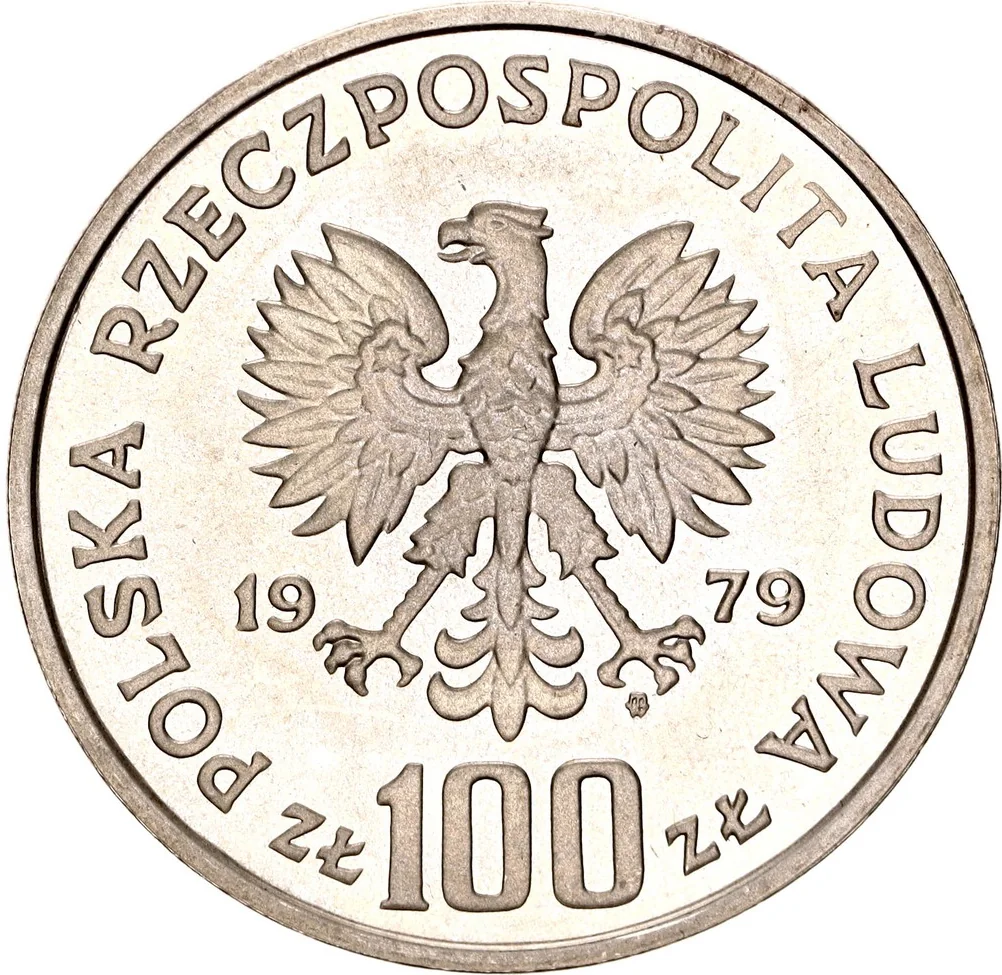
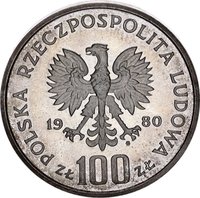
Imperial eagle atop value.
Inscription:
POLSKA RZECZPOSPOLITA LUDOWA
19 79
mw
ZŁ 100 ZŁ
19 79
mw
ZŁ 100 ZŁ
Translation:
PEOPLE'S REPUBLIC OF POLAND
19 79
mw
100 ZŁ ZŁ
19 79
mw
100 ZŁ ZŁ
Script: Latin
Language: Polish
Designer: Stanisława Wątróbska-Frindt
Reverse
Description:
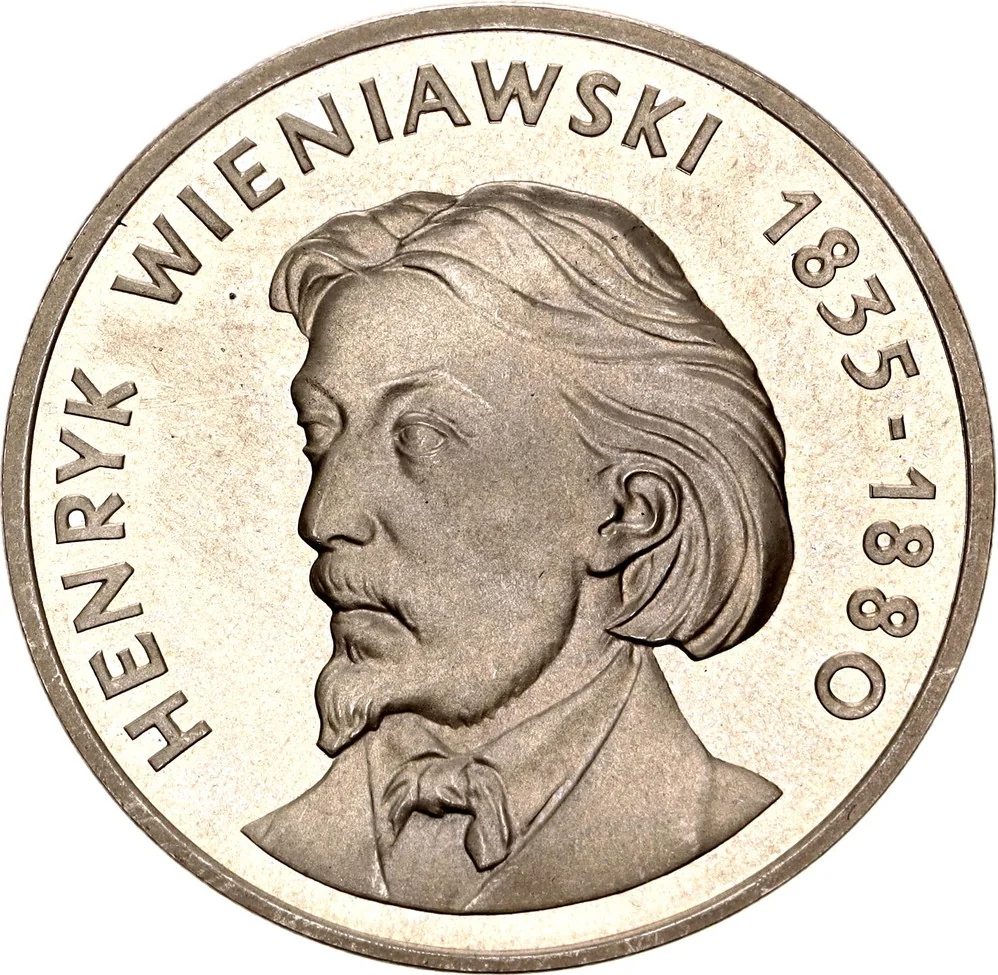
Henryk Wieniawski, three-quarter left profile.
Inscription:
HENRYK WIENIAWSKI 1835-1880
Script: Latin
Designer: Ewa Olszewska-Borys
Edge
Plain
Mints
| Name | Mark |
|---|---|
| Mint of Poland | (MW) |
Mintings
| Year | Mint Mark | Mintage | Quality | Collection |
|---|---|---|---|---|
| 1979 | MW | 30,000 | Proof |
Historical background
In 1979, Poland's currency situation was characterized by the severe strains of a centrally planned economy in decline, operating within the rigid framework of the Communist bloc. The official currency, the złoty, was non-convertible on international markets and its exchange rate was set by government decree at an artificially high level, bearing little relation to economic reality. This created a vast disparity between the official economy and the thriving black market, where hard currencies like the US dollar and the West German Deutsche Mark commanded a premium many times higher than the official rate, effectively functioning as a parallel shadow currency for obtaining scarce goods and services.
The economic backdrop was one of chronic shortage, stagnation, and mounting foreign debt. Years of inefficient state planning, subsidized prices, and heavy investment in industry had led to widespread consumer goods shortages, hidden inflation, and a growing dependence on Western loans to import essential technology and food. The government, led by Edward Gierek, attempted to maintain social peace through subsidies, which further distorted the economy and increased the budget deficit. The złoty's purchasing power was steadily eroding, though this was masked in official statistics, and the public's trust in the national currency was low.
This unstable monetary environment was a key symptom of the deeper systemic crisis that would erupt into the Solidarity movement the following year. The currency duality reflected the divide between the state's propaganda of stability and the daily economic frustrations of citizens. The situation was unsustainable, presaging the need for drastic economic reforms and ultimately contributing to the political upheavals of the 1980s, as the regime's inability to manage the economy or provide basic goods became a central rallying point for popular dissent.
The economic backdrop was one of chronic shortage, stagnation, and mounting foreign debt. Years of inefficient state planning, subsidized prices, and heavy investment in industry had led to widespread consumer goods shortages, hidden inflation, and a growing dependence on Western loans to import essential technology and food. The government, led by Edward Gierek, attempted to maintain social peace through subsidies, which further distorted the economy and increased the budget deficit. The złoty's purchasing power was steadily eroding, though this was masked in official statistics, and the public's trust in the national currency was low.
This unstable monetary environment was a key symptom of the deeper systemic crisis that would erupt into the Solidarity movement the following year. The currency duality reflected the divide between the state's propaganda of stability and the daily economic frustrations of citizens. The situation was unsustainable, presaging the need for drastic economic reforms and ultimately contributing to the political upheavals of the 1980s, as the regime's inability to manage the economy or provide basic goods became a central rallying point for popular dissent.
⭐ Rare