

10 soldi – Papal States
Add to wishlist
Vatican City
Context
Years: 1868–1869
Country: Vatican City
Issuer: Papal States
Ruler: Pius IX
Currency:
(1866—1870)
Demonetized: Yes
Total mintage: 12,636,740
Material
References
KM: #
Numista: #3583
Value
Bullion value: $5.12
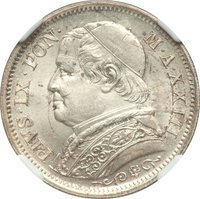
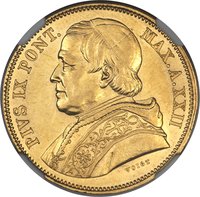
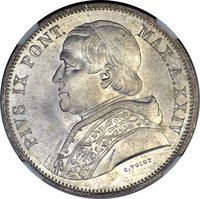
Obverse
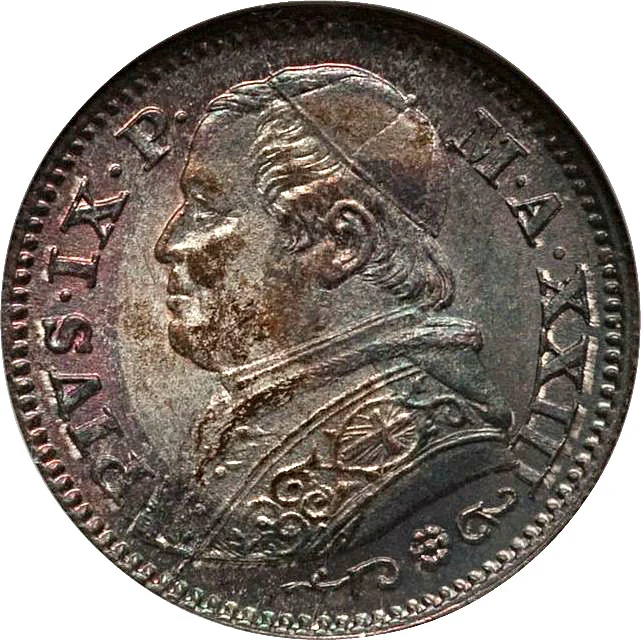
Description:
Leftward bust.
Inscription:
PIVS·IX·P· M·A·XXIII
Translation:
Pius IX, Pontifex Maximus, Year 23
Script: Latin
Language: Latin
Engraver: Carl Friedrich Voigt
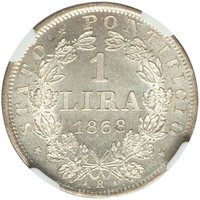
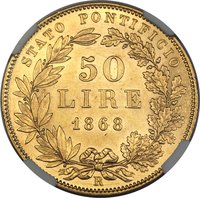
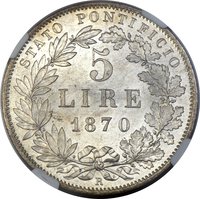
Reverse
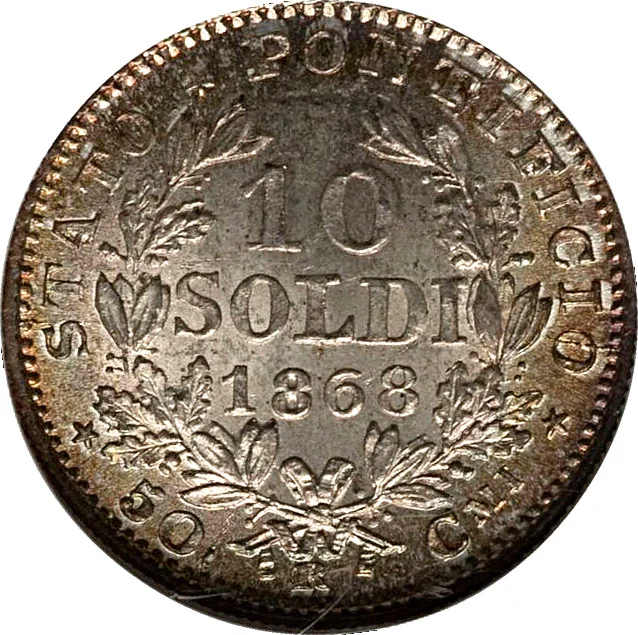
Description:
Value and date encircled.
Inscription:
*STATO*PONTIFICIO*
10 SOLDI
50 R C MI
10 SOLDI
50 R C MI
Translation:
Papal State
10 Soldi
50 Roman Republic, Mint of Milan
10 Soldi
50 Roman Republic, Mint of Milan
Script: Latin
Engraver: Carl Friedrich Voigt
Edge
Reeded
Mints
| Name | Mark |
|---|---|
| Rome | R |
Historical background
In 1868, the currency situation within the Papal States was complex and indicative of its precarious political and economic position. The state officially operated on a bimetallic system based on the scudo, divided into 100 baiocchi, with a parallel system of lire (each worth one French franc). However, the reality was a chaotic circulation of diverse coins. Alongside Papal mint issues, French, Austrian, Tuscan, Neapolitan, and Sardinian coins all circulated freely due to trade, previous occupations, and political influence. This monetary plurality created confusion in everyday transactions and hindered commerce.
Economically, the Papal treasury was under severe strain. The cost of maintaining a large bureaucracy, coupled with the enormous expense of funding a foreign army (primarily French troops) to protect the Pope's temporal power from Italian unification forces, had led to chronic budget deficits. To raise revenue, the government heavily relied on debasement—reducing the precious metal content in newly minted coins compared to older issues. This practice, while providing short-term liquidity, eroded public trust in the currency and spurred inflation, punishing the local populace.
The year 1868 fell within the final, unstable decade of the Papal States' existence. The monetary disorder was a direct reflection of its fading sovereignty, caught between the advancing forces of the Kingdom of Italy and its dependence on foreign military protection. The circulation of so many external currencies, particularly the French franc and the coins of surrounding Italian states, foreshadowed the imminent monetary unification that would follow political annexation. Just two years later, in 1870, with the capture of Rome, the Papal States would cease to exist, and the Italian lira would become the sole legal tender, ending the fragmented currency system for good.
Economically, the Papal treasury was under severe strain. The cost of maintaining a large bureaucracy, coupled with the enormous expense of funding a foreign army (primarily French troops) to protect the Pope's temporal power from Italian unification forces, had led to chronic budget deficits. To raise revenue, the government heavily relied on debasement—reducing the precious metal content in newly minted coins compared to older issues. This practice, while providing short-term liquidity, eroded public trust in the currency and spurred inflation, punishing the local populace.
The year 1868 fell within the final, unstable decade of the Papal States' existence. The monetary disorder was a direct reflection of its fading sovereignty, caught between the advancing forces of the Kingdom of Italy and its dependence on foreign military protection. The circulation of so many external currencies, particularly the French franc and the coins of surrounding Italian states, foreshadowed the imminent monetary unification that would follow political annexation. Just two years later, in 1870, with the capture of Rome, the Papal States would cease to exist, and the Italian lira would become the sole legal tender, ending the fragmented currency system for good.
🌱 Common