

100 fils – Hashemite Kingdom
Add to wishlist
Jordan
Context
Year: 1953
Islamic (Hijri) Year:: 1372
Country: Jordan
Issuer: Hashemite Kingdom
Ruler: Faisal II
Currency:
(since 1931)
Demonetization: 6 January 1961
Total mintage: 1,200,200
Material
References
KM: #
Numista: #35759
Value
Exchange value: 0.100 IQD
Bullion value: $23.00
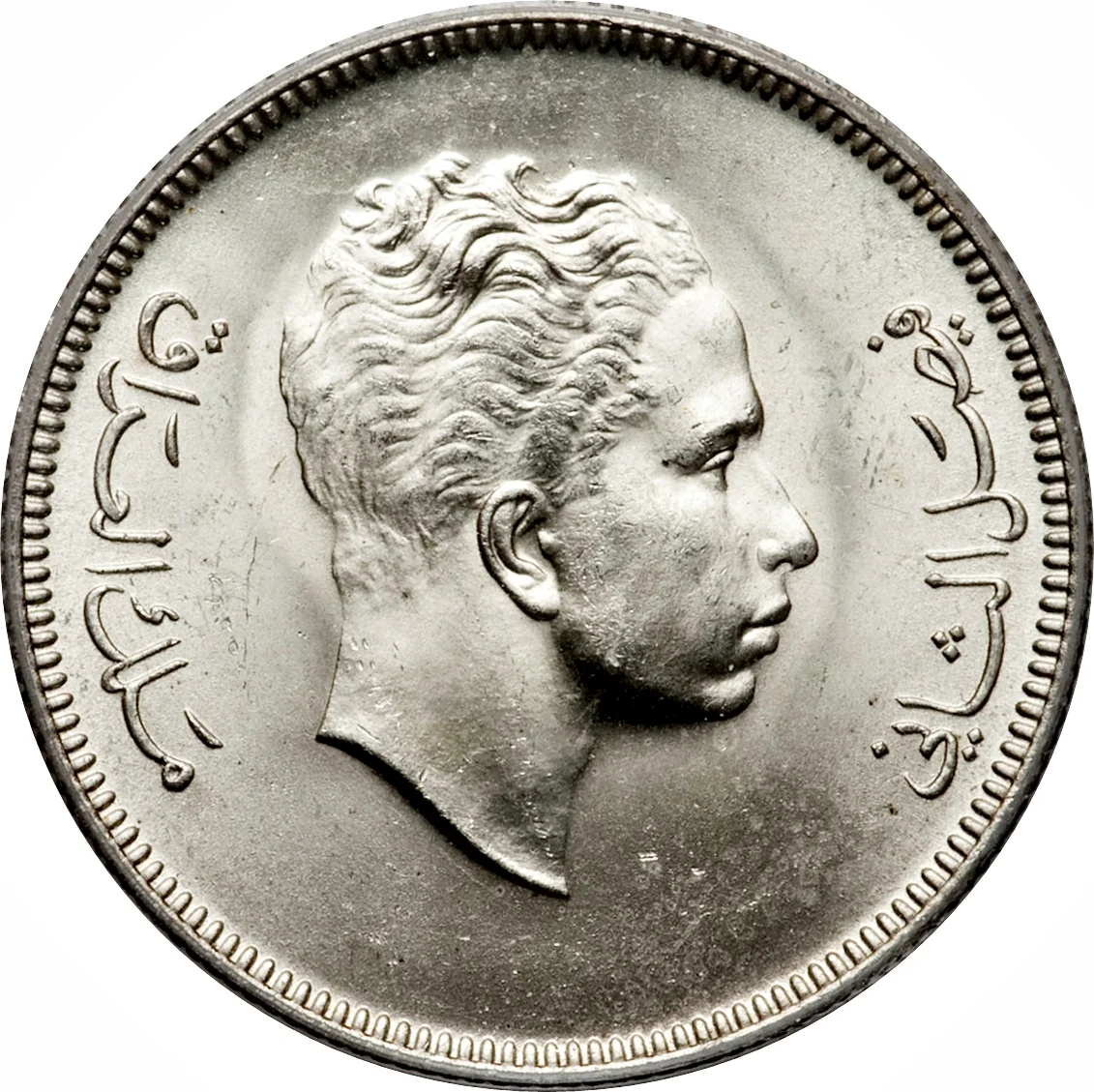
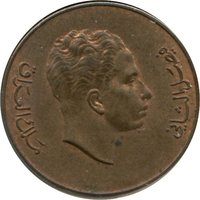
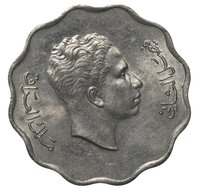
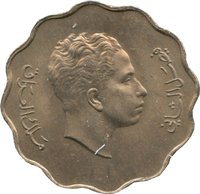
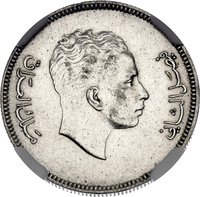
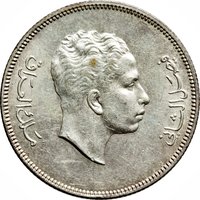
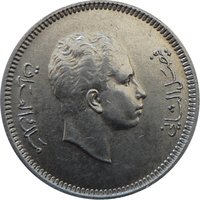
Obverse
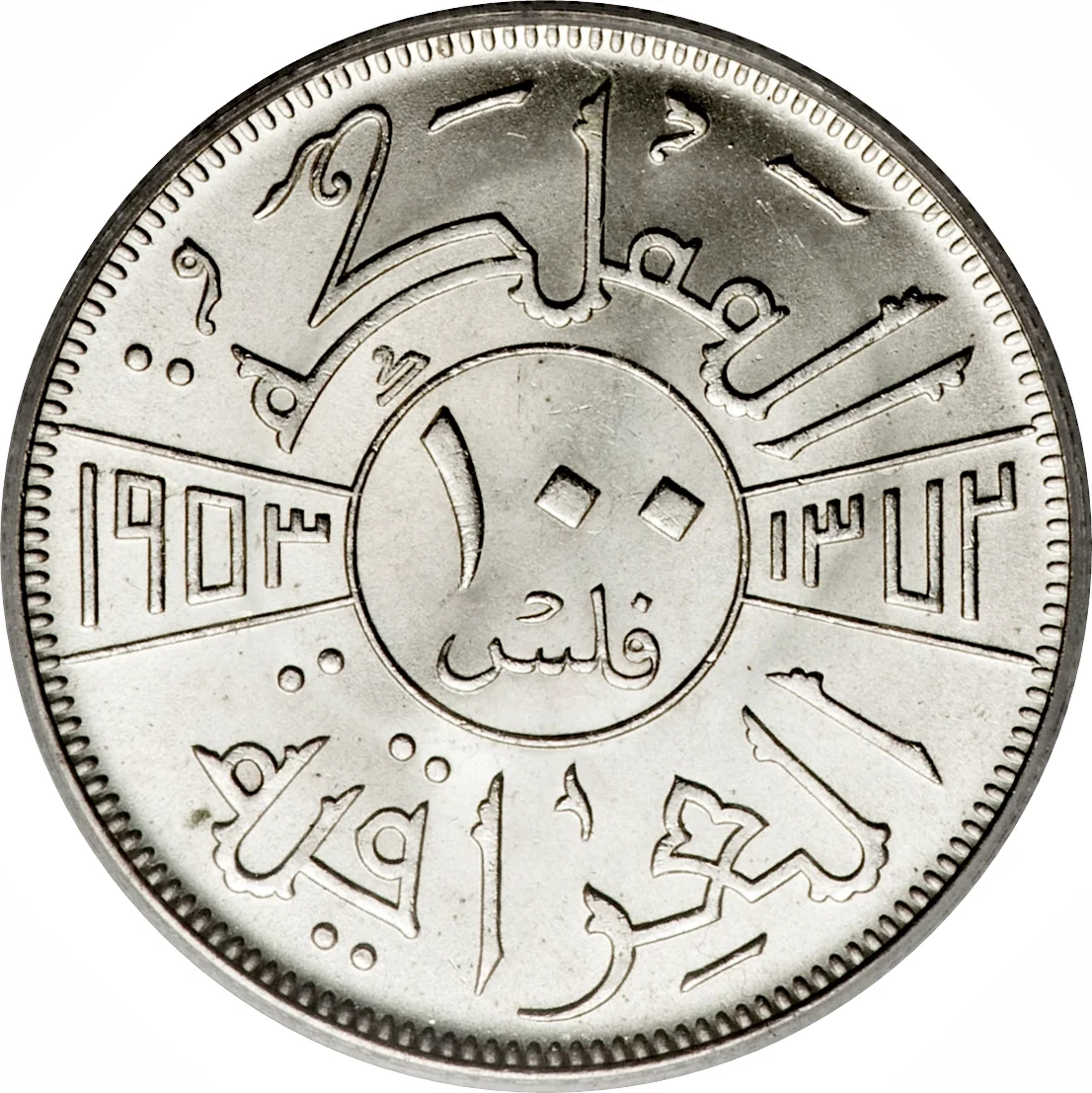
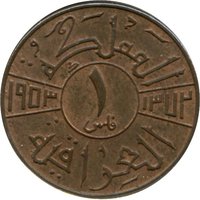
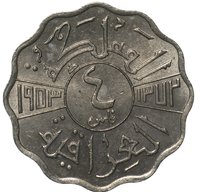
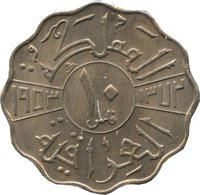
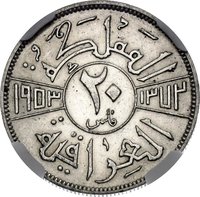
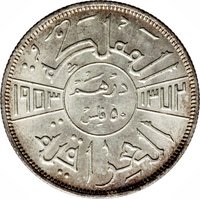
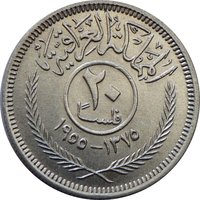
Reverse
Edge
Reeded
Mints
| Name | Mark |
|---|---|
| Royal Mint (Tower Hill) | — |
Mintings
| Year | Mint Mark | Mintage | Quality | Collection |
|---|---|---|---|---|
| 1953 | — | 1,200,000 | ||
| 1953 | — | 200 | Proof |
Historical background
In 1953, the Hashemite Kingdom of Jordan was navigating a complex monetary landscape defined by its recent independence and regional ties. Following the dissolution of the British Mandate in 1946 and the 1948 Arab-Israeli War, which resulted in a massive influx of Palestinian refugees, Jordan's economy was under significant strain. The country did not yet issue its own independent currency; instead, it remained part of the "Sterling Area" and used the Palestinian Pound. This currency, issued by the British Mandate authorities and later by the Jordan Currency Board established in 1950, was pegged to the British Pound Sterling, linking Jordan's financial stability directly to the United Kingdom.
The monetary system was in a transitional phase, as the Jordan Currency Board, based in London, had the authority to issue notes and maintain reserves. This arrangement provided a degree of stability and international confidence, but it also meant Jordan lacked full control over its monetary policy. The currency in circulation—the Palestinian Pound, often stamped with "The Hashemite Kingdom of Jordan"—was a practical solution but a symbol of incomplete financial sovereignty. Economic challenges were acute, with the government heavily reliant on British subsidies and foreign aid to manage budget deficits exacerbated by the costs of integrating refugees and maintaining a larger military.
This backdrop set the stage for a significant monetary reform. The pressures of nation-building and economic development ultimately led to the establishment of the Central Bank of Jordan in 1959. Therefore, the currency situation in 1953 represents a pivotal prelude, where Jordan operated under a colonial-era currency board system, grappling with postwar economic hardships while laying the institutional groundwork for its own independent dinar, which would be introduced in 1950.
The monetary system was in a transitional phase, as the Jordan Currency Board, based in London, had the authority to issue notes and maintain reserves. This arrangement provided a degree of stability and international confidence, but it also meant Jordan lacked full control over its monetary policy. The currency in circulation—the Palestinian Pound, often stamped with "The Hashemite Kingdom of Jordan"—was a practical solution but a symbol of incomplete financial sovereignty. Economic challenges were acute, with the government heavily reliant on British subsidies and foreign aid to manage budget deficits exacerbated by the costs of integrating refugees and maintaining a larger military.
This backdrop set the stage for a significant monetary reform. The pressures of nation-building and economic development ultimately led to the establishment of the Central Bank of Jordan in 1959. Therefore, the currency situation in 1953 represents a pivotal prelude, where Jordan operated under a colonial-era currency board system, grappling with postwar economic hardships while laying the institutional groundwork for its own independent dinar, which would be introduced in 1950.
⭐ Rare