

4 soldi – Papal States
Add to wishlist
Vatican City
Context
Years: 1866–1869
Country: Vatican City
Issuer: Papal States
Ruler: Pius IX
Currency:
(1866—1870)
Demonetized: Yes
Total mintage: 12,258,000
Material
References
KM: #
Numista: #3575
Obverse
Description:
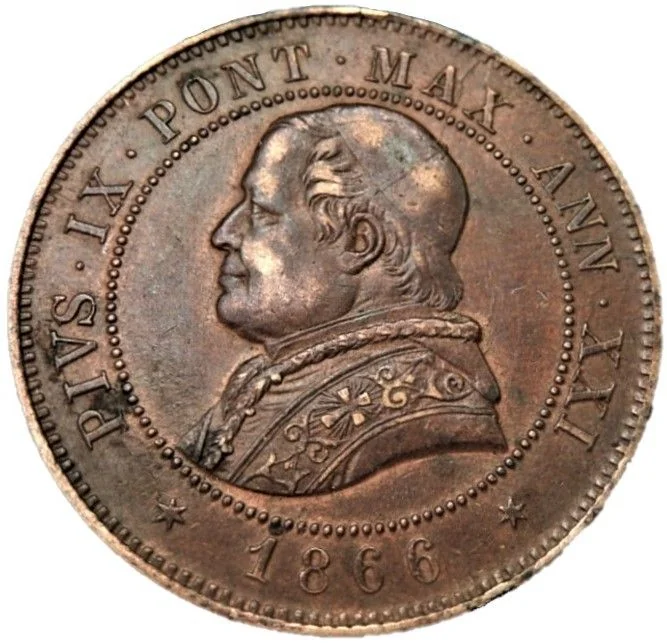
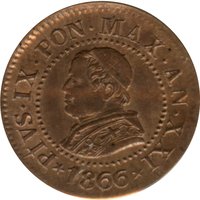
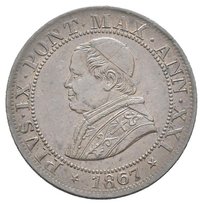
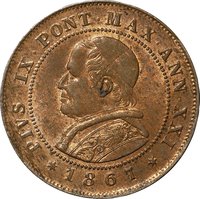
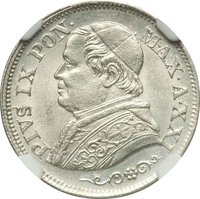
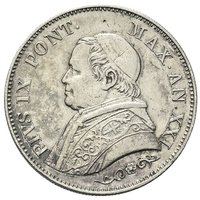
Bust left in beaded circle, date below. Legend abbreviations: PONT. MAX. (pontifex maximus) and ANN.XXI (year 21 of reign).
Inscription:
PIVS · IX · PONT · MAX · ANN · XXI
* 1866 *
* 1866 *
Translation:
Pius IX, Supreme Pontiff, in the 21st year [of his reign].
* 1866 *
* 1866 *
Script: Latin
Language: Latin
Engraver: Carl Friedrich Voigt
Reverse
Description:
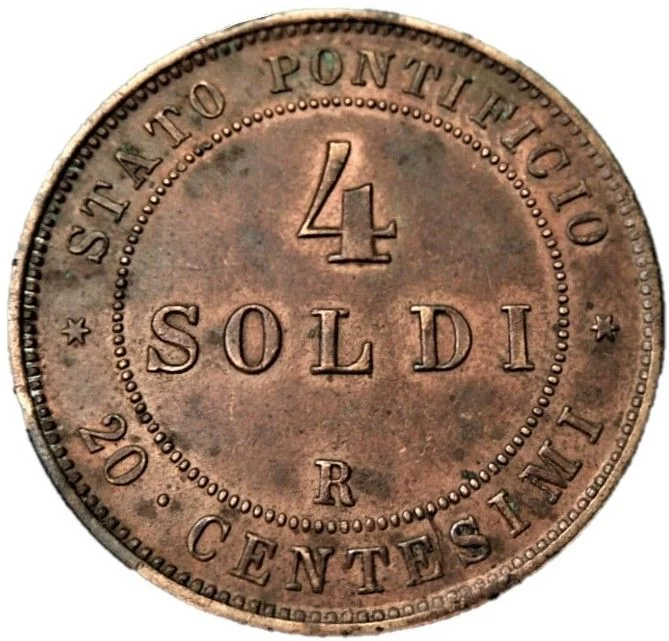
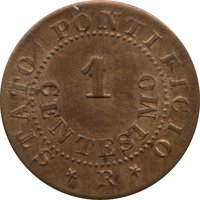
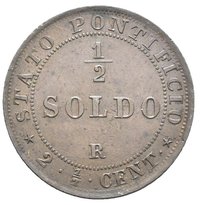
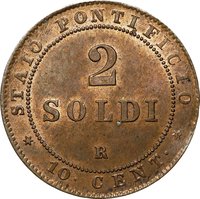
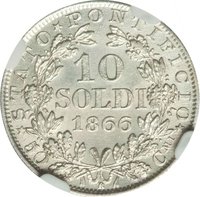
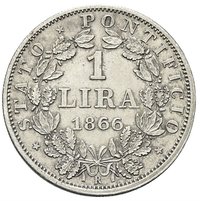
Value and mintmark inside beaded circle.
Inscription:
STATO PONTIFICIO
4
SOLDI
R
20 · CENTESIMI
4
SOLDI
R
20 · CENTESIMI
Translation:
Pontifical State
4
Soldi
R
20 · Centesimi
4
Soldi
R
20 · Centesimi
Script: Latin
Language: Italian
Engraver: Carl Friedrich Voigt
Edge
Plain
Mints
| Name | Mark |
|---|---|
| Rome | R |
Mintings
Historical background
In 1866, the Papal States faced a severe monetary crisis, a direct consequence of its precarious political and financial position during the Italian Risorgimento. The state's treasury had been drained by the costs of maintaining a large foreign mercenary army to defend its territories against the advancing forces of the Kingdom of Italy. To cover these massive expenditures, the government of Pope Pius IX resorted to inflationary practices, including the excessive minting of low-value copper and silver coins and the issuance of paper money, known as biglietti di banca, which began to depreciate rapidly against harder currencies.
The situation was fundamentally one of a collapsing bimetallic system. Officially, the currency was the scudo, divided into 100 baiocchi, but in practice, a chaotic mix of coins circulated. This included not only Papal issues but also older Roman Republican coins, currencies from other Italian states, and even French francs, due to the presence of French garrison troops protecting Rome. The overproduction of subsidiary coinage, particularly copper, led to a severe loss of public confidence. Merchants and citizens began hoarding older, more trusted silver coins, leading to a classic case of Gresham's Law, where "bad money drives out good."
This monetary instability was both a symptom and an accelerator of the Papal States' final demise. The depreciating currency caused price inflation, hardship for the populace, and disrupted commerce, further undermining the legitimacy and functionality of the temporal papal government. The crisis would persist until the definitive end of the Papal States in 1870, after which its territories were integrated into the Kingdom of Italy and the new national lira currency replaced the chaotic papal monetary system.
The situation was fundamentally one of a collapsing bimetallic system. Officially, the currency was the scudo, divided into 100 baiocchi, but in practice, a chaotic mix of coins circulated. This included not only Papal issues but also older Roman Republican coins, currencies from other Italian states, and even French francs, due to the presence of French garrison troops protecting Rome. The overproduction of subsidiary coinage, particularly copper, led to a severe loss of public confidence. Merchants and citizens began hoarding older, more trusted silver coins, leading to a classic case of Gresham's Law, where "bad money drives out good."
This monetary instability was both a symptom and an accelerator of the Papal States' final demise. The depreciating currency caused price inflation, hardship for the populace, and disrupted commerce, further undermining the legitimacy and functionality of the temporal papal government. The crisis would persist until the definitive end of the Papal States in 1870, after which its territories were integrated into the Kingdom of Italy and the new national lira currency replaced the chaotic papal monetary system.
🌱 Fairly Common