

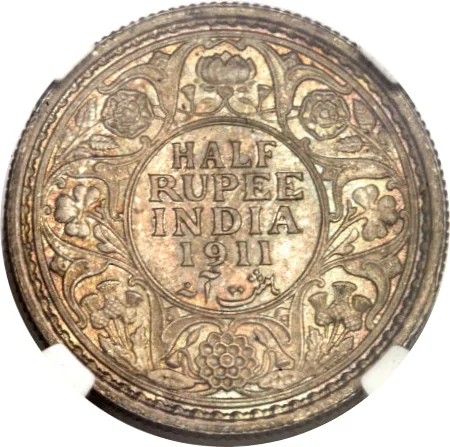
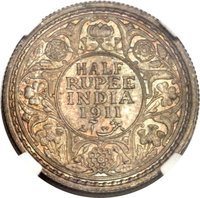
½ Rupee – India - British
India
Context
Year: 1911
Country: India 
Issuer: India - British
Ruler: George V
Currency:
(1770—1947)
Demonetized: Yes
Total mintage: 2,293,000
Material
References
KM: #Click to copy to clipboard521
Numista: #35743
Value
Bullion value: $15.51
Obverse
Description:
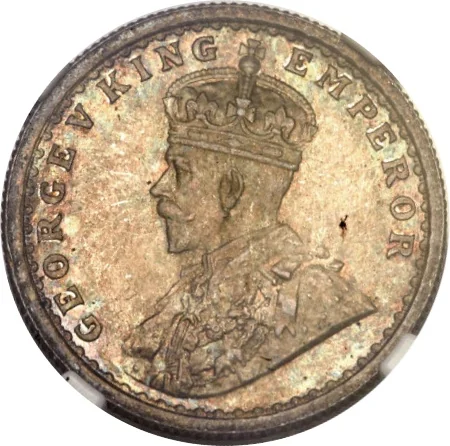
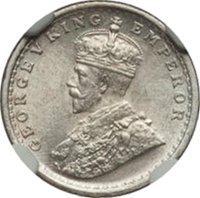
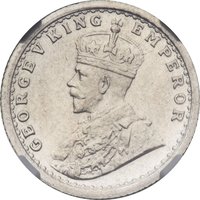
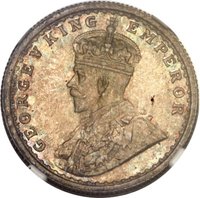
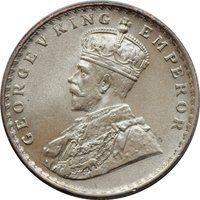
George V crowned left, Type I bust.
Inscription:
GEORGE V KING EMPEROR
Translation:
GEORGE V KING EMPEROR
Language: English
Engraver: Edgar Bertram MacKennal
Reverse
Edge
Reeded
Mints
| Name | Mark |
|---|---|
| Kolkata / Calcutta / Murshidabad | C |
Historical background
By 1911, the currency situation in British India was a complex and managed system, firmly under the control of the colonial government. The cornerstone was the Indian Rupee, a silver-based currency whose value had been severely destabilised in the late 19th century by the global depreciation of silver. To protect imperial financial interests, the British implemented the Gold Exchange Standard in 1898, effectively pegging the rupee to gold at a fixed rate of 1s 4d (16 pence sterling). This meant the rupee's value was no longer dictated by the market price of silver but was artificially maintained by the government's willingness to exchange rupees for sterling bills at that set rate.
The system was centralised and operated through a currency reserve held in London, which consisted of both gold and sterling securities. The government issued rupees against this reserve, strictly controlling the money supply to maintain the fixed exchange rate. This stability greatly facilitated trade and remittances to Britain (the "Home Charges"), but it came at a significant cost to the Indian economy. The high fixed exchange rate (often criticised as overvaluing the rupee) made Indian exports, like cotton textiles, more expensive and less competitive on the world market, while benefiting British imports and creditors.
Furthermore, the monetary policy was designed with imperial priorities first, often exacerbating domestic hardship. The strict control over currency issuance, intended to prevent inflation, frequently led to deflationary pressure and a scarcity of rupees in circulation, particularly in rural areas. This credit crunch hampered internal trade and agriculture, contributing to peasant indebtedness. Thus, in 1911, the currency system was a tool of colonial economic management—providing macroeconomic stability for imperial transactions but criticised for stifling indigenous industrial growth and prioritising London's financial markets over the welfare of the Indian populace.
The system was centralised and operated through a currency reserve held in London, which consisted of both gold and sterling securities. The government issued rupees against this reserve, strictly controlling the money supply to maintain the fixed exchange rate. This stability greatly facilitated trade and remittances to Britain (the "Home Charges"), but it came at a significant cost to the Indian economy. The high fixed exchange rate (often criticised as overvaluing the rupee) made Indian exports, like cotton textiles, more expensive and less competitive on the world market, while benefiting British imports and creditors.
Furthermore, the monetary policy was designed with imperial priorities first, often exacerbating domestic hardship. The strict control over currency issuance, intended to prevent inflation, frequently led to deflationary pressure and a scarcity of rupees in circulation, particularly in rural areas. This credit crunch hampered internal trade and agriculture, contributing to peasant indebtedness. Thus, in 1911, the currency system was a tool of colonial economic management—providing macroeconomic stability for imperial transactions but criticised for stifling indigenous industrial growth and prioritising London's financial markets over the welfare of the Indian populace.
💎 Extremely Rare