

1 escudo – Mozambique
Add to wishlist
Mozambique
Context
Years: 1950–1951
Issuer: Mozambique
Period:
(1910—1951)
Currency:
(1911—1974)
Demonetized: Yes
Total mintage: 20,000,000
Material
Diameter: 27 mm
Weight: 8.1 g
Shape: Round
Composition: Nickel brass
Magnetic: No
Technique: Milled
Alignment: Coin alignment
flip
References
KM: #
Numista: #14041
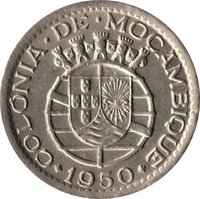
Obverse
Description:
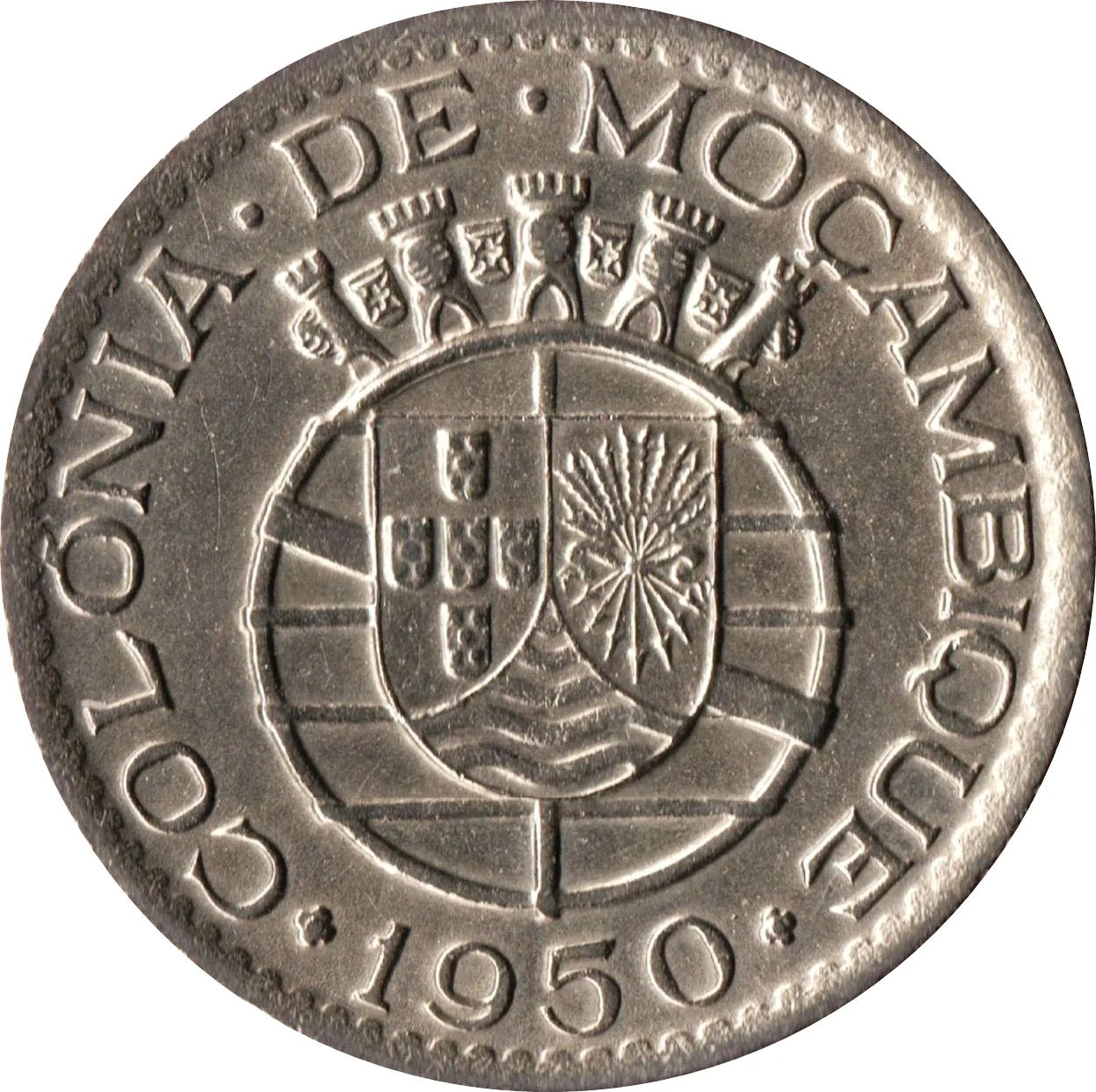
Crowned globe with arms, dated below.
Inscription:
· COLONIA · DE · MOÇAMBIQUE ·
1950
1950
Translation:
Colony of Mozambique
1950
1950
Script: Latin
Language: Portuguese
Reverse
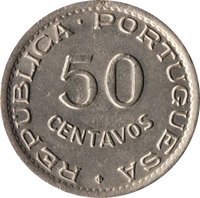
Description:
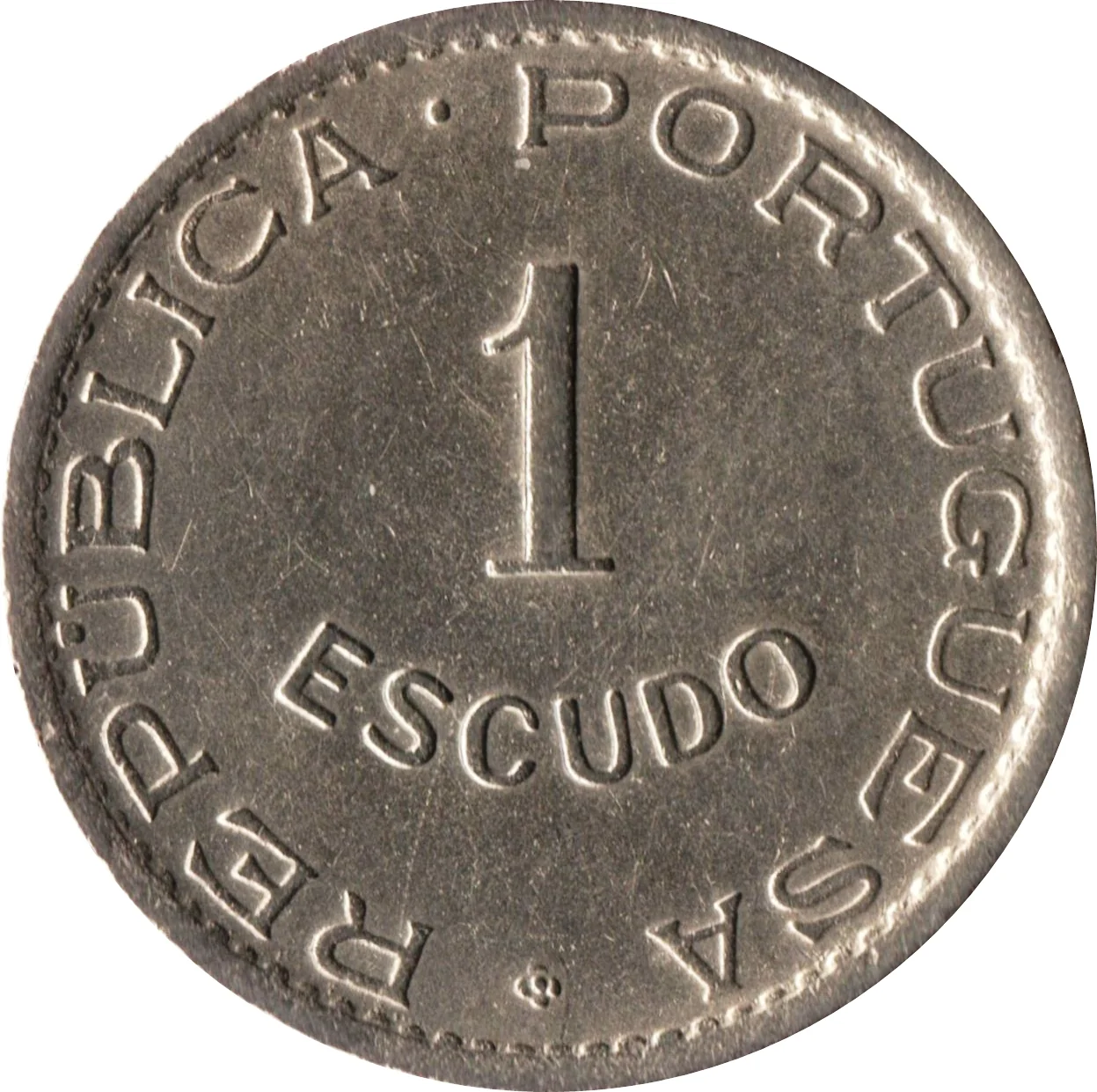
Center value, encircled by legend.
Inscription:
REPUBLICA · PORTUGUESA
1
ESCUDO
1
ESCUDO
Translation:
REPUBLIC · PORTUGUESE
1
SHIELD
1
SHIELD
Script: Latin
Language: Portuguese
Edge
Plain
Mintings
| Year | Mint Mark | Mintage | Quality | Collection |
|---|---|---|---|---|
| 1950 | — | 10,000,000 | ||
| 1951 | — | 10,000,000 |
Historical background
In 1950, Mozambique's currency situation was fundamentally shaped by its status as a Portuguese colony, integrated into Portugal's broader imperial financial system. The official currency was the Portuguese escudo (PTE), which circulated interchangeably with the Mozambican escudo (MZE). The Mozambican escudo, introduced in 1914, was pegged at par with the metropolitan Portuguese escudo, meaning one MZE equaled one PTE. This arrangement was managed by the Bank of Portugal, with the Bank of Mozambique (Banco Nacional Ultramarino acting as the issuing bank) functioning primarily as a colonial branch of the Lisbon-based system, ensuring monetary policy was directed from the metropole.
The economy was heavily geared towards exporting primary commodities—such as cotton, cashews, sugar, and tea—to Portugal and other international markets. Currency flows and exchange controls were tightly managed to benefit Portugal, with earnings from Mozambique's exports often used to offset Portugal's own trade deficits with other European nations. Internally, the monetary economy was largely concentrated in the hands of Portuguese settlers, colonial administration, and a few foreign companies, while a significant portion of the indigenous population remained engaged in subsistence agriculture or forced cash-crop cultivation, with limited integration into the formal cash-based system.
This period represented the height of colonial monetary integration, but the system was inherently extractive and unstable. The fixed parity and centralized control suppressed local economic autonomy and directed financial resources towards Lisbon. While it provided a stable exchange rate within the Portuguese empire, it tied Mozambique's fortunes directly to Portugal's weaker economy, a dependency that would contribute to future economic challenges. The structure established in this era would persist until the wars of independence began to destabilize the colonial economy in the 1960s.
The economy was heavily geared towards exporting primary commodities—such as cotton, cashews, sugar, and tea—to Portugal and other international markets. Currency flows and exchange controls were tightly managed to benefit Portugal, with earnings from Mozambique's exports often used to offset Portugal's own trade deficits with other European nations. Internally, the monetary economy was largely concentrated in the hands of Portuguese settlers, colonial administration, and a few foreign companies, while a significant portion of the indigenous population remained engaged in subsistence agriculture or forced cash-crop cultivation, with limited integration into the formal cash-based system.
This period represented the height of colonial monetary integration, but the system was inherently extractive and unstable. The fixed parity and centralized control suppressed local economic autonomy and directed financial resources towards Lisbon. While it provided a stable exchange rate within the Portuguese empire, it tied Mozambique's fortunes directly to Portugal's weaker economy, a dependency that would contribute to future economic challenges. The structure established in this era would persist until the wars of independence began to destabilize the colonial economy in the 1960s.
🌱 Common