

50 Centavos – Mozambique
Mozambique
Context
Year: 1945
Issuer: Mozambique 
Period:
(1910—1951)
Currency:
(1911—1974)
Demonetized: Yes
Total mintage: 2,500,000
Material
References
KM: #Click to copy to clipboard73
Numista: #14038
Obverse
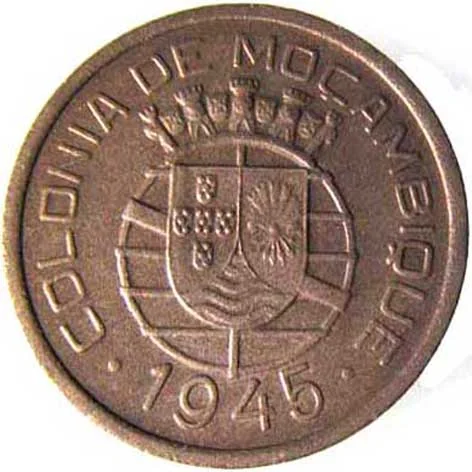
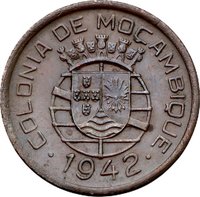
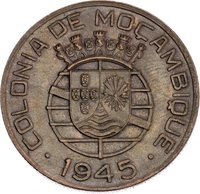
Description:
Crowned globe enclosing arms.
Inscription:
COLONIA DE MOÇAMBIQUE
·1945·
·1945·
Translation:
Colony of Mozambique
·1945·
·1945·
Script: Latin
Language: Portuguese
Reverse
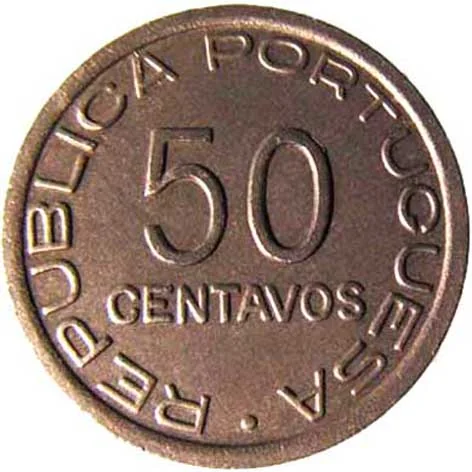
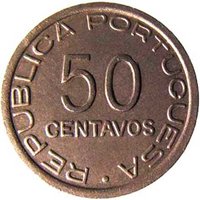
Description:
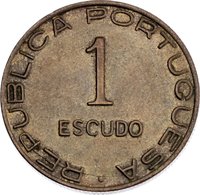
Central value, encircled legend.
Inscription:
REPUBLICA PORTUGUESA
50
CENTAVOS
50
CENTAVOS
Translation:
PORTUGUESE REPUBLIC
50
CENTS
50
CENTS
Script: Latin
Language: Portuguese
Edge
Reeded
Mintings
| Year | Mint Mark | Mintage | Quality | Collection |
|---|---|---|---|---|
| 1945 | — | 2,500,000 |
Historical background
In 1945, Mozambique's currency situation was fundamentally defined by its status as a Portuguese colony, integrated into the broader Portuguese imperial monetary system. The official currency was the Portuguese escudo, which circulated alongside Mozambique's own distinctive banknotes and coins. These were issued by the Banco Nacional Ultramarino (BNU), the privileged bank of the Portuguese empire, which acted as the colony's central bank and issuer of currency. While legally pegged to and interchangeable with the metropolitan Portuguese escudo, the colony's notes were physically different, bearing the name "Moçambique" and often local imagery, symbolizing a separate circulation within the colonial framework.
The economy was heavily oriented towards supporting Portugal's post-war recovery and its strategic goals of economic self-sufficiency within the empire. Mozambique's currency, therefore, facilitated the extraction of agricultural commodities (like cotton, cashews, and sugar) and minerals to feed Portuguese industries. The escudo zone, including Mozambique, operated with strict exchange controls and trade preferences directed towards Lisbon, limiting financial autonomy and integration with neighboring British-dominated territories in Southern Africa. This system ensured that Mozambique's monetary policy was decided in Lisbon, primarily to manage Portugal's own foreign reserves and balance of payments, rather than to address local Mozambican economic conditions.
Despite this formal structure, the reality on the ground was more complex. The official currency coexisted with traditional forms of exchange in less monetized rural areas, and the strict controls often spurred informal cross-border trade with British colonies like Southern Rhodesia and Nyasaland. Furthermore, the fixed parity and colonial economic policies did not shield Mozambique from the inflationary pressures affecting Portugal in the wake of World War II. Thus, in 1945, Mozambique's currency was a tool of colonial administration, binding the territory financially to a weakened and increasingly insular metropole while laying the groundwork for the economic challenges of the coming decades.
The economy was heavily oriented towards supporting Portugal's post-war recovery and its strategic goals of economic self-sufficiency within the empire. Mozambique's currency, therefore, facilitated the extraction of agricultural commodities (like cotton, cashews, and sugar) and minerals to feed Portuguese industries. The escudo zone, including Mozambique, operated with strict exchange controls and trade preferences directed towards Lisbon, limiting financial autonomy and integration with neighboring British-dominated territories in Southern Africa. This system ensured that Mozambique's monetary policy was decided in Lisbon, primarily to manage Portugal's own foreign reserves and balance of payments, rather than to address local Mozambican economic conditions.
Despite this formal structure, the reality on the ground was more complex. The official currency coexisted with traditional forms of exchange in less monetized rural areas, and the strict controls often spurred informal cross-border trade with British colonies like Southern Rhodesia and Nyasaland. Furthermore, the fixed parity and colonial economic policies did not shield Mozambique from the inflationary pressures affecting Portugal in the wake of World War II. Thus, in 1945, Mozambique's currency was a tool of colonial administration, binding the territory financially to a weakened and increasingly insular metropole while laying the groundwork for the economic challenges of the coming decades.
🌱 Common