

10 franga ari – Albania
Add to wishlist
Albania
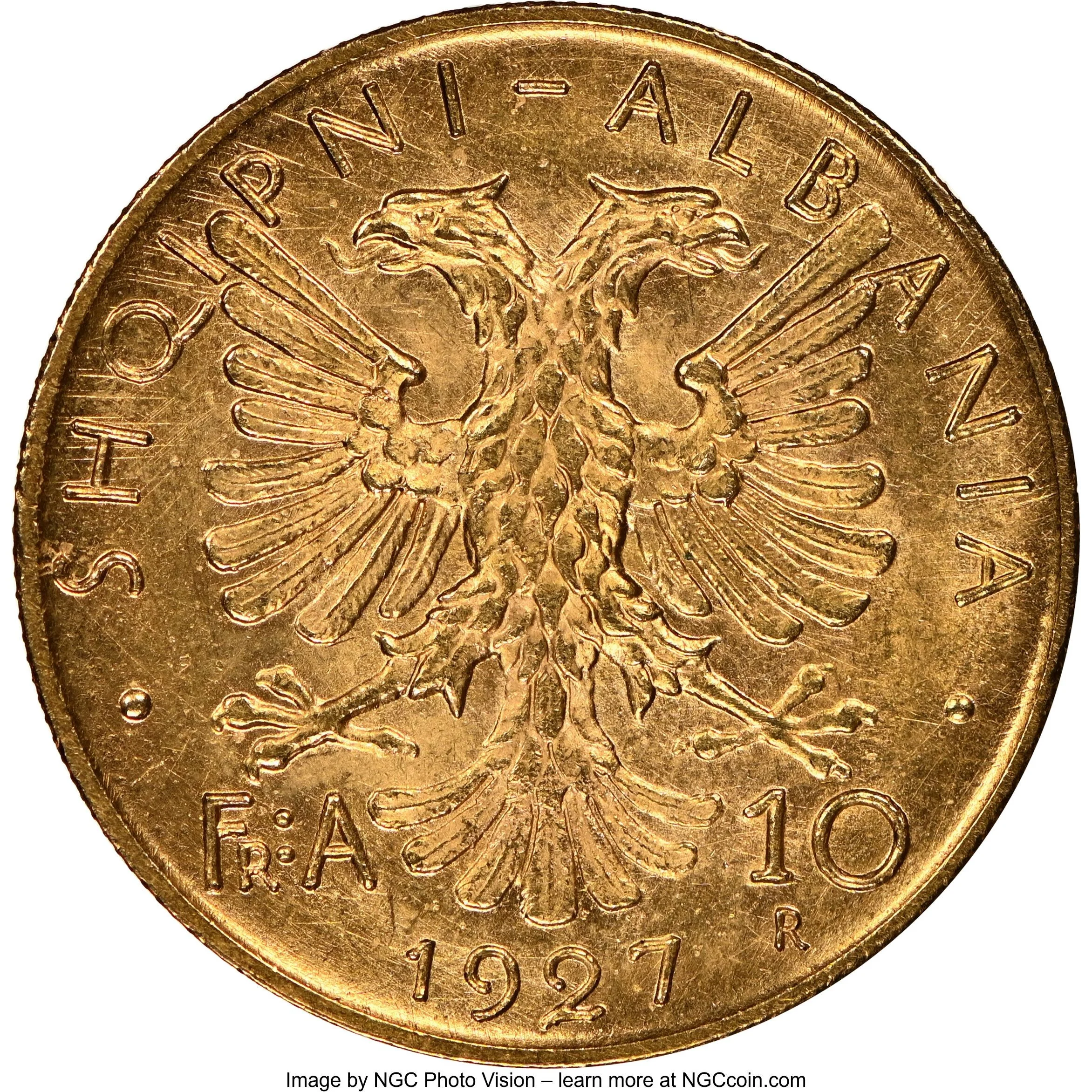
Obverse
Description:
Two-headed eagle, wings and legs outstretched.
Inscription:
· SHQIPNI - ALBANIA ·
Fr:A 10
1927 R
Fr:A 10
1927 R
Translation:
Albania - Albania
10 Francs Ar
1927 R
10 Francs Ar
1927 R
Script: Latin
Engravers: Giuseppe Romagnoli, Attilio Silvio Motti
Reverse
Description:
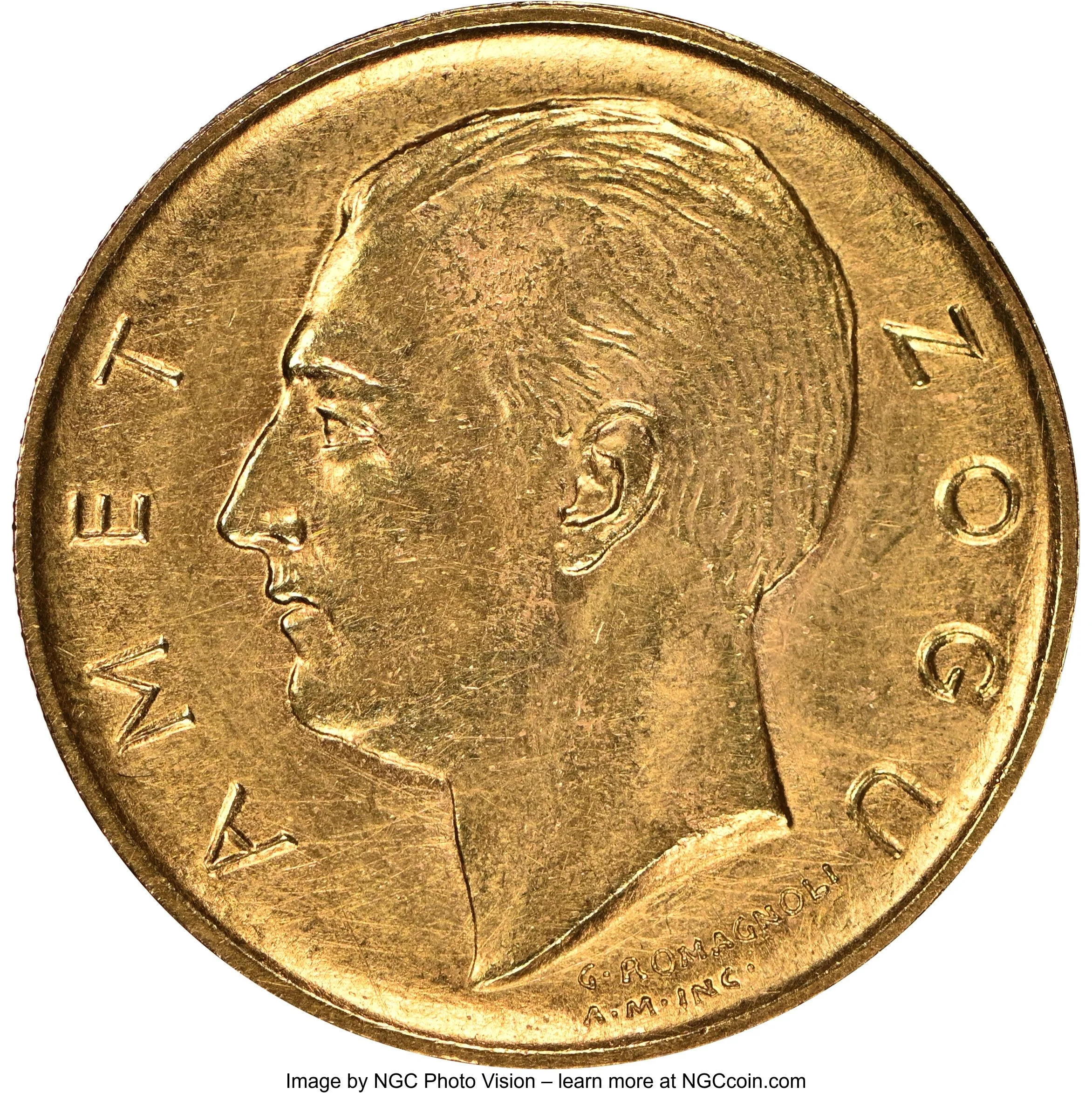
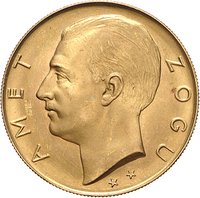
King Zog I, left-facing
Inscription:
AMET ZOGU
G·Romagnoli
A·M·Inc·
G·Romagnoli
A·M·Inc·
Translation:
I LOVE THE KING
G·Romagnoli
A·M·Inc·
G·Romagnoli
A·M·Inc·
Script: Latin
Engravers: Giuseppe Romagnoli, Attilio Silvio Motti
Edge
Reeded
Categories
| Animal> Bird |
| Symbol> Double-headed eagle |
Mints
| Name | Mark |
|---|---|
| Rome | R |
Mintings
| Year | Mint Mark | Mintage | Quality | Collection |
|---|---|---|---|---|
| 1927 | R | 6,000 |
Historical background
In 1927, Albania’s currency situation was characterized by significant instability and reliance on foreign monetary systems, a legacy of its late emergence as an independent state following the collapse of the Ottoman Empire. The country lacked a unified national currency; instead, a chaotic mix of foreign coins and notes circulated, primarily the Italian lira, the Greek drachma, the Yugoslav dinar, and the Turkish gold pound. This monetary fragmentation hindered trade, complicated taxation, and symbolized the weak central authority of the young kingdom under King Zog I, who faced the daunting task of modernizing a largely agrarian and isolated economy.
The government recognized that establishing a national currency was essential for economic sovereignty and stability. Consequently, in 1925, the National Bank of Albania was founded with substantial Italian capital and technical assistance, granting it the sole right of note issue. By 1927, the bank had introduced the first Albanian gold-based currency, the Albanian franc (Franga ari), which was pegged at par to the French franc and the Italian lira. While this created a nominal national monetary unit, the system was fundamentally underwritten and influenced by Italian financial interests, reflecting Italy's growing political and economic dominance in the country.
Thus, the currency "reform" of the period was a double-edged sword. On one hand, 1927 marked a point where Albania had a defined, gold-backed currency that began to unify the monetary space, facilitating state administration and commercial transactions. On the other hand, this stability was fragile and externally dependent, embedding Albania deeper into Italy's sphere of influence. This financial dependency would soon have profound political consequences, culminating in Italy's invasion and annexation of Albania in 1939.
The government recognized that establishing a national currency was essential for economic sovereignty and stability. Consequently, in 1925, the National Bank of Albania was founded with substantial Italian capital and technical assistance, granting it the sole right of note issue. By 1927, the bank had introduced the first Albanian gold-based currency, the Albanian franc (Franga ari), which was pegged at par to the French franc and the Italian lira. While this created a nominal national monetary unit, the system was fundamentally underwritten and influenced by Italian financial interests, reflecting Italy's growing political and economic dominance in the country.
Thus, the currency "reform" of the period was a double-edged sword. On one hand, 1927 marked a point where Albania had a defined, gold-backed currency that began to unify the monetary space, facilitating state administration and commercial transactions. On the other hand, this stability was fragile and externally dependent, embedding Albania deeper into Italy's sphere of influence. This financial dependency would soon have profound political consequences, culminating in Italy's invasion and annexation of Albania in 1939.
💎 Extremely Rare