

25 Centimes – Cambodia
Cambodia

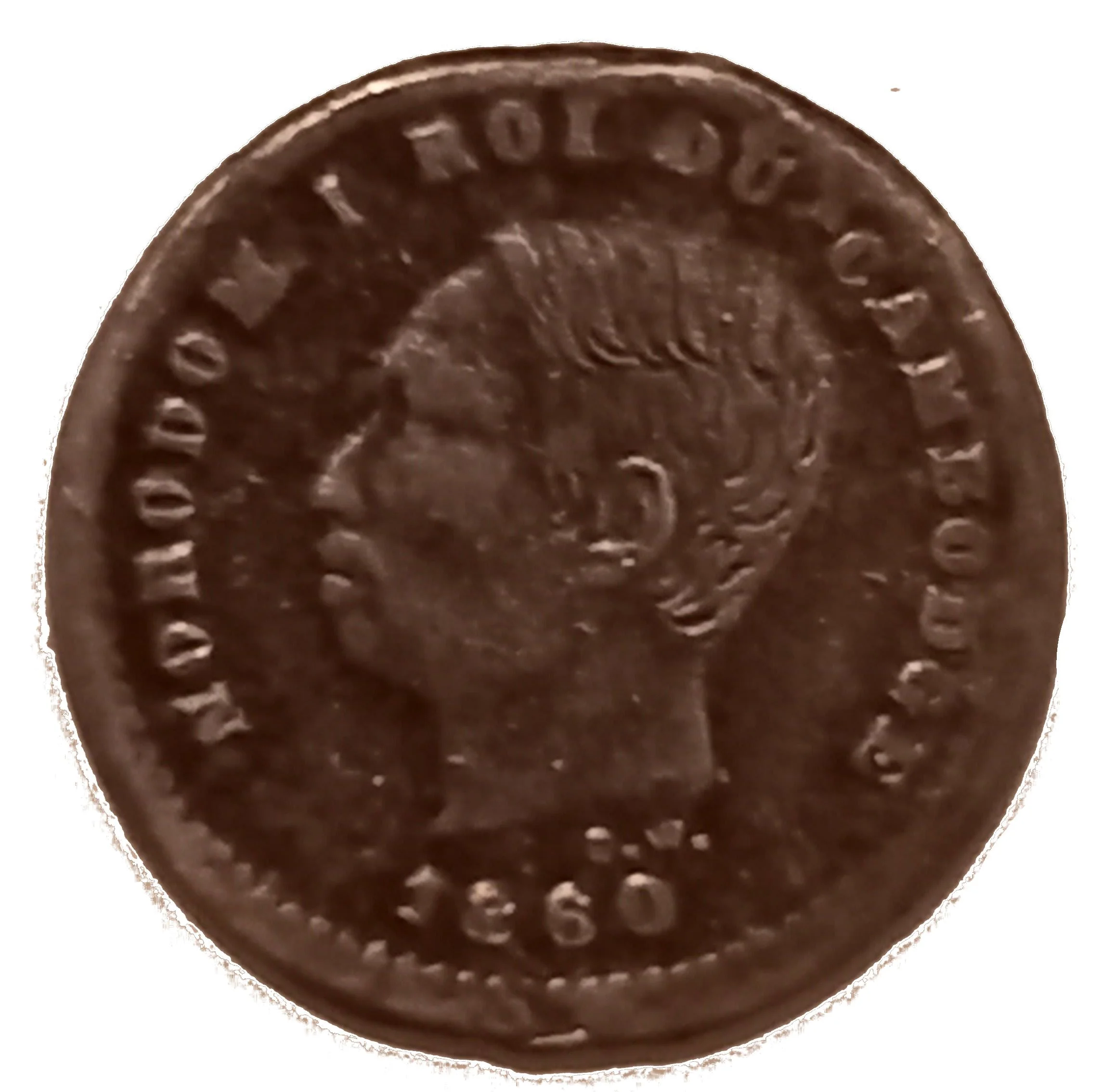
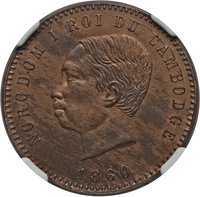
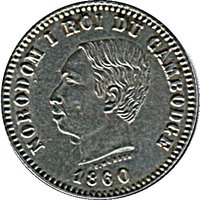
Obverse
Description:
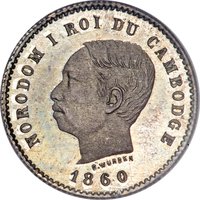
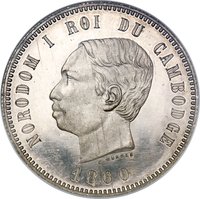
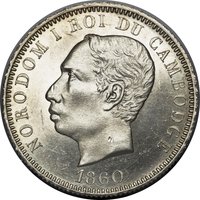
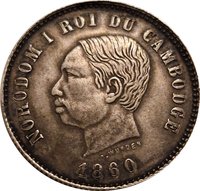
Norodom I, left profile.
Inscription:
NORODOM I ROI DU CAMBODGE // 1860.
Translation:
NORODOM I KING OF CAMBODGE // 1860.
Language: French
Engraver: Henri Charles Würden
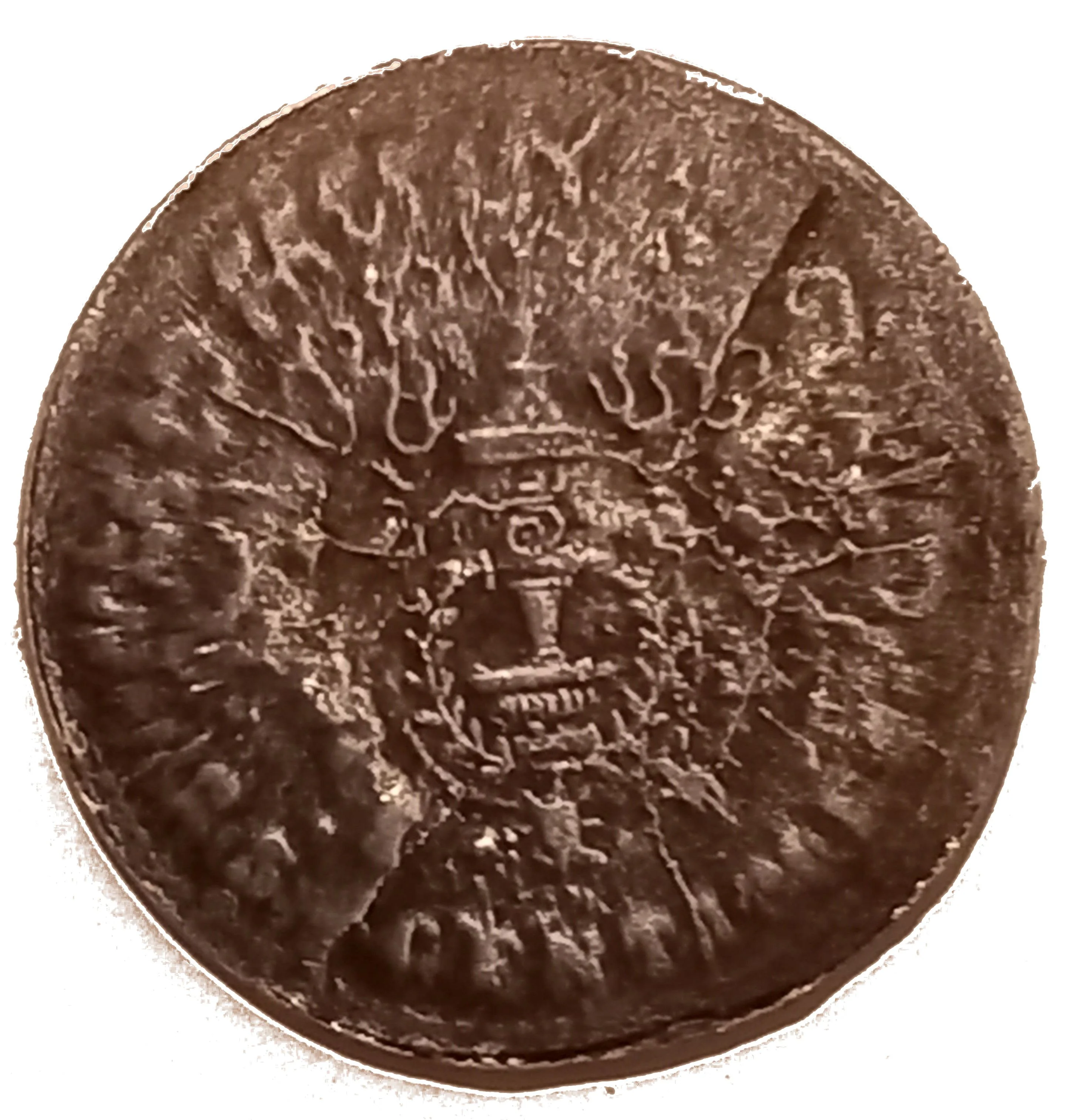
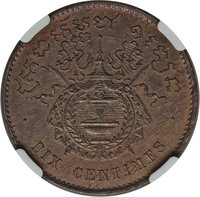
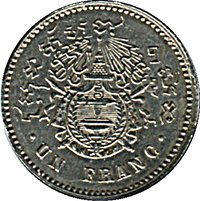
Reverse
Description:
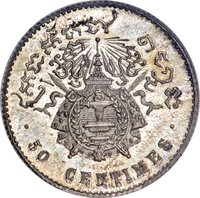
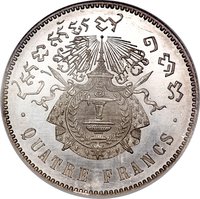
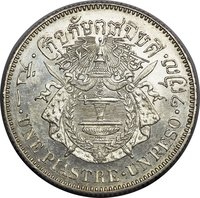
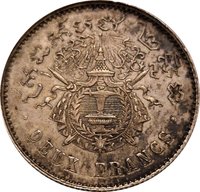
The royal coat of arms of Cambodia.
Inscription:
25 CENTIMES.
Engraver: Henri Charles Würden
Edge
Striated or smooth for the Lec 38 variety
Mintings
| Year | Mint Mark | Mintage | Quality | Collection |
|---|---|---|---|---|
| 1860 | — | — |
Historical background
In the 1860s, Cambodia's currency system was a complex and fragmented reflection of its political turmoil. The kingdom was a tributary state under dual suzerainty, caught between the expanding influence of Siam (Thailand) to the west and Vietnam to the east, while also facing increasing French colonial pressure following the establishment of a protectorate in 1863. This lack of centralized political authority meant there was no unified, sovereign Cambodian currency. Instead, the economy operated on a multi-currency system driven by regional trade and foreign impositions.
The primary mediums of exchange were silver bars (known as damlung) and Mexican Silver Dollars, which entered the region through international commerce. These bulky silver coins and ingots were used for larger transactions and state revenues. For everyday smaller trade, a wide variety of low-value coins circulated, including Siamese bia (bullet coins), Vietnamese zian (cash coins with a square hole), and older Khmer tin and lead coins. The value of these coins was not fixed by a central bank but fluctuated based on their intrinsic silver or copper content and local acceptance, leading to a cumbersome system requiring constant weighing and assaying.
This monetary fragmentation was a direct symptom of Cambodia's weakened sovereignty and underdeveloped economy. The French protectorate, formalized by treaty with King Norodom in 1863, initially did little to immediately standardize the currency. However, it set the stage for future monetary transformation. The French would later move to integrate Cambodia into the Indochinese monetary union, ultimately replacing this heterogeneous system with a uniform, colonial currency by the end of the 19th century, thereby bringing the chaotic currency situation of the 1860s to a close.
The primary mediums of exchange were silver bars (known as damlung) and Mexican Silver Dollars, which entered the region through international commerce. These bulky silver coins and ingots were used for larger transactions and state revenues. For everyday smaller trade, a wide variety of low-value coins circulated, including Siamese bia (bullet coins), Vietnamese zian (cash coins with a square hole), and older Khmer tin and lead coins. The value of these coins was not fixed by a central bank but fluctuated based on their intrinsic silver or copper content and local acceptance, leading to a cumbersome system requiring constant weighing and assaying.
This monetary fragmentation was a direct symptom of Cambodia's weakened sovereignty and underdeveloped economy. The French protectorate, formalized by treaty with King Norodom in 1863, initially did little to immediately standardize the currency. However, it set the stage for future monetary transformation. The French would later move to integrate Cambodia into the Indochinese monetary union, ultimately replacing this heterogeneous system with a uniform, colonial currency by the end of the 19th century, thereby bringing the chaotic currency situation of the 1860s to a close.
Series: 1860 Cambodia circulation coins
✨ Legendary