

1 pound – Ireland
Add to wishlist
Ireland
Context
Years: 1990–2000
Issuer: Ireland
Period:
(since 1937)
Currency:
(1971—2001)
Demonetization: 9 February 2002
Total mintage: 161,572,000
Material
Diameter: 31.1 mm
Weight: 10 g
Thickness: 1.83 mm
Shape: Round
Composition: Copper-nickel
Technique: Milled
Alignment: Medal alignment
flip
References
KM: #
Numista: #1402
Value
Exchange value: 1 IEP
Inflation-adjusted value: 2.23 IEP
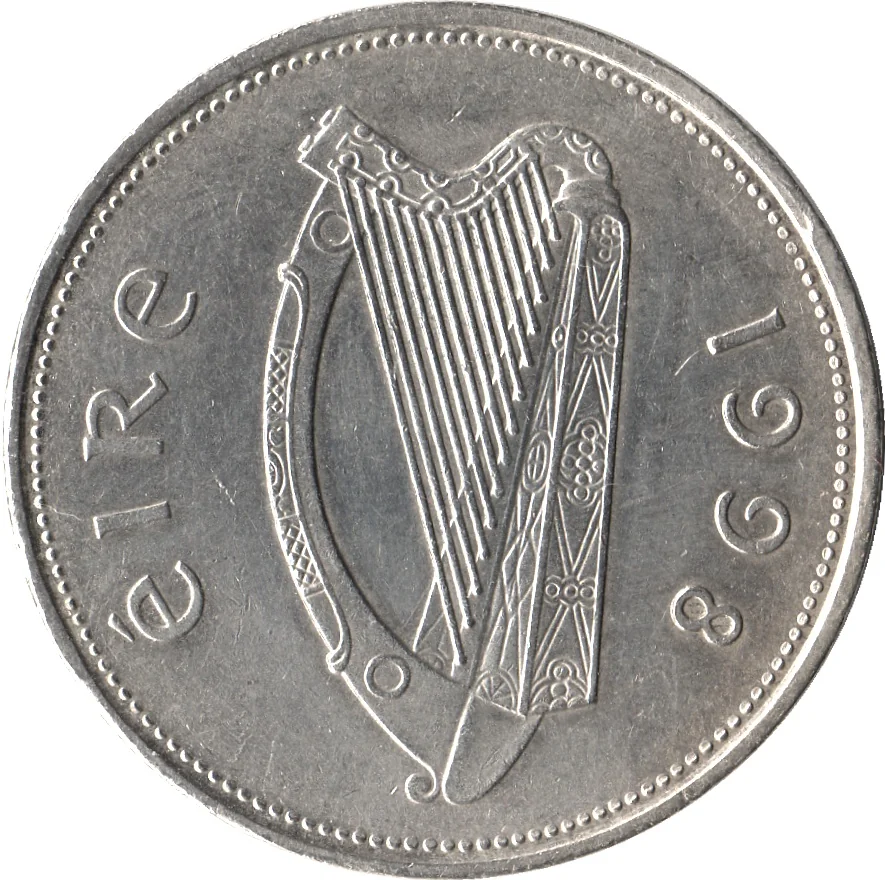
Obverse
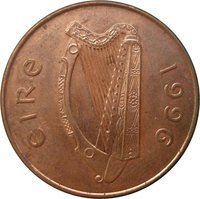
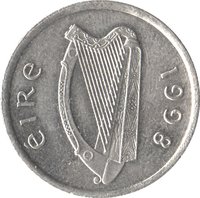
Description:
Celtic string instrument
Inscription:
éIRe 1998
Translation:
Ireland 1998
Script: Latin (Gaelic)
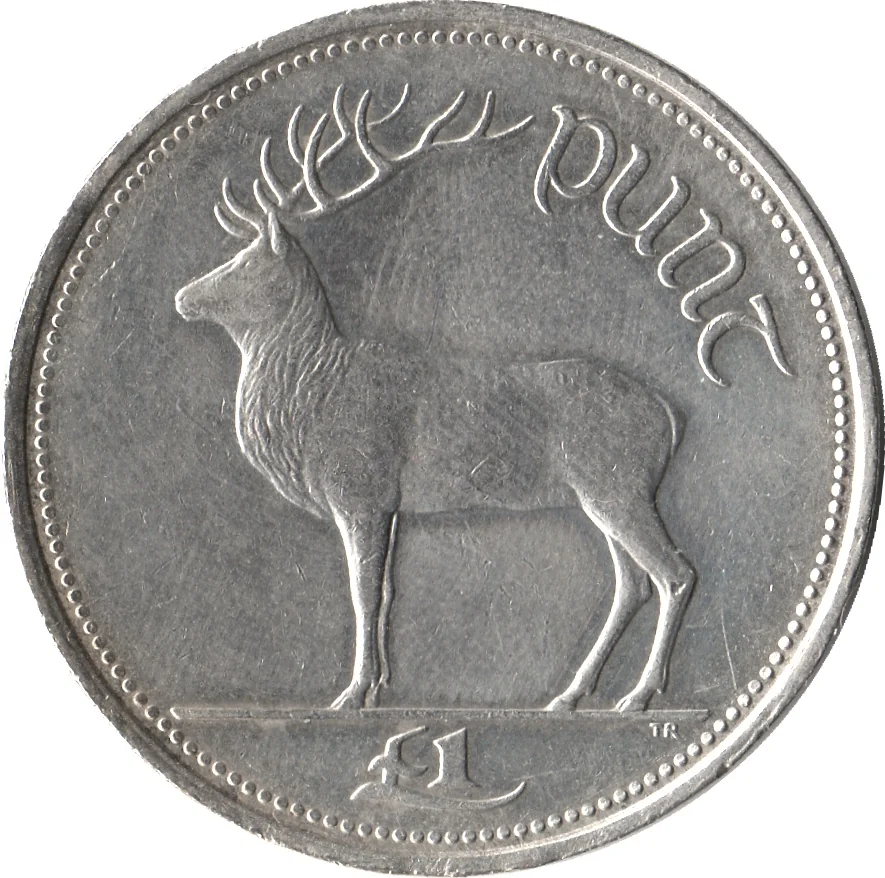
Reverse
Edge
Security Edge|.|
Mints
| Name | Mark |
|---|---|
| Irish Mint | — |
Mintings
| Year | Mint Mark | Mintage | Quality | Collection |
|---|---|---|---|---|
| 1990 | — | 62,292,000 | ||
| 1990 | — | 42,000 | Proof | |
| 1994 | — | 14,925,000 | ||
| 1995 | — | 10,215,000 | ||
| 1996 | — | 9,230,000 | ||
| 1998 | — | 22,955,000 | ||
| 1999 | — | 10,000,000 | ||
| 2000 | — | 31,913,000 |
Historical background
In 1990, the Republic of Ireland’s currency situation was defined by its membership in the European Monetary System (EMS) and its Exchange Rate Mechanism (ERM). The national currency was the Irish pound (or punt), which was pegged within the ERM to a central rate against other European currencies, most significantly the Deutsche Mark. This arrangement aimed to provide exchange rate stability, control inflation, and foster closer European economic integration. However, the system required the Central Bank of Ireland to actively manage interest rates and intervene in currency markets to maintain the agreed-upon narrow band of fluctuation, which was ±2.25%.
The Irish economy in 1990 was in a period of significant transition. After the economic stagnation of the 1980s, the country was beginning to experience the early effects of the "Celtic Tiger" boom, driven by foreign direct investment, particularly from US multinationals. The fixed exchange rate within the ERM provided a crucial anchor of stability for these investors, shielding them from currency volatility. Domestically, however, maintaining the peg often meant that Irish monetary policy was largely dictated by the needs of the ERM and the dominant German Bundesbank, rather than by purely domestic economic conditions, a point of ongoing political and economic debate.
This period of relative stability in 1990 was, in hindsight, a calm before a significant storm. Just two years later, in 1992, the EMS would be thrown into crisis. Speculative attacks forced the pound sterling and the Italian lira to suspend their ERM membership. The Irish pound came under severe pressure but, following a controversial one-off devaluation of 10% in January 1993 and a subsequent widening of the ERM bands, it remained within the mechanism. This resilience underscored Ireland’s commitment to European monetary integration, a path that would ultimately lead to its adoption of the euro in 1999.
The Irish economy in 1990 was in a period of significant transition. After the economic stagnation of the 1980s, the country was beginning to experience the early effects of the "Celtic Tiger" boom, driven by foreign direct investment, particularly from US multinationals. The fixed exchange rate within the ERM provided a crucial anchor of stability for these investors, shielding them from currency volatility. Domestically, however, maintaining the peg often meant that Irish monetary policy was largely dictated by the needs of the ERM and the dominant German Bundesbank, rather than by purely domestic economic conditions, a point of ongoing political and economic debate.
This period of relative stability in 1990 was, in hindsight, a calm before a significant storm. Just two years later, in 1992, the EMS would be thrown into crisis. Speculative attacks forced the pound sterling and the Italian lira to suspend their ERM membership. The Irish pound came under severe pressure but, following a controversial one-off devaluation of 10% in January 1993 and a subsequent widening of the ERM bands, it remained within the mechanism. This resilience underscored Ireland’s commitment to European monetary integration, a path that would ultimately lead to its adoption of the euro in 1999.
🌱 Very Common