

10 para – Serbia
Add to wishlist
Serbia
Context
Year: 1879
Issuer: Serbia
Ruler: Milan Obrenović IV
Currency:
(1868—1918)
Demonetized: Yes
Total mintage: 9,000,000
Material
References
KM: #
Numista: #14016
Obverse
Description:
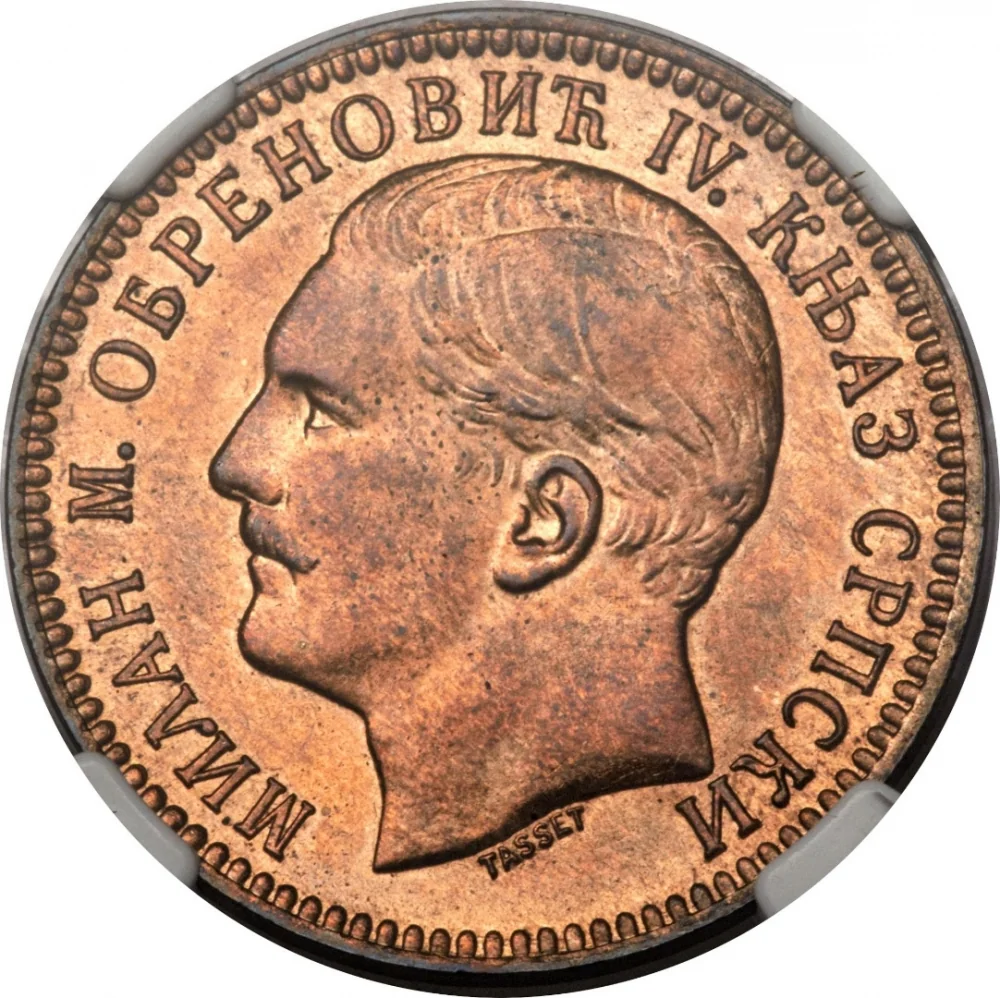
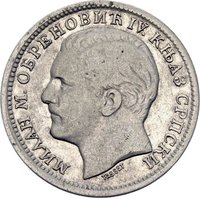
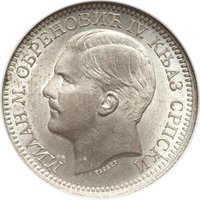
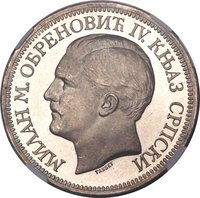
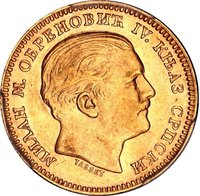
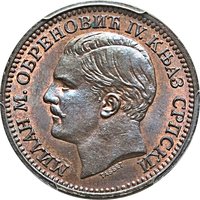
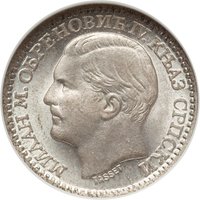
Milan Obrenović IV, left profile.
Inscription:
МИЛАН М. ОБРЕНОВИЋ IV.
КЊАЗ СРПСКИ
TASSET
КЊАЗ СРПСКИ
TASSET
Translation:
MILAN M. OBRENOVIĆ IV.
PRINCE OF SERBIA
PRINCE OF SERBIA
Script: Cyrillic
Language: Serbian
Engraver: Ernest Paulin Tasset
Reverse
Description:
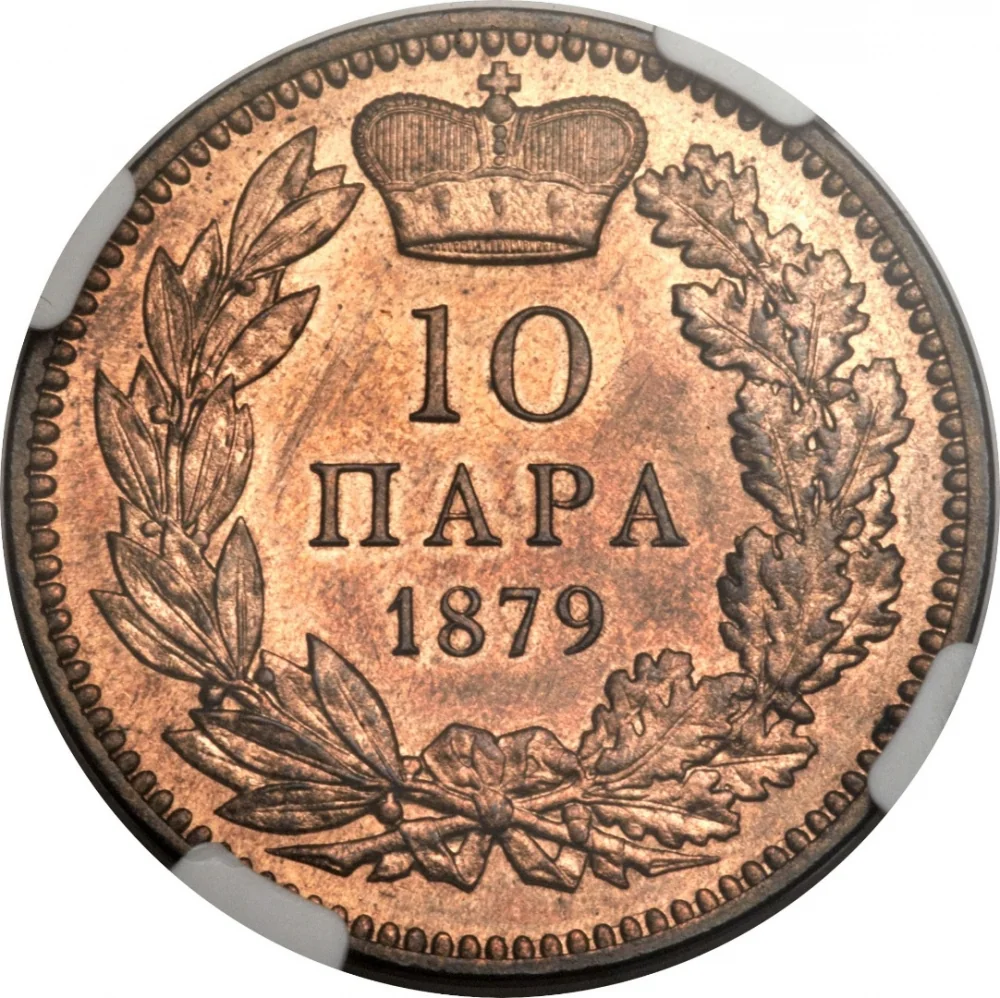
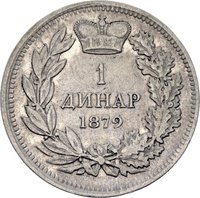
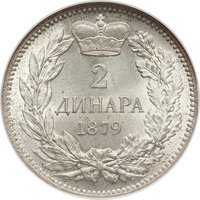
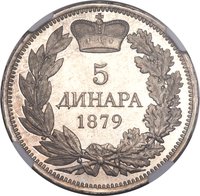
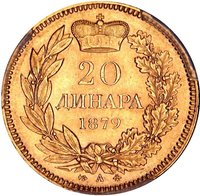
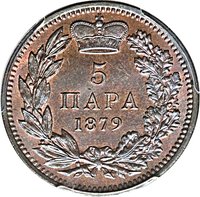
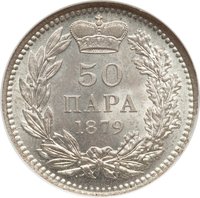
Crowned wreath enclosing denomination and date.
Inscription:
10
ПАРА
1879
ПАРА
1879
Translation:
10 PARA 1879
Script: Cyrillic
Language: Russian
Engraver: Ernest Paulin Tasset
Edge
Plain
Mintings
| Year | Mint Mark | Mintage | Quality | Collection |
|---|---|---|---|---|
| 1879 | — | 9,000,000 | ||
| 1879 | — | — | Proof |
Historical background
In 1879, Serbia's currency situation was defined by its transition from Ottoman monetary influence towards greater economic independence, yet it remained deeply entangled within the sphere of the Austro-Hungarian Empire. Following the Congress of Berlin in 1878, Serbia gained full international recognition as an independent principality, but its economy was still tied to Vienna through the secret trade and customs convention of 1881. Practically, this meant the Austrian florin (gulden) and its subsidiary silver coins circulated widely and were the preferred medium for significant commerce and state finance, undermining Serbia's monetary sovereignty.
Domestically, the Serbian dinar, first introduced in 1868, was in circulation but faced challenges of public trust and inconsistent value. The National Bank of the Kingdom of Serbia, established in 1884, did not yet exist, so currency issuance was less regulated. A key problem was the coexistence of various foreign coins alongside the domestic dinar, creating a complex and inefficient multi-currency system. The government struggled to establish the dinar as a stable and singular legal tender, as decades of circulating Ottoman and Austrian currencies had ingrained a habit of using foreign specie, especially for large transactions.
Therefore, the background of 1879 is one of a monetary duality. While Serbia possessed its own nominal currency, the reality was a dependent economy where the Austrian gulden set the de facto standard. This period was a pivotal prelude to the more assertive monetary reforms of the 1880s, driven by the need to strengthen national sovereignty, simplify trade, and create a unified financial system under the control of a soon-to-be-established central bank. The currency situation mirrored Serbia's broader political journey: formally independent but navigating the powerful economic gravity of a neighboring empire.
Domestically, the Serbian dinar, first introduced in 1868, was in circulation but faced challenges of public trust and inconsistent value. The National Bank of the Kingdom of Serbia, established in 1884, did not yet exist, so currency issuance was less regulated. A key problem was the coexistence of various foreign coins alongside the domestic dinar, creating a complex and inefficient multi-currency system. The government struggled to establish the dinar as a stable and singular legal tender, as decades of circulating Ottoman and Austrian currencies had ingrained a habit of using foreign specie, especially for large transactions.
Therefore, the background of 1879 is one of a monetary duality. While Serbia possessed its own nominal currency, the reality was a dependent economy where the Austrian gulden set the de facto standard. This period was a pivotal prelude to the more assertive monetary reforms of the 1880s, driven by the need to strengthen national sovereignty, simplify trade, and create a unified financial system under the control of a soon-to-be-established central bank. The currency situation mirrored Serbia's broader political journey: formally independent but navigating the powerful economic gravity of a neighboring empire.
Series: 1879 Serbia circulation coins
🌱 Fairly Common