

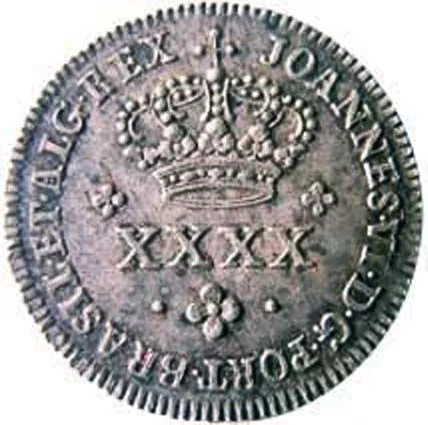
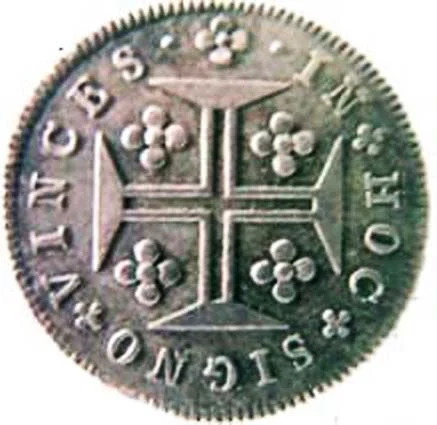
Mints
| Name | Mark |
|---|---|
| Imprensa Nacional - Casa da Moeda | — |
Mintings
| Year | Mint Mark | Mintage | Quality | Collection |
|---|---|---|---|---|
| — | — | 102,027 |
Historical background
In 1816, Portugal's currency situation was complex and strained, a direct legacy of the Napoleonic Wars and the Peninsular War (1807-1814). The French invasions had devastated the economy, disrupted trade, and forced the Portuguese royal court to flee to Brazil in 1807. This exile shifted the empire's financial center to Rio de Janeiro, where the Bank of Brazil was founded in 1808. Crucially, large quantities of gold, silver, and coinage were transferred from Portugal, creating a severe metallic currency shortage in the homeland. The circulating medium in Portugal became a chaotic mix of depreciated paper money, older Portuguese coins, and a multitude of foreign currencies, including British, Spanish, and French coins, leading to widespread confusion and commercial difficulty.
The official currency remained the real (plural réis), but its value and the coins that represented it were in disarray. To address the acute shortage, the government in Lisbon, under the British-led Regency established during the absence of King João VI, was heavily reliant on financial subsidies from Britain. These funds, part of the war compensation and alliance agreements, helped sustain the state but did not solve the underlying monetary instability. Furthermore, the country was burdened by significant public debt and the economic costs of hosting a large British military presence, which further distorted the local economy and currency exchange.
Perhaps the most defining feature of the 1816 monetary landscape was the dualistic nature of the Portuguese empire's finances. While Portugal itself struggled, Brazil was experiencing a period of economic growth and monetary expansion under the king's direct rule. The Portuguese government, still operating from Rio de Janeiro until 1821, often prioritized Brazilian interests. This period set the stage for the impending political and financial crises of the 1820s, including Brazil's independence in 1822, which would sever the flow of Brazilian gold and ultimately lead to the complete collapse of the Portuguese currency system, making 1816 a year of fragile and transitional monetary order.
The official currency remained the real (plural réis), but its value and the coins that represented it were in disarray. To address the acute shortage, the government in Lisbon, under the British-led Regency established during the absence of King João VI, was heavily reliant on financial subsidies from Britain. These funds, part of the war compensation and alliance agreements, helped sustain the state but did not solve the underlying monetary instability. Furthermore, the country was burdened by significant public debt and the economic costs of hosting a large British military presence, which further distorted the local economy and currency exchange.
Perhaps the most defining feature of the 1816 monetary landscape was the dualistic nature of the Portuguese empire's finances. While Portugal itself struggled, Brazil was experiencing a period of economic growth and monetary expansion under the king's direct rule. The Portuguese government, still operating from Rio de Janeiro until 1821, often prioritized Brazilian interests. This period set the stage for the impending political and financial crises of the 1820s, including Brazil's independence in 1822, which would sever the flow of Brazilian gold and ultimately lead to the complete collapse of the Portuguese currency system, making 1816 a year of fragile and transitional monetary order.
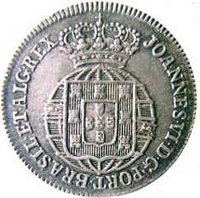
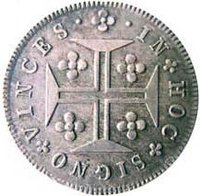
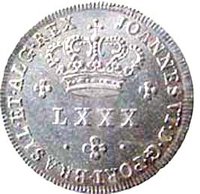
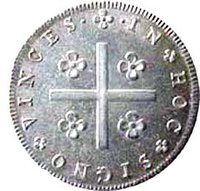
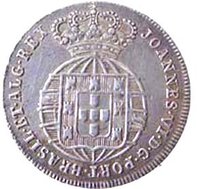
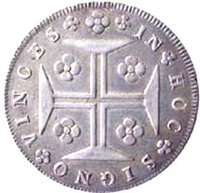
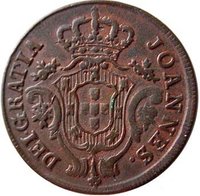
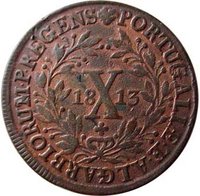
Series: 1816 Portugal circulation coins
💎 Extremely Rare