

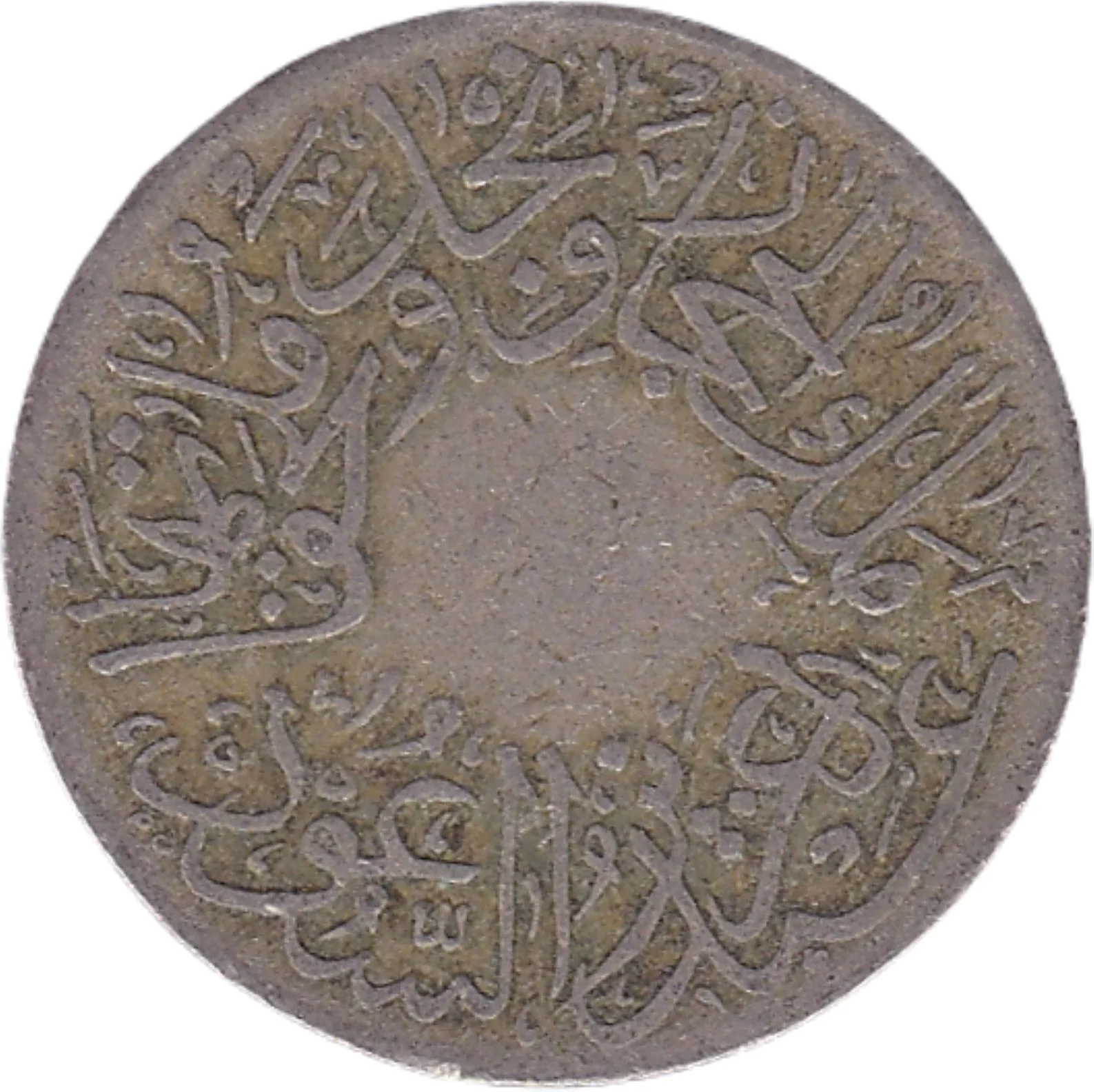
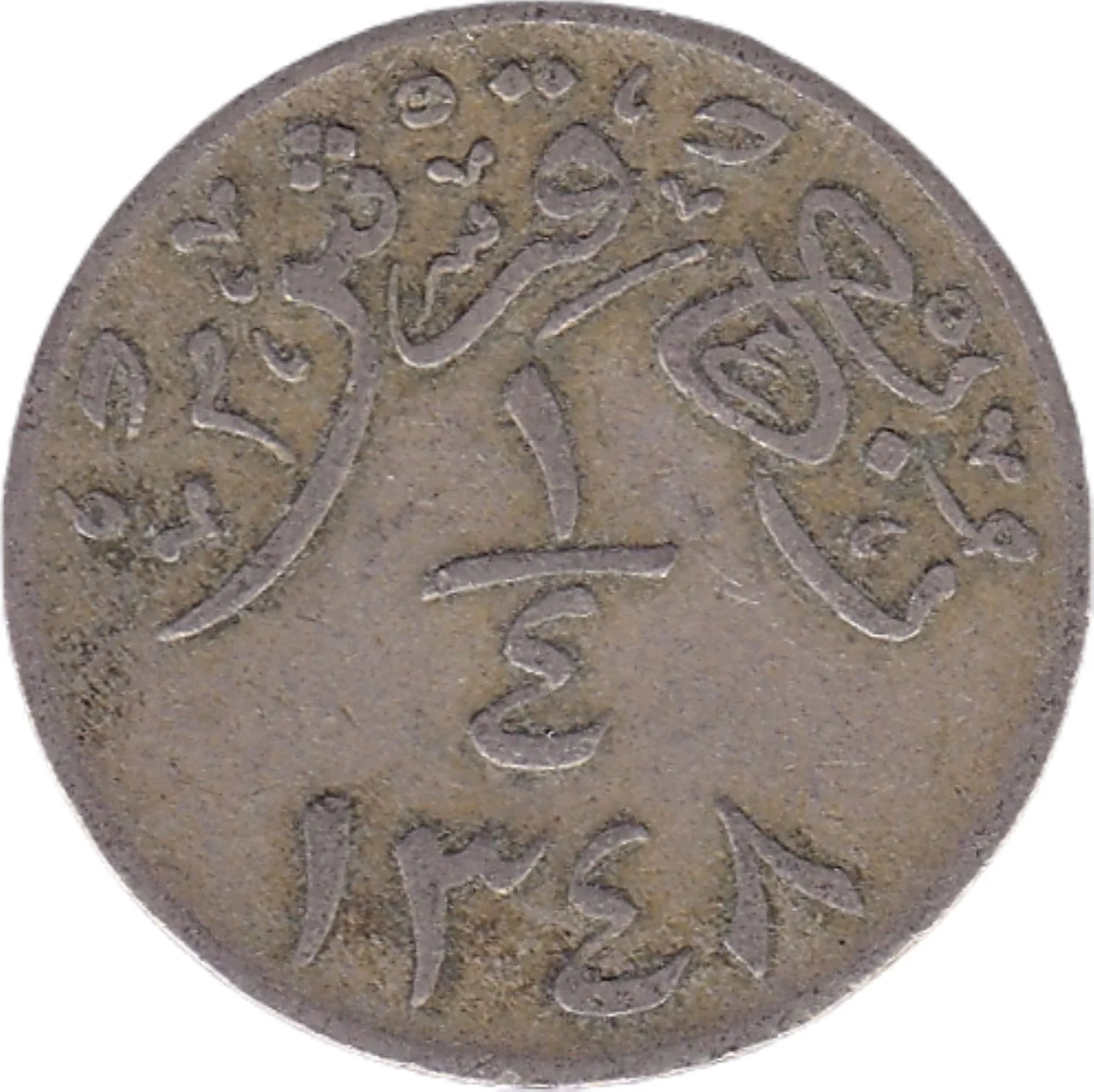
¼ qirsh – Hejaz and Nejd
Add to wishlist
Saudi Arabia
Context
Year: 1930
Islamic (Hijri) Year:: 1348
Country: Saudi Arabia
Issuer: Hejaz and Nejd
Ruler: Abdulaziz bin Abdulrahman
Currency:
(1925—1960)
Demonetized: Yes
Total mintage: 1,000
Material
Diameter: 20 mm
Weight: 4.25 g
Thickness: 1.6 mm
Shape: Round
Composition: Copper-nickel
Technique: Milled
Alignment: Medal alignment
flip
References
KM: #
Numista: #35457
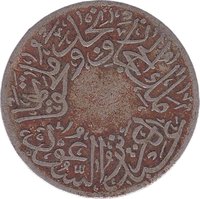
Obverse
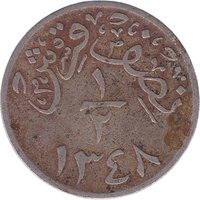
Reverse
Edge
Mintings
| Year | Mint Mark | Mintage | Quality | Collection |
|---|---|---|---|---|
| 1930 | — | — | ||
| 1930 | — | 1,000 | Proof |
Historical background
By 1930, the currency situation in the dual kingdoms of Hejaz and Nejd was a complex reflection of the region's political and economic transition under the consolidating rule of Abdulaziz Ibn Saud. The Hejaz, with its holy cities and long history of international pilgrimage, operated on a monetary system dominated by the Ottoman qirsh and the silver Saudi riyal, but was flooded with a multitude of foreign coins, including British sovereigns, Indian rupees, and Egyptian and Ottoman gold pounds. Nejd, more isolated and traditional, relied heavily on the Austrian thaler (Maria Theresa) and a variety of older Arabian and Ottoman coins, with transactions often conducted through barter or weighed silver bullion.
This monetary fragmentation posed a significant challenge to Ibn Saud's state-building and centralization efforts. The lack of a uniform currency complicated taxation, government accounting, and trade between the two regions, while the fluctuating values of disparate coins created economic instability. Furthermore, the declining global price of silver in the late 1920s eroded the value of the silver-based riyal, exacerbating budgetary pressures and inflation, particularly in the commercially active Hejaz.
Recognizing this crisis, Ibn Saud's government took decisive action in 1930. It introduced a new, unified silver riyal to circulate across both kingdoms, marking a major step toward financial integration. While foreign gold coins remained in use for larger transactions, this reform established the first nationally recognized currency of the emerging Saudi state, laying the essential groundwork for the fully centralized monetary system that would follow after the proclamation of the Kingdom of Saudi Arabia in 1932.
This monetary fragmentation posed a significant challenge to Ibn Saud's state-building and centralization efforts. The lack of a uniform currency complicated taxation, government accounting, and trade between the two regions, while the fluctuating values of disparate coins created economic instability. Furthermore, the declining global price of silver in the late 1920s eroded the value of the silver-based riyal, exacerbating budgetary pressures and inflation, particularly in the commercially active Hejaz.
Recognizing this crisis, Ibn Saud's government took decisive action in 1930. It introduced a new, unified silver riyal to circulate across both kingdoms, marking a major step toward financial integration. While foreign gold coins remained in use for larger transactions, this reform established the first nationally recognized currency of the emerging Saudi state, laying the essential groundwork for the fully centralized monetary system that would follow after the proclamation of the Kingdom of Saudi Arabia in 1932.
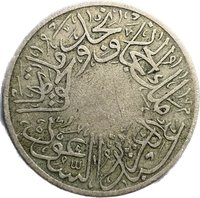
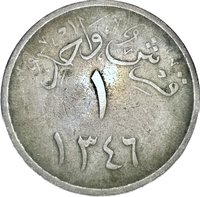
⭐ Somewhat Rare