

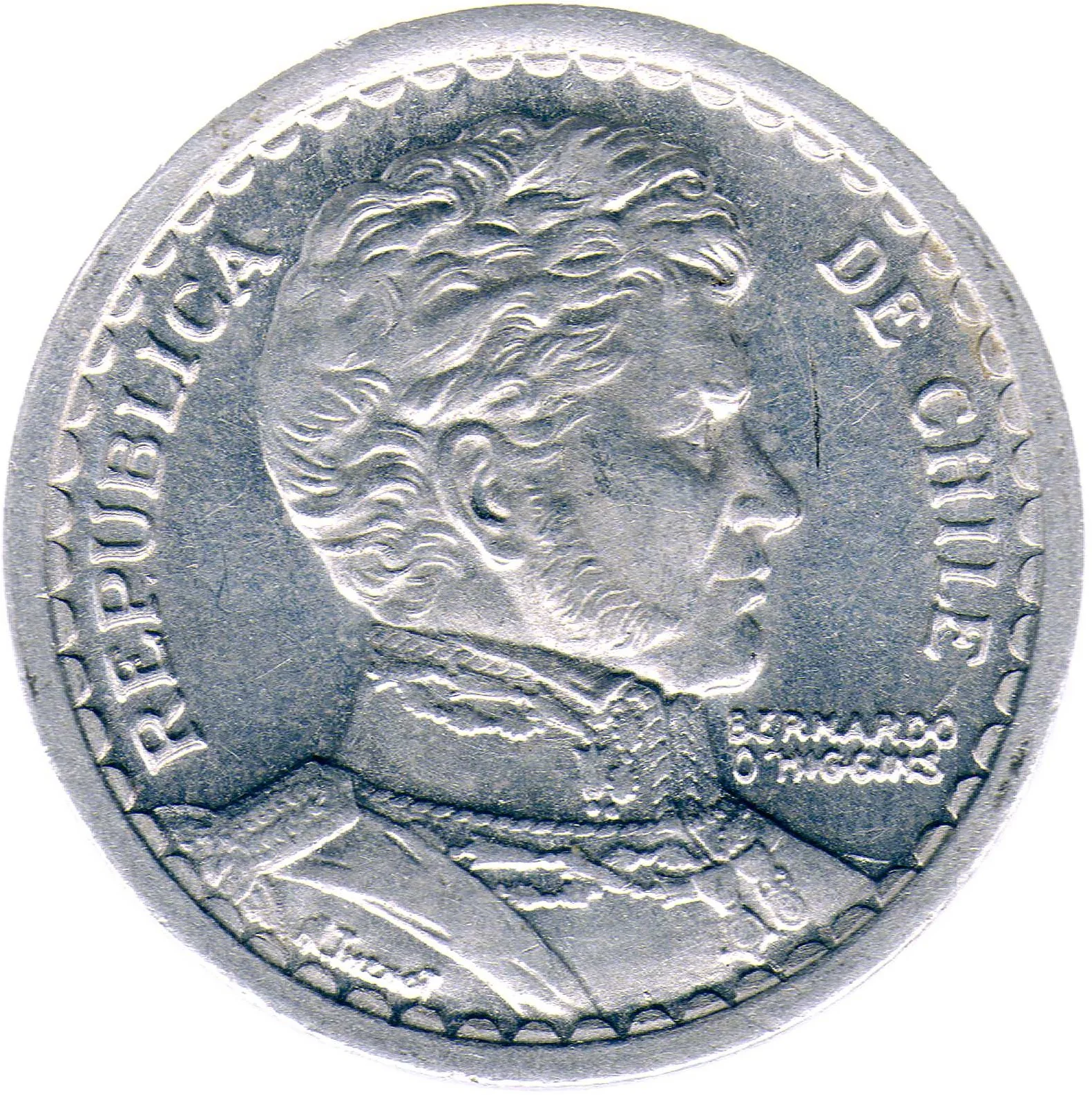
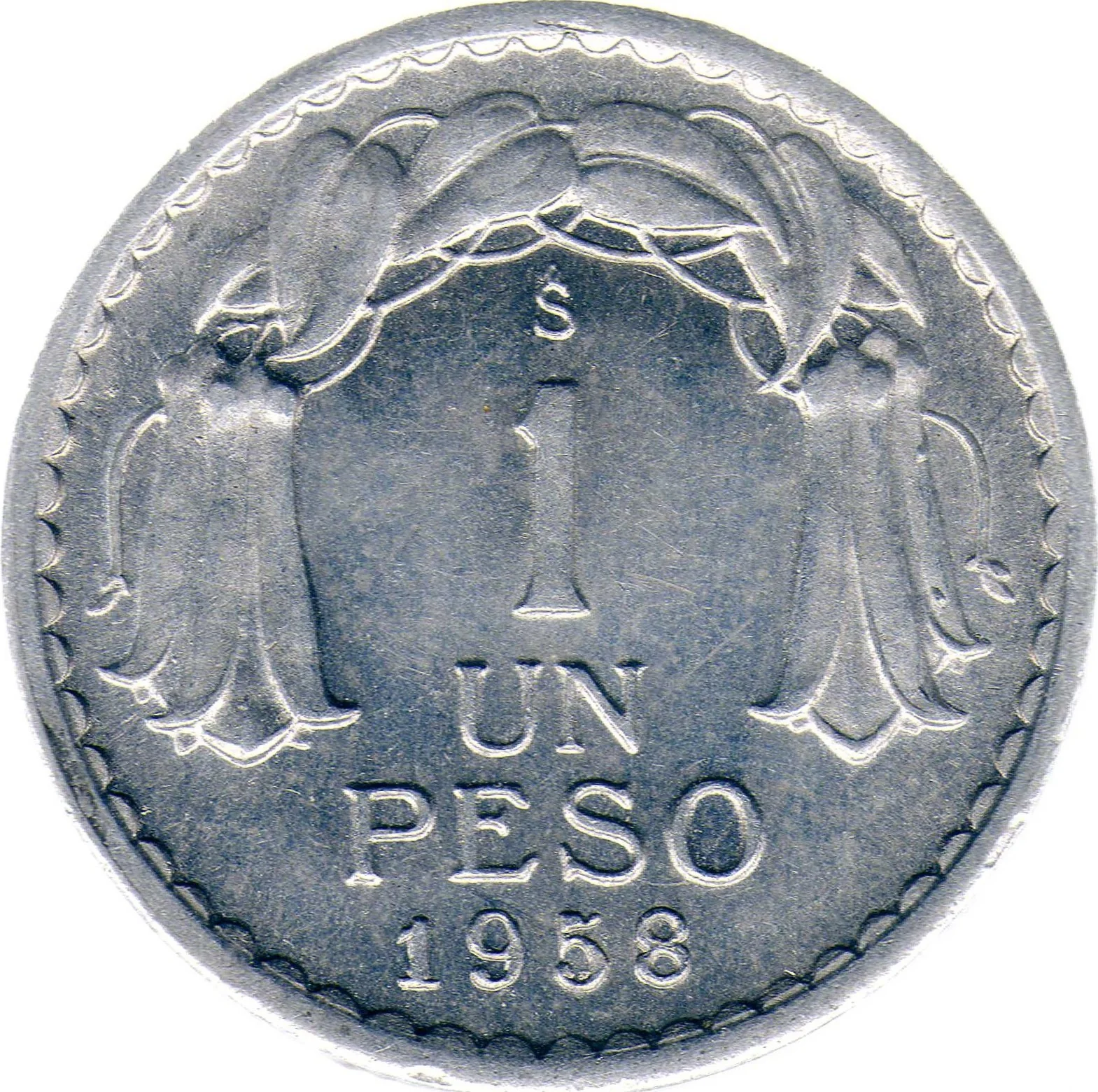
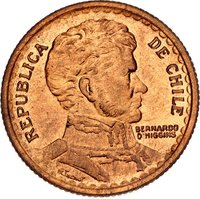
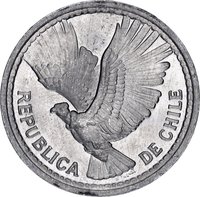
Obverse
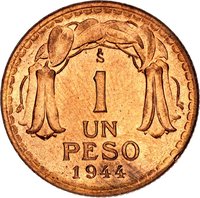
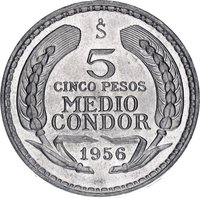
Reverse
Edge
Plain
Categories
| Person> Military leader |
| Person> Politician |
| Plants> Flower |
Mints
| Name | Mark |
|---|---|
| Casa de Moneda de Chile | (So) |
Mintings
| Year | Mint Mark | Mintage | Quality | Collection |
|---|---|---|---|---|
| 1954 | So | 43,550,000 | ||
| 1954 | So | — | Proof | |
| 1955 | So | 69,050,000 | ||
| 1956 | So | 58,250,000 | ||
| 1956 | So | — | Proof | |
| 1957 | So | 49,250,000 | ||
| 1958 | So | 29,900,000 |
Historical background
In 1954, Chile's currency situation was characterized by severe inflationary pressures and a complex, multi-tiered exchange rate system, both symptoms of deep structural economic problems. The year fell within the era of the "Inflationary Finance" model, where successive governments, lacking a robust tax base, heavily relied on the central bank to finance public spending by printing money. This practice, combined with loose fiscal policies and widespread indexation mechanisms, fueled an inflation rate that would reach approximately 71% that year, eroding purchasing power and creating significant economic instability.
The exchange rate regime was a critical component of the crisis. Instead of a single, unified rate, Chile operated a system of multiple "tipos de cambio" (exchange rates), where different categories of imports and exports received different peso-to-dollar valuations set by authorities. This system aimed to control the balance of payments, subsidize essential imports, and tax luxury goods, but in practice it created massive distortions. It encouraged corruption and rent-seeking, as access to preferential dollar rates became highly lucrative, while simultaneously discouraging non-traditional exports and creating a thriving black market for foreign currency.
The situation in 1954 was a clear precursor to more drastic measures. The persistent inflation and unwieldy exchange controls failed to correct fundamental fiscal imbalances. This mounting instability set the stage for the major stabilization attempts that would follow later in the decade, most notably the 1955 Klein-Saks mission—a group of foreign economists invited to prescribe orthodox shock therapy. Thus, 1954 represents a point of escalating crisis within a longer trajectory of economic struggle, highlighting the unsustainable policies that would eventually force a painful and controversial restructuring of the Chilean economy.
The exchange rate regime was a critical component of the crisis. Instead of a single, unified rate, Chile operated a system of multiple "tipos de cambio" (exchange rates), where different categories of imports and exports received different peso-to-dollar valuations set by authorities. This system aimed to control the balance of payments, subsidize essential imports, and tax luxury goods, but in practice it created massive distortions. It encouraged corruption and rent-seeking, as access to preferential dollar rates became highly lucrative, while simultaneously discouraging non-traditional exports and creating a thriving black market for foreign currency.
The situation in 1954 was a clear precursor to more drastic measures. The persistent inflation and unwieldy exchange controls failed to correct fundamental fiscal imbalances. This mounting instability set the stage for the major stabilization attempts that would follow later in the decade, most notably the 1955 Klein-Saks mission—a group of foreign economists invited to prescribe orthodox shock therapy. Thus, 1954 represents a point of escalating crisis within a longer trajectory of economic struggle, highlighting the unsustainable policies that would eventually force a painful and controversial restructuring of the Chilean economy.
🌱 Very Common