

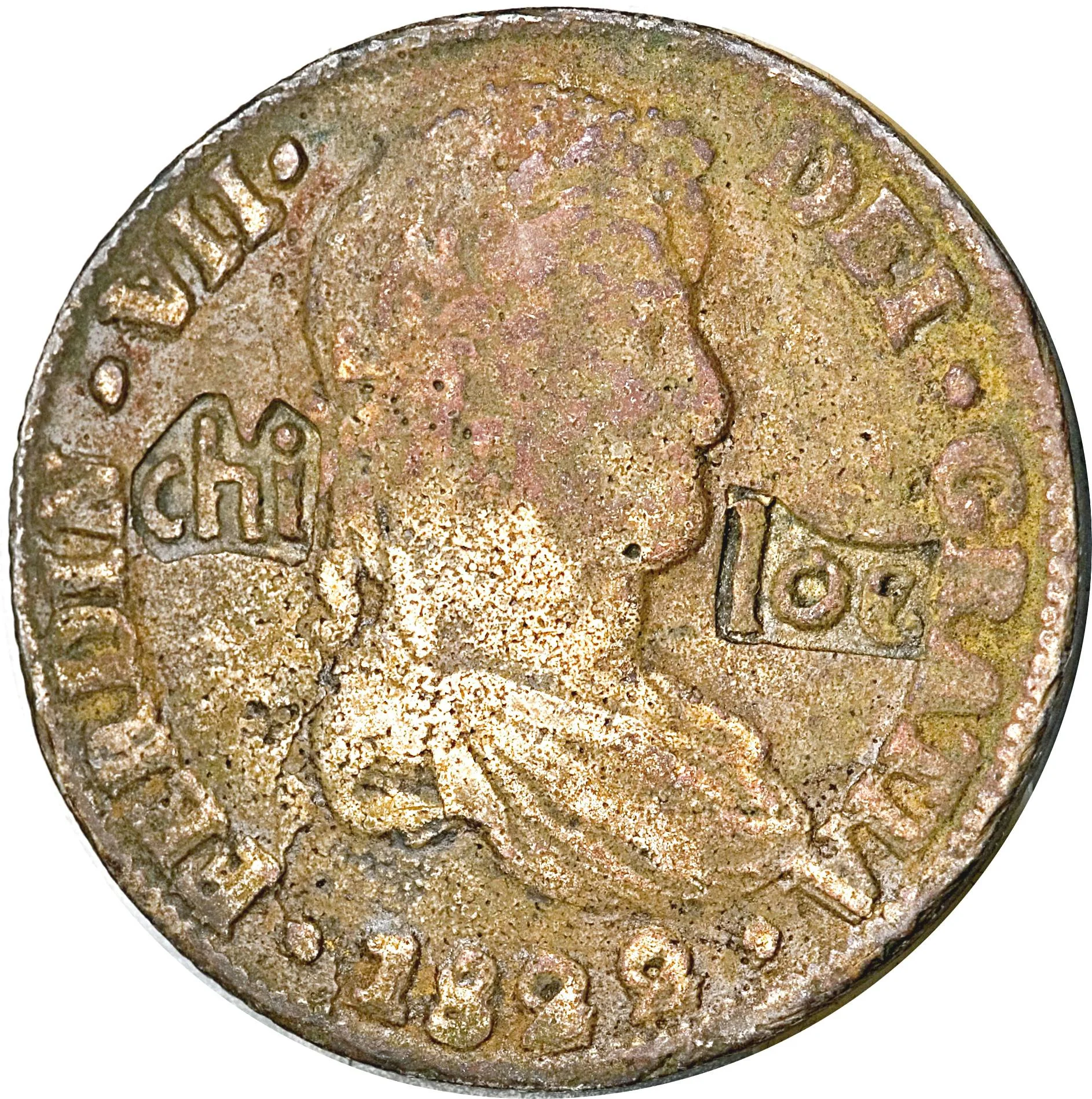
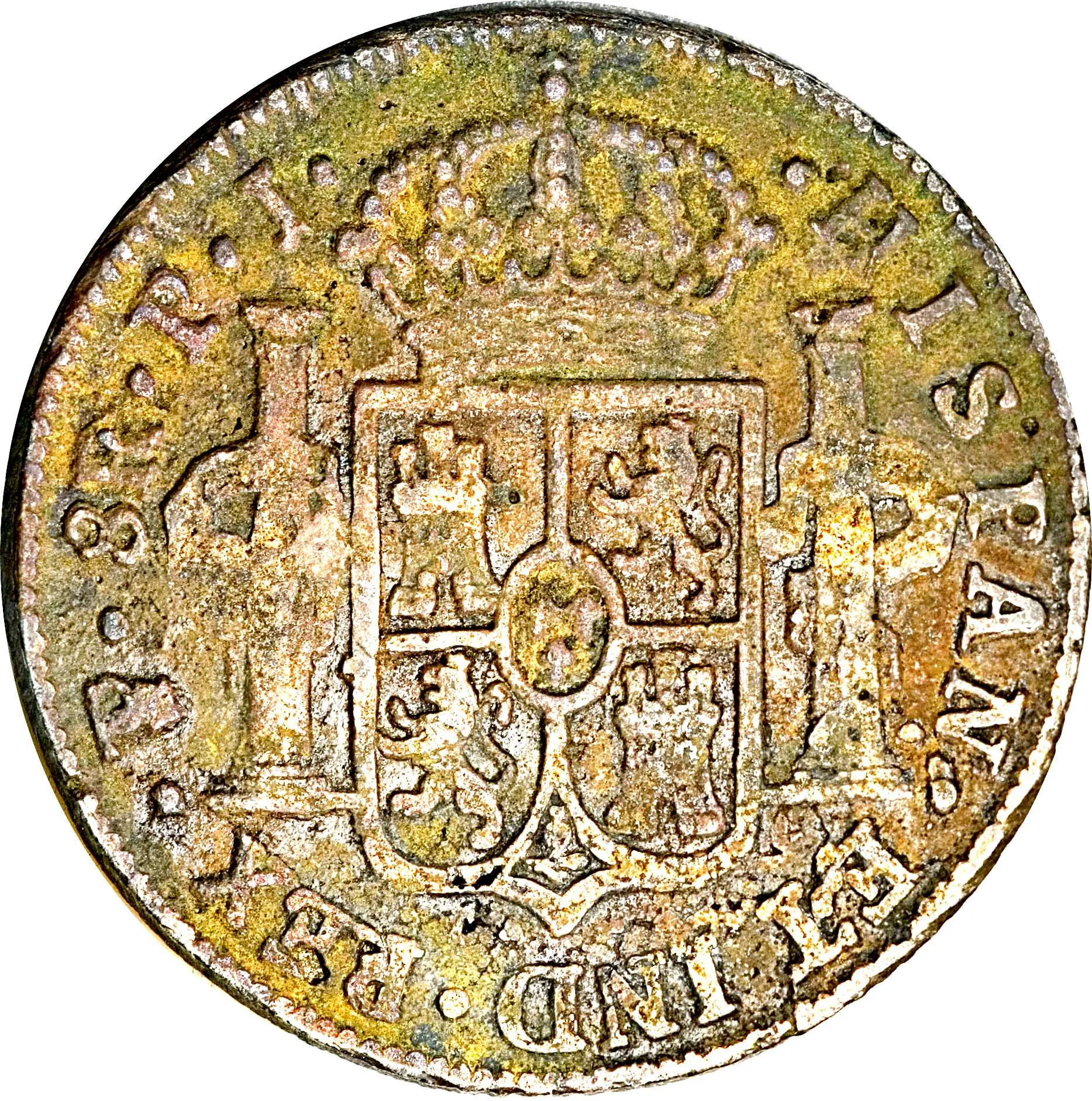
8 Reals – Chiloé Island
Chile
Context
Years: 1822–1825
Country: Chile 
Issuer: Chiloé Island
Ruler: Ferdinand VII
Currency:
(1541—1852)
Demonetized: Yes
Material
Diameter: 38 mm
Weight: 23.5 g
Silver weight: 22.79 g
Shape: Round
Composition: 97% Silver
Magnetic: No
Techniques: Cast, Countermarked
References
KM: #Click to copy to clipboard2
Numista: #35412
Value
Bullion value: $64.48
Obverse
Reverse
Edge
Categories
| Person> Monarch |
| Symbols> Coat of Arms |
Mintings
| Year | Mint Mark | Mintage | Quality | Collection |
|---|---|---|---|---|
| 1822 | — | — | ||
| 1825 | — | — |
Historical background
In 1822, the currency situation on Chiloé Island was one of profound isolation and scarcity, starkly different from the fledgling republic of Chile to which it nominally belonged. While mainland Chile was grappling with the economic turbulence of the post-independence period, Chiloé remained a final royalist stronghold, firmly under Spanish control. This political separation created an effective economic blockade, severing the archipelago from mainland trade and the limited coinage in circulation there. The Spanish administration, stretched thin by war, could not reliably supply official currency, leaving the local economy to function on a patchwork system of barter, credit, and any worn foreign coins that arrived via clandestine trade.
The primary medium of exchange was a motley assortment of silver coins from various origins. These included old Spanish reales, Peruvian pesos from the Lima mint, and even coins from other Spanish American territories. Due to the chronic shortage, these coins often circulated at a premium, and their value was determined more by their weight and silver content than their face value. For smaller, everyday transactions, the economy relied heavily on in-kind exchanges—fish for potatoes, wool for tools—and handwritten debt notes (vales) that promised future payment in goods or labor. This system was deeply personal and community-based, rooted in the island's traditional minga culture of reciprocal aid.
This precarious monetary reality persisted until the fall of Chiloé to Chilean forces in 1826. Following its incorporation into the republic, the island faced a slow and difficult integration into the national monetary system, a process that took decades. Thus, in 1822, Chiloé's currency was not defined by a state-issued standard but by necessity and survival, reflecting its status as a isolated, besieged outpost of a dying empire.
The primary medium of exchange was a motley assortment of silver coins from various origins. These included old Spanish reales, Peruvian pesos from the Lima mint, and even coins from other Spanish American territories. Due to the chronic shortage, these coins often circulated at a premium, and their value was determined more by their weight and silver content than their face value. For smaller, everyday transactions, the economy relied heavily on in-kind exchanges—fish for potatoes, wool for tools—and handwritten debt notes (vales) that promised future payment in goods or labor. This system was deeply personal and community-based, rooted in the island's traditional minga culture of reciprocal aid.
This precarious monetary reality persisted until the fall of Chiloé to Chilean forces in 1826. Following its incorporation into the republic, the island faced a slow and difficult integration into the national monetary system, a process that took decades. Thus, in 1822, Chiloé's currency was not defined by a state-issued standard but by necessity and survival, reflecting its status as a isolated, besieged outpost of a dying empire.

✨ Legendary