

Pataco – Portugal
Portugal
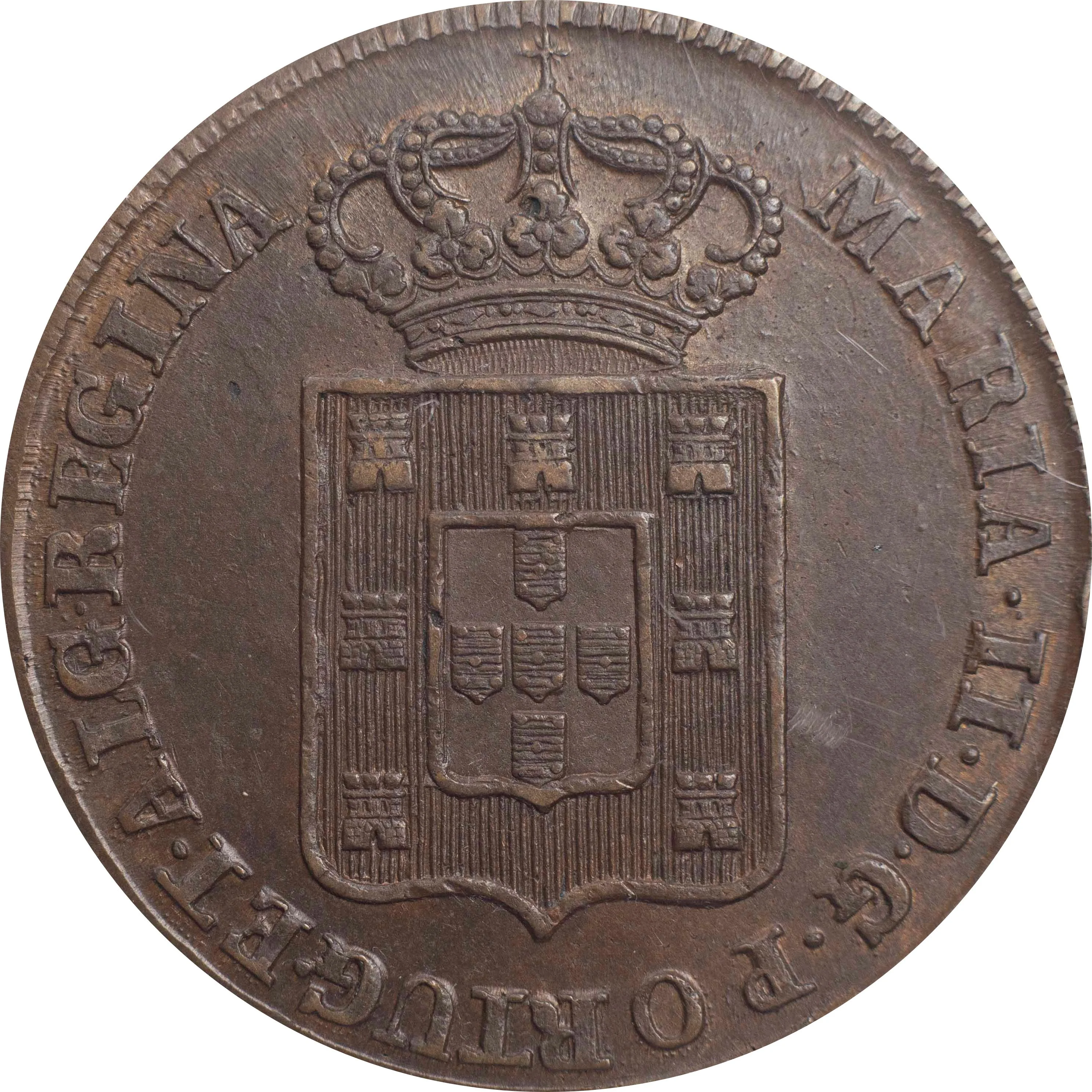
Obverse
Description:
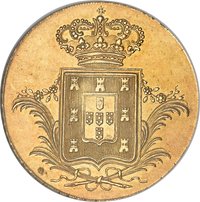
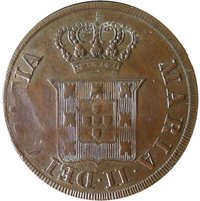
Arms with a crown.
Inscription:
MARIA.II.D.G.PORTUG.ET.ALG.REGINA
Translation:
Maria II, by the Grace of God, Queen of Portugal and the Algarves
Script: Latin
Languages: Latin, Portuguese
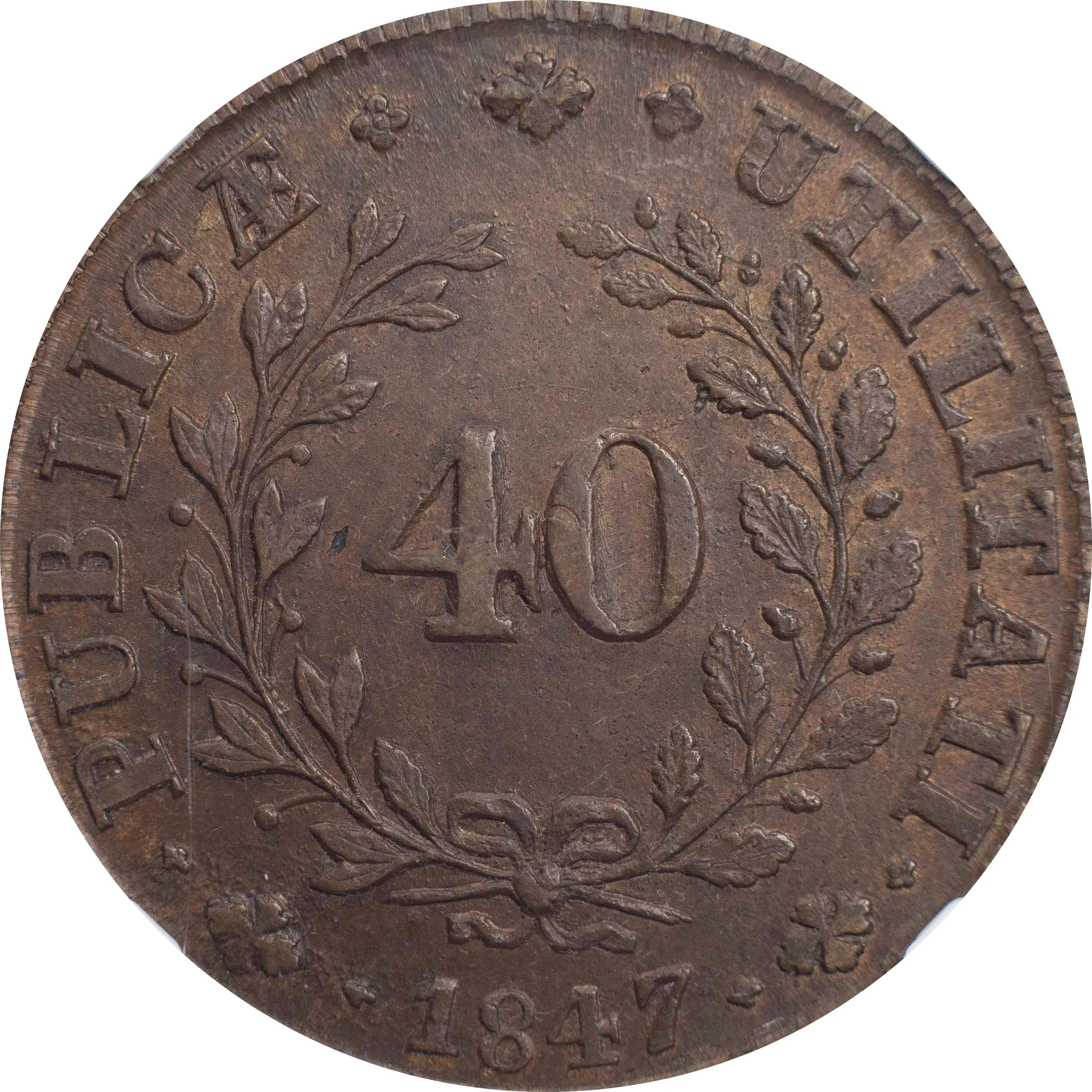
Reverse
Edge
Mints
| Name | Mark |
|---|---|
| Imprensa Nacional - Casa da Moeda | — |
| Porto | — |
Mintings
| Year | Mint Mark | Mintage | Quality | Collection |
|---|---|---|---|---|
| 1831 | — | — | ||
| 1833 | — | — | ||
| 1834 | — | — | ||
| 1847 | — | — |
Historical background
In 1831, Portugal was in the midst of a profound political and financial crisis, directly impacting its currency. The country was embroiled in the Liberal Wars (1828-1834), a civil war between the liberal constitutionalists, led by Pedro IV (former Emperor of Brazil), and the absolutist forces of his brother, Miguel I. This conflict devastated the economy, disrupted trade, and led to the near bankruptcy of the state. The royal treasury was exhausted from funding the war effort, leading to a severe shortage of specie (gold and silver coinage) in circulation, which crippled everyday commerce and state finances.
The monetary system itself was a complex and unstable bimetallic system based on the real (plural réis), but the unit of account for larger transactions was the milréis. The scarcity of precious metals meant that the currency in actual circulation was a chaotic mix of officially minted Portuguese coins, heavily worn older coins, and a flood of foreign coins—particularly Spanish, British, and Brazilian—which circulated at fluctuating and unofficial rates. Furthermore, the government of the liberal Regency, based in the Azores and then in Porto, resorted to issuing paper money and copper token coinage to pay its troops and expenses, but this fiat currency was not widely trusted and traded at a significant discount to its face value.
Consequently, the currency situation was characterized by severe inflation, confusion, and a lack of uniform monetary authority. The value of money was highly localized and unstable, dependent more on the metal content and perceived legitimacy of the issuing authority (liberal or Miguelist) in a given region than on any central banking policy. This monetary disarray reflected the broader struggle for the nation's political soul, with a stable and unified currency awaiting the outcome of the civil war and the eventual victory of the liberals, who would later undertake significant financial reforms in the 1830s to restore order.
The monetary system itself was a complex and unstable bimetallic system based on the real (plural réis), but the unit of account for larger transactions was the milréis. The scarcity of precious metals meant that the currency in actual circulation was a chaotic mix of officially minted Portuguese coins, heavily worn older coins, and a flood of foreign coins—particularly Spanish, British, and Brazilian—which circulated at fluctuating and unofficial rates. Furthermore, the government of the liberal Regency, based in the Azores and then in Porto, resorted to issuing paper money and copper token coinage to pay its troops and expenses, but this fiat currency was not widely trusted and traded at a significant discount to its face value.
Consequently, the currency situation was characterized by severe inflation, confusion, and a lack of uniform monetary authority. The value of money was highly localized and unstable, dependent more on the metal content and perceived legitimacy of the issuing authority (liberal or Miguelist) in a given region than on any central banking policy. This monetary disarray reflected the broader struggle for the nation's political soul, with a stable and unified currency awaiting the outcome of the civil war and the eventual victory of the liberals, who would later undertake significant financial reforms in the 1830s to restore order.
⭐ Somewhat Rare