

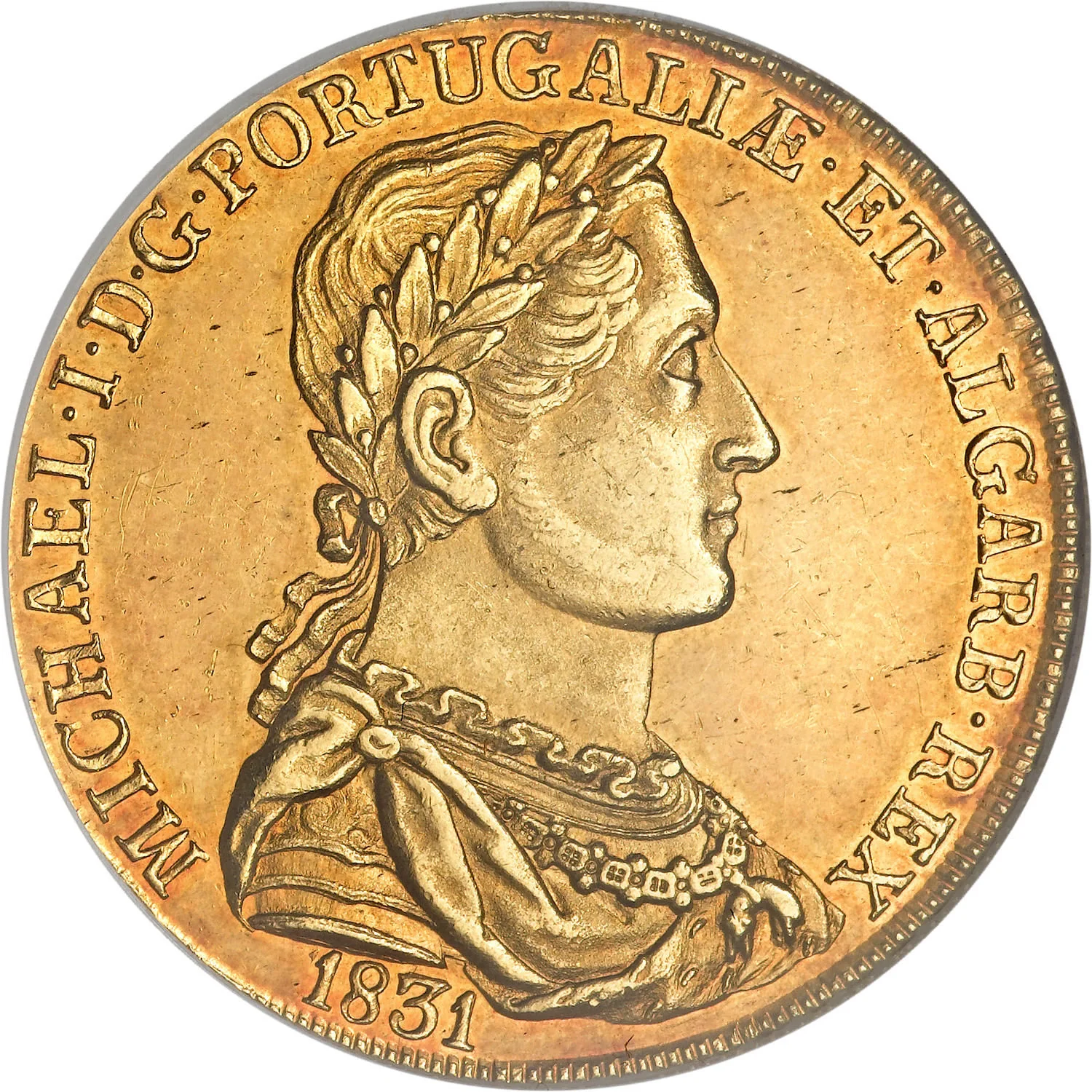
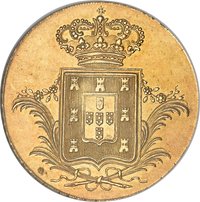
Obverse
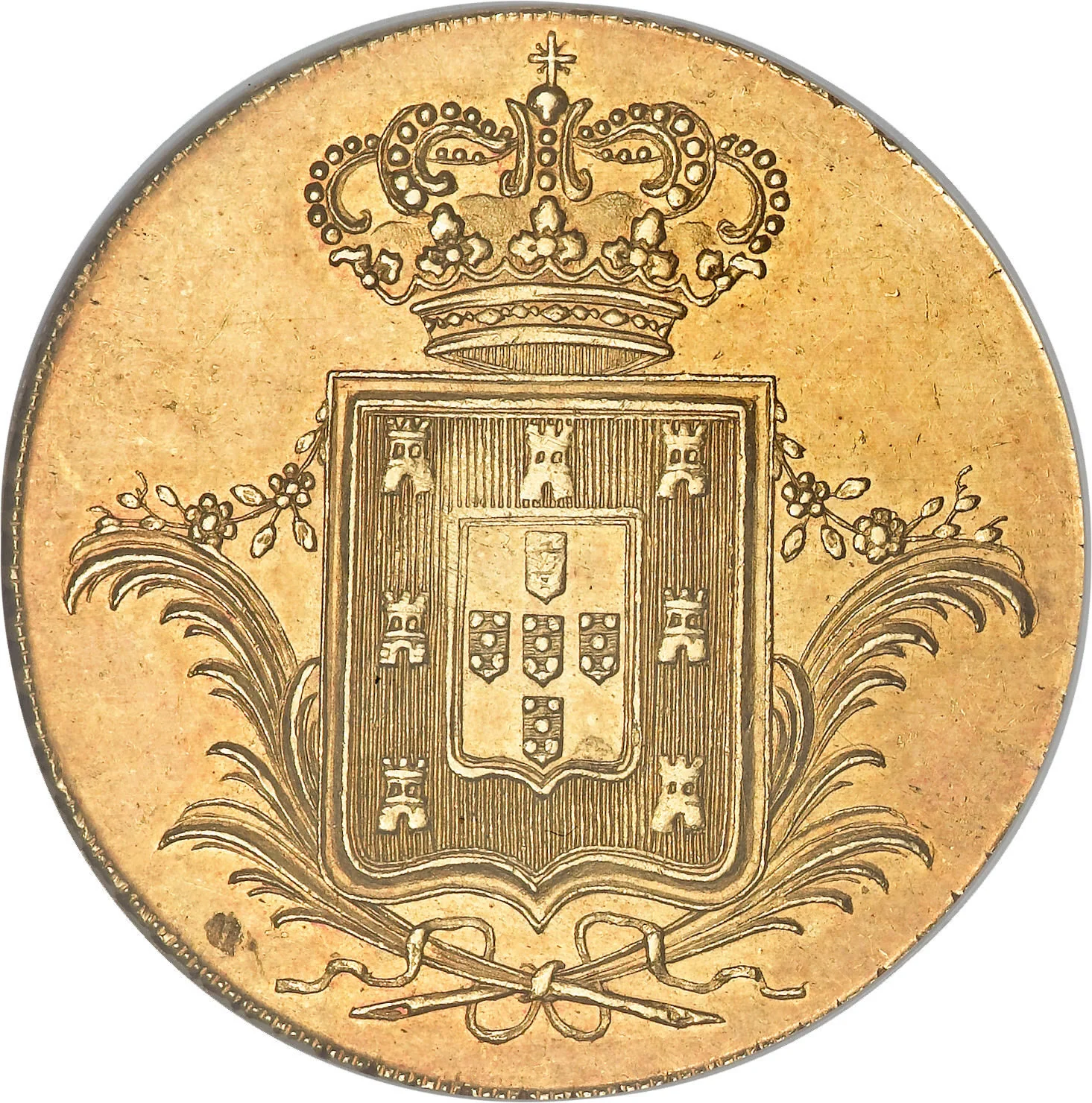
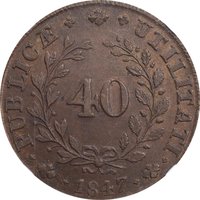
Reverse
Edge
String shape
Mints
| Name | Mark |
|---|---|
| Imprensa Nacional - Casa da Moeda | — |
Mintings
| Year | Mint Mark | Mintage | Quality | Collection |
|---|---|---|---|---|
| 1830 | — | 2,274 | ||
| 1831 | — | 1,618 |
Historical background
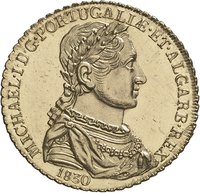
In 1830, Portugal’s currency situation was complex and unstable, deeply entangled with the political turmoil of the period. The country was in the midst of the Liberal Wars (1828-1834), a civil conflict between absolutist supporters of King Miguel and constitutional liberals backing the exiled Queen Maria II. This political division led to a fractured monetary system, with both factions minting their own coinage and issuing paper money to finance their military campaigns. The result was a dual circulation of coins bearing the effigies of both Miguel and Maria, alongside a proliferation of depreciating paper notes, creating widespread confusion and a severe lack of public confidence in the currency.
The underlying monetary standard was theoretically the real (plural réis), but its value was highly unstable. Decades of economic strain, beginning with the Napoleonic invasions and the flight of the court to Brazil, had drained the treasury. To cover deficits, successive governments had resorted to debasing coinage and issuing fiduciary money not backed by sufficient specie (gold or silver). Consequently, the currency in circulation was a heterogeneous mix of older Portuguese coins, newer debased issues, foreign coins (particularly British), and largely distrusted paper. Inflation was a significant problem, eroding purchasing power and hindering both domestic commerce and international trade.
This chaotic environment placed Portugal in a state of monetary crisis, with the value of money largely dependent on which faction controlled a given region and the fluctuating fortunes of war. The situation would only begin to resolve after the liberal victory in 1834, which allowed for the gradual consolidation of political power. The subsequent decades would see concerted, though difficult, efforts to unify the monetary system, stabilize the real, and restore public credit, laying the groundwork for the eventual adoption of the escudo in 1911.
The underlying monetary standard was theoretically the real (plural réis), but its value was highly unstable. Decades of economic strain, beginning with the Napoleonic invasions and the flight of the court to Brazil, had drained the treasury. To cover deficits, successive governments had resorted to debasing coinage and issuing fiduciary money not backed by sufficient specie (gold or silver). Consequently, the currency in circulation was a heterogeneous mix of older Portuguese coins, newer debased issues, foreign coins (particularly British), and largely distrusted paper. Inflation was a significant problem, eroding purchasing power and hindering both domestic commerce and international trade.
This chaotic environment placed Portugal in a state of monetary crisis, with the value of money largely dependent on which faction controlled a given region and the fluctuating fortunes of war. The situation would only begin to resolve after the liberal victory in 1834, which allowed for the gradual consolidation of political power. The subsequent decades would see concerted, though difficult, efforts to unify the monetary system, stabilize the real, and restore public credit, laying the groundwork for the eventual adoption of the escudo in 1911.
✨ Legendary