

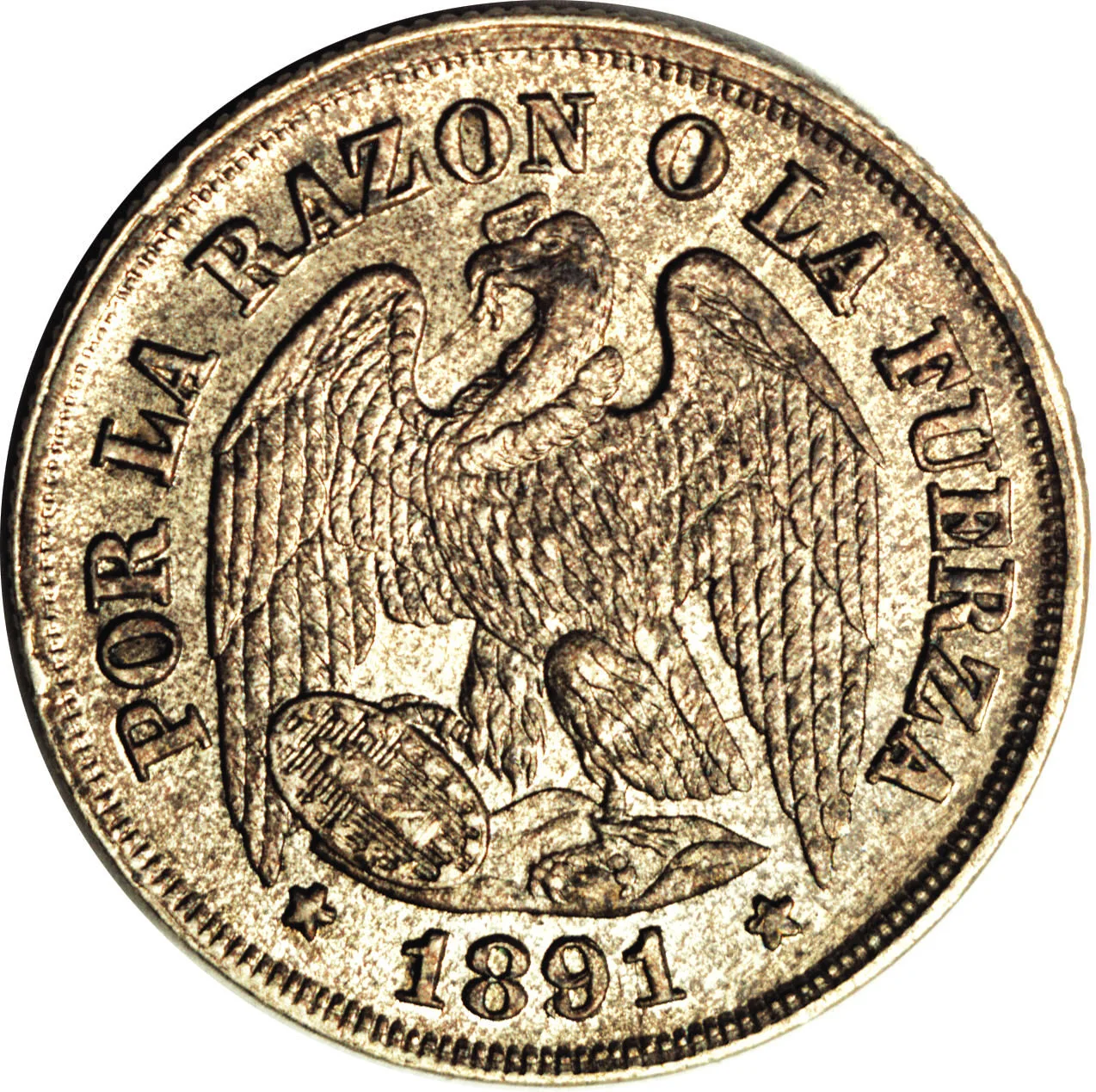
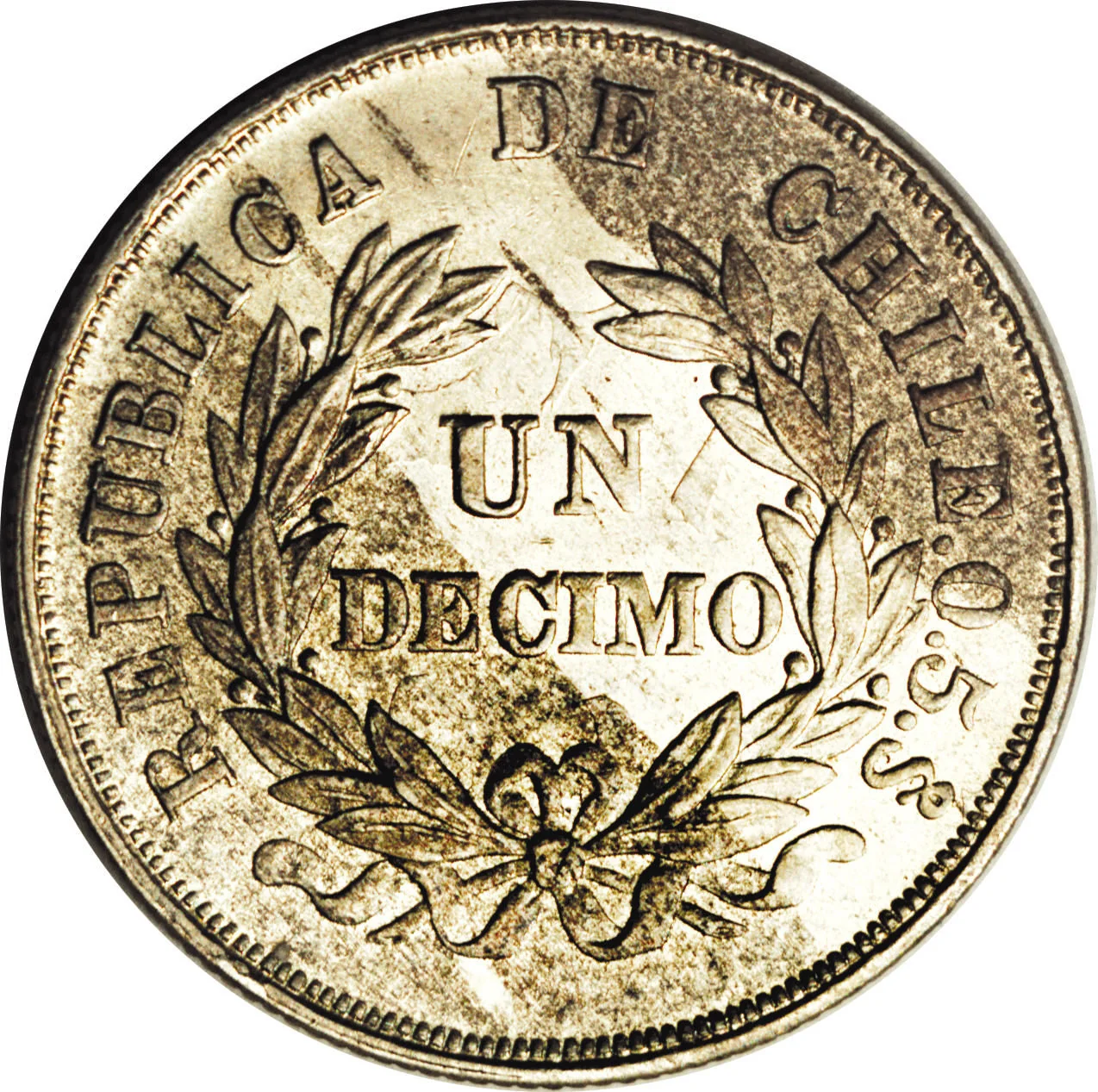

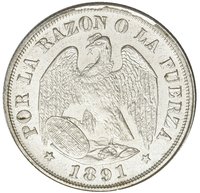
Obverse
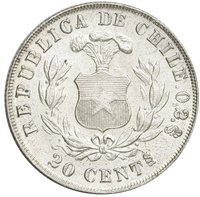
Reverse
Edge
Mintings
| Year | Mint Mark | Mintage | Quality | Collection |
|---|---|---|---|---|
| 1891 | So | 264,000 |
Historical background
In 1891, Chile was embroiled in a bloody civil war between the Congressional forces and President José Manuel Balmaceda. This conflict had a profound and immediate impact on the nation's currency situation, creating a period of severe monetary instability. The war fractured the state's financial institutions, with both sides needing to fund their military campaigns. The Congressional junta, controlling the northern nitrate-rich provinces, seized custom house revenues and secured loans from British nitrate interests, while the Balmaceda government in Santiago resorted to printing large quantities of unbacked paper money to finance its war effort.
This led to a classic crisis of confidence and a split monetary system. The peso billete (paper peso) issued by the Balmaceda administration in the central and southern regions began to depreciate rapidly due to inflation and lack of trust. Meanwhile, in the north, the Congressional forces maintained a harder currency, often relying on metallic coins and their own emergency issues, which held greater value. The result was a wide and fluctuating exchange rate between the "paper peso of the government" and the "metal peso of the revolution," severely disrupting internal trade and causing great hardship for the civilian population.
The currency chaos was resolved abruptly with the Congressional victory in August 1891. The new government moved quickly to restore monetary order, making the retirement of the inflated paper money a top priority. By 1892, a process of conversion and consolidation was underway, stabilizing the currency on a gold standard. Thus, the currency situation of 1891 serves as a direct reflection of the civil war's economic disruption, characterized by competing issuers, rampant inflation in government-held zones, and a restoration of orthodox financial policy only upon the conflict's conclusion.
This led to a classic crisis of confidence and a split monetary system. The peso billete (paper peso) issued by the Balmaceda administration in the central and southern regions began to depreciate rapidly due to inflation and lack of trust. Meanwhile, in the north, the Congressional forces maintained a harder currency, often relying on metallic coins and their own emergency issues, which held greater value. The result was a wide and fluctuating exchange rate between the "paper peso of the government" and the "metal peso of the revolution," severely disrupting internal trade and causing great hardship for the civilian population.
The currency chaos was resolved abruptly with the Congressional victory in August 1891. The new government moved quickly to restore monetary order, making the retirement of the inflated paper money a top priority. By 1892, a process of conversion and consolidation was underway, stabilizing the currency on a gold standard. Thus, the currency situation of 1891 serves as a direct reflection of the civil war's economic disruption, characterized by competing issuers, rampant inflation in government-held zones, and a restoration of orthodox financial policy only upon the conflict's conclusion.
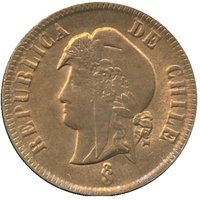
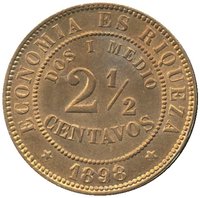
💎 Extremely Rare